
Scalp conditions
Scalp fungal infection (tinea capitis)
Broken hairs and scaly patches that often need more than a shampoo.
A scalp fungal infection, called tinea capitis, is an infection of the scalp skin and hair shafts by fungi known as dermatophytes. It is most common in children, can spread between people and pets, and can cause patchy hair loss. Because the fungus lives inside the hair, oral treatment is often needed, and early care helps protect the hair.
Last updated · Medical review: Dr. Ashutosh Shah, M.B.B.S., M.S., M.Ch., D.N.B. (Plastic Surgery), Gujarat Medical Council Reg. No. G-26257
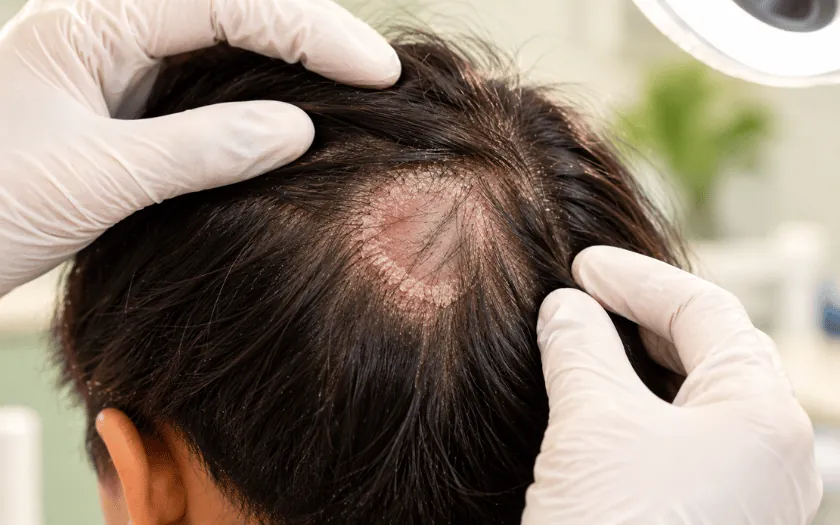 Early treatment protects the hair
What is a scalp fungal infection?
Tinea capitis, sometimes called ringworm of the scalp, has nothing to do with worms. It is caused by fungi that feed on keratin, the protein in skin and hair. On the scalp, these fungi can grow on the surface of the hair or inside the hair shaft itself, making hairs weak so they break close to the skin.
It is different from the yeast linked to dandruff. Dandruff is not contagious and responds to medicated shampoos, while tinea capitis is a true infection that can spread and usually needs medicine taken by mouth.
Scalp fungal infection causes and how it spreads
The fungi come from three main sources, and the source can affect how the infection looks and how it is treated:
- Other people, through close contact or shared combs, brushes, caps, pillows, towels and hair accessories
- Animals, especially kittens, puppies and some farm animals, which may carry the fungus without obvious signs
- Soil, less commonly
Children, particularly those under school age and in the early school years, are affected most often, possibly because the scalp of adults produces oils that are less favourable to these fungi. Crowded living, shared bedding and warm, humid weather can make spread easier. Adults can be affected too, particularly those caring for infected children or with lowered immunity.
Signs: broken hairs, patchy loss and inflammatory swelling
Tinea capitis can look quite different from one person to another, which is one reason it is sometimes mistaken for dandruff or alopecia areata.
- Scaly patches, round or irregular, sometimes grey and dull, looking like dandruff in one area
- Broken hairs that snap at or just above the scalp, leaving a pattern of black dots
- Patchy hair loss, with one or several patches that may slowly enlarge
- Itching, which may be mild or absent
- Pustules or scattered spots across the scalp
- Swollen glands at the back of the neck
Kerion: inflammatory swelling
In some people, the body mounts a strong reaction to the fungus, producing a soft, painful, boggy swelling that may ooze pus. This is called a kerion. It is often mistaken for a bacterial abscess, but it is an inflammatory reaction to the fungus, so cutting or draining it is usually not helpful and antifungal treatment is the priority. A kerion may be accompanied by fever and tiredness, and without timely treatment it can leave a scar with lasting hair loss in that area.
How tinea capitis is diagnosed
A doctor will examine the scalp, ask about contact with others who have similar patches, pets and previous treatments, and look for fungal infection elsewhere on the body. Trichoscopy, a magnified look at the scalp, can reveal characteristic changes in broken hairs.
Diagnosis is usually confirmed by taking a few scales and plucked or broken hairs. These are examined under a microscope and may be sent for fungal culture, which identifies the type of fungus and can take a few weeks. Treatment is often started before culture results return when the picture is clear. A special lamp examination may help with some types of fungi. Confirming the diagnosis is important, because antifungal tablets are a significant commitment and other conditions can look alike.
Scalp fungal infection treatment, and why tablets are often needed
Creams and shampoos alone rarely clear tinea capitis, because the fungus lives deep in the hair follicle and inside the hair shaft, where products applied to the surface cannot reach well. The choice of medicine and how long it is taken are decided by your doctor according to the fungus, age, weight and general health.
- Oral antifungal medicine
Tablets or a liquid, such as terbinafine or griseofulvin, are usually taken for several weeks. Your doctor will explain possible side effects, such as stomach upset, headache, taste changes or rash, and whether any blood tests are needed. Completing the full course matters, even when the scalp starts to look better.
- Antifungal shampoo alongside
An antifungal shampoo, such as one containing ketoconazole or selenium sulphide, reduces fungal spores on the scalp and lowers the chance of passing the infection on. It supports, but does not replace, oral treatment.
- Treating inflammation
In a kerion, additional treatment for inflammation may occasionally be considered. Any bacterial infection on top is treated if present.
- Checking contacts and pets
Family members, especially other children, may need checking. If a pet is suspected, a vet can examine and treat it.
- Follow up
Reviews check healing and hair regrowth, and a repeat sample may be taken to confirm the fungus has cleared.
Reducing spread at home
- Do not share combs, brushes, caps, towels or pillows
- Soak combs and brushes in hot soapy water or discard old ones
- Wash bedding and towels regularly in hot water
- Ask about returning to school; many children can attend once treatment has started
Special concerns in children
Because tinea capitis is mainly a childhood infection, parents are often the first to notice a patch of scaly skin or a bald spot. It is easily mistaken for dandruff, dry skin or alopecia areata, and applying steroid creams without a diagnosis can change its appearance and delay treatment.
Children need medicine chosen and measured for their age and weight, so please do not give adult antifungal tablets or leftover prescriptions. Watch for swelling, pus, fever or glands in the neck, and seek review promptly if these appear. With timely treatment, hair usually regrows well. Reassure your child that this is a common infection and not their fault.
Scalp fungal infection and hair loss
Hair loss in tinea capitis happens because infected hairs become brittle and break, or because inflammation disturbs the follicles. In most people, hair grows back once the infection is cleared, though regrowth can take a few months.
Severe inflammation, especially an untreated or late treated kerion, can occasionally destroy follicles and leave a scarred patch. In that situation, restoring hair is considered only once the infection has cleared completely and the area has been stable for a period, as with other forms of scarring alopecia. An active infection is always treated before any hair procedure.
When to see a doctor, and what affects the cost
- A child has a scaly patch, broken hairs or a bald spot
- A painful, boggy or oozing swelling appears on the scalp
- Anti dandruff shampoos have not helped a localised patch
- Several family members have itchy, scaly patches
- There are swollen neck glands or fever
The cost of scalp fungal infection treatment in Surat depends on factors such as which tests are needed, the medicine chosen and how long it is taken, whether blood tests are advised, how many family members need treatment and the number of review visits. These are explained after your consultation.
Suitability, risks and recovery differ for each patient and are discussed during consultation.
Patchy loss with broken hairs?
An examination and a simple sample can confirm a fungal infection before treatment starts.
Fungal infection questions
Still have a question?
Answers to common questions about fungal infection of the scalp. Your own diagnosis is confirmed only after an examination.
Yes. It can spread through close contact and shared items such as combs, caps and pillows, and some types come from pets. Keeping items personal and checking contacts helps limit spread.
Usually not on its own. The fungus lives inside the hair shaft and follicle, where creams cannot reach well, so oral medicine is normally needed, with a shampoo used alongside.
In most children it does, once the infection is cleared, although regrowth can take a few months. Severe inflammation that is treated late can occasionally leave a small scarred patch.
Generally no. A kerion is an inflammatory reaction to fungus rather than a pus collection, so antifungal treatment is the main step. Cutting it can add to scarring.
Yes, though it is less common than in children. Adults caring for infected children, those with pets carrying the fungus and people with lowered immunity are more likely to be affected.
If the fungus type suggests an animal source or a pet has patchy fur, a vet check is worthwhile. Treating the pet helps prevent the infection from returning.
Book a consultation
Begin with a conversation.
Every plan starts with an in person assessment by Dr. Ashutosh Shah. Call or WhatsApp the clinic and our team will get back to you.
Book on WhatsApp
Chat with our team on WhatsApp about any treatment, consultation or appointment.
- Ask about any treatment
- Book a consultation
- Get directions to our clinics
WhatsApp opens with a short message ready to send. The clinic team replies during working hours.