
Why a plastic surgeon for hair transplant
Surgery is a medical decision.
A plastic surgeon hair transplant brings training in surgery, scalp anatomy, wound healing and scar care to a procedure performed on living tissue.
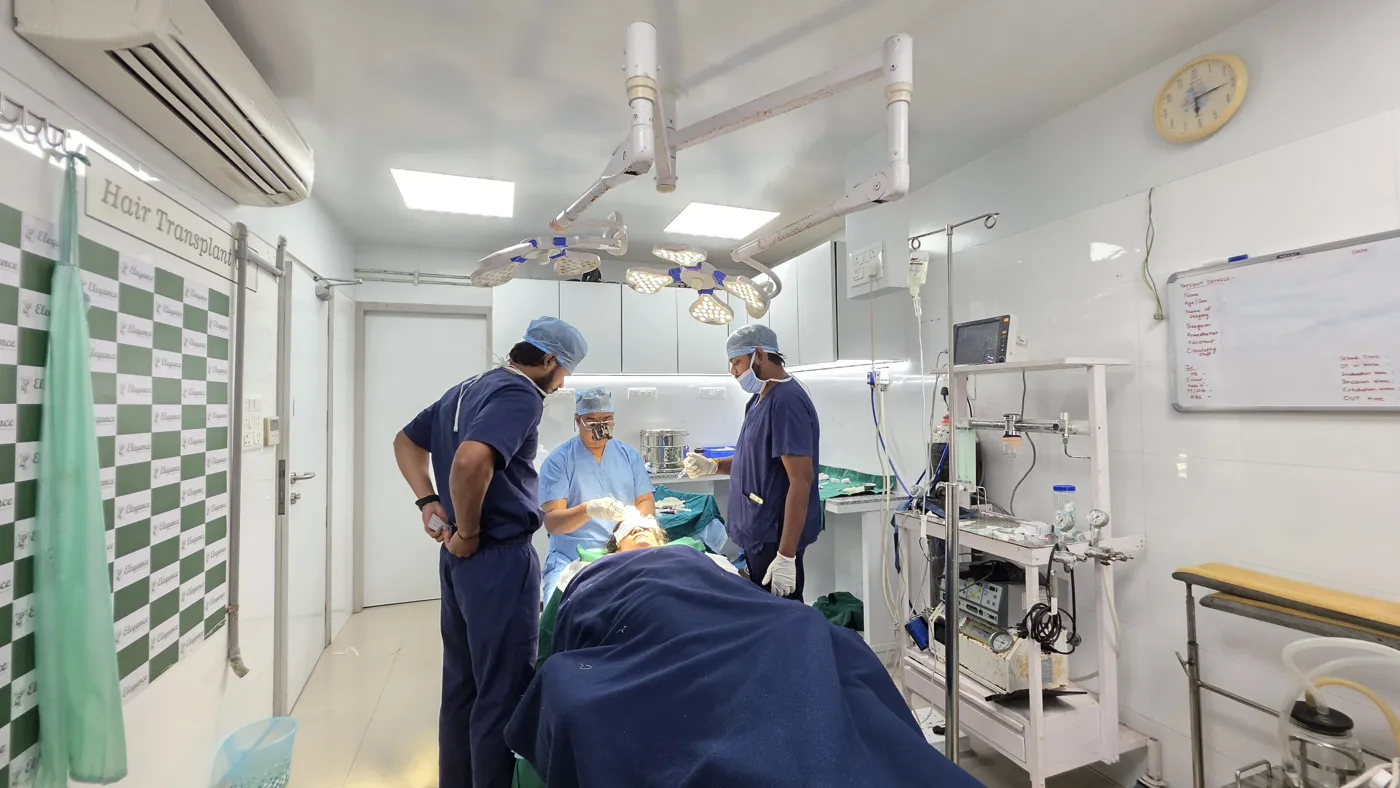
Surgical training
What plastic surgeon hair transplant training brings.
Choosing a plastic surgeon for hair transplant means choosing someone trained in surgery, anatomy and wound healing. A hair transplant is real surgery on living tissue, and those foundations shape every step.
Plastic surgery training covers general surgical principles, detailed anatomy of the skin and soft tissue, and the way wounds heal and scars form. It also includes reconstructive work after burns, trauma and cancer surgery, where tissue must be moved, closed and protected with care.
These skills are directly relevant to hair restoration. Grafts are removed from one area and placed in another, the scalp is anaesthetised, small wounds are created and allowed to heal, and the final look depends on facial proportion as much as on graft numbers.
Training alone does not make a good result. Careful diagnosis, honest planning and personal involvement matter just as much, and results vary from person to person.
Ten reasons
Why a plastic surgeon for hair transplant.
Skills that are useful from planning through to healing.

Surgery, anatomy and wound healing
Formal training in surgical principles and in how tissue heals after it is cut and closed.
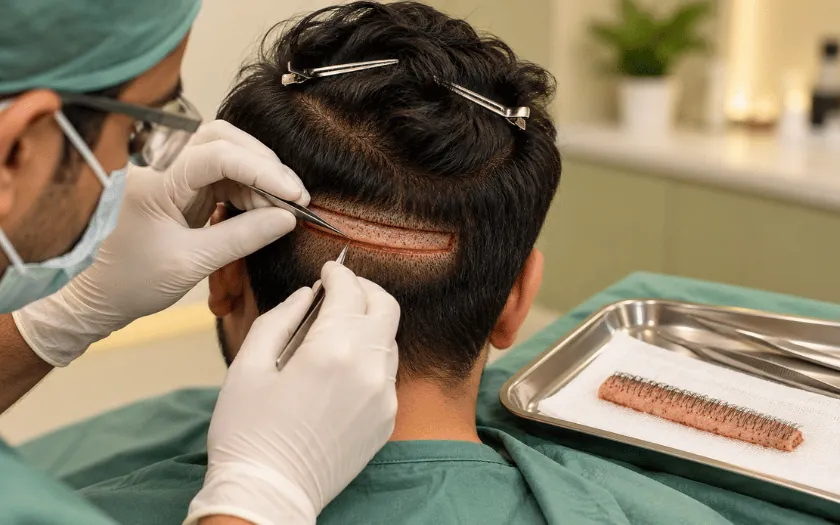
Scalp blood supply
Understanding scalp circulation helps grafts survive and protects the surrounding skin.

Local anaesthesia and surgical safety
Safe dosing, patient monitoring and a sterile operating environment throughout the procedure.

Scar management
Careful closure and planning to keep donor scars as discreet as possible. No surgery is scarless.
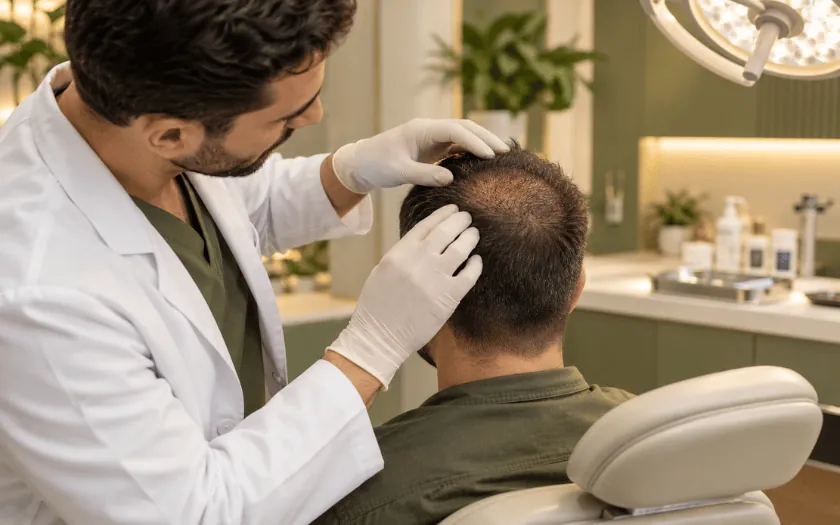
Complication management
Recognising problems such as infection or poor healing early and treating them promptly.
Reconstructive experience
Work with burns, trauma and scars informs restoration in areas where tissue is thin or tight.
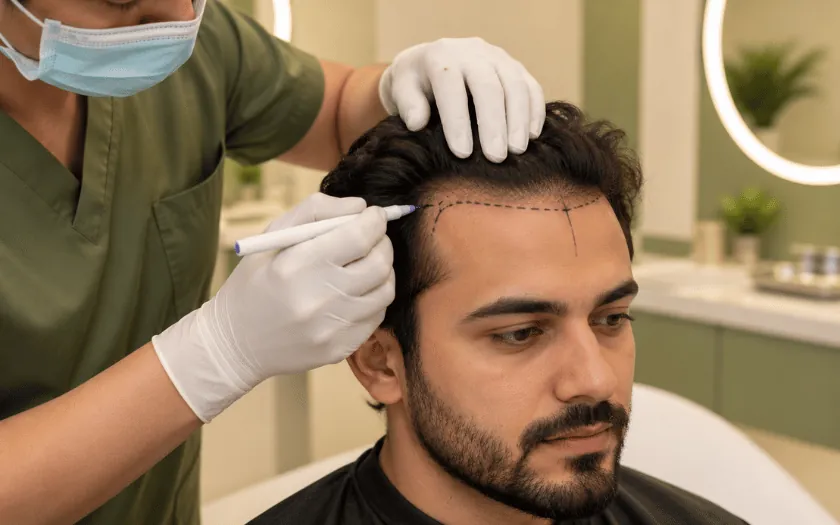
Facial aesthetic assessment
Hairlines designed in proportion to the forehead, brows and the whole face, not to a template.

Donor planning and hairline design
Donor hair is limited, so it is planned for a lifetime rather than spent in one session.

Combining FUT, FUE and reconstruction
FUT, FUE and reconstructive options can be combined when that suits the scalp and the goal.
Care before, during and after
Responsibility for the patient across pre operative, operative and post operative care.

Complex cases
Where reconstructive skill matters most.
- i
Scarring alopecia, once stable
Transplant is considered only after the condition has been inactive for a period and the scalp has been assessed carefully.
- ii
Burn and trauma scars
Scar tissue has a weaker blood supply, so grafts may need to be placed with more care and sometimes in stages.
- iii
Corrective and repair surgery
Unnatural hairlines, visible donor scars or poorly placed grafts from earlier surgery can often be improved.
- iv
Advanced hair loss with limited donor
When donor hair is scarce, priorities are set carefully so the most visible areas are treated first.
- v
Eyebrow and beard reconstruction
Fine angle and direction control helps restored hair blend with the face.
- vi
Transgender facial hair and hairline work
Hairline and facial hair planning that respects each person's goals and facial features.
A balanced view
A fair word about other specialists.
Plastic surgeons are not the only doctors who perform hair transplants, and a specialty title alone does not decide the outcome.
Dermatologists and other surgeons with proper training in hair restoration also perform transplants well. Many have deep experience in diagnosing and treating hair and scalp disease, which is an important part of any plan.
What matters most is that you choose an appropriately qualified, legally authorised and adequately trained medical practitioner who:
- Personally evaluates your scalp and the cause of your hair loss
- Plans the procedure, including the hairline and the use of donor hair
- Performs the critical surgical steps
- Remains responsible for your follow up and any complications
Training, accountability and honesty are the qualities to look for, whatever the specialty. Be cautious of any clinic where the doctor is absent for most of the procedure or where the promises sound too certain.
Before you decide
Questions to ask any surgeon.
These questions help you understand who is responsible for each part of your care, whichever clinic you are considering.
- 01
Who examines me?
Ask whether the operating surgeon personally examines your scalp, confirms the diagnosis and checks whether your hair loss is stable.
- 02
Who designs the hairline?
The hairline shapes how natural the result looks for years. It should be designed by the surgeon, in proportion to your face and age.
- 03
Who harvests grafts and makes recipient sites?
These are critical steps that decide graft survival, angle and density. Ask who performs them and what the team's role is.
- 04
Is the surgeon present throughout?
A hair transplant can take many hours. Ask whether the surgeon stays in the operating room and remains available if something changes.
- 05
How is my donor planned for my lifetime?
Donor hair is limited. Ask how many grafts are planned now, what is kept in reserve, and how future thinning has been considered.
- 06
Who manages complications and follow up?
Ask who you contact after surgery, how often you will be reviewed, and who treats problems if they arise.
Questions patients ask
Straight answers, before you decide.
Common questions about choosing a surgeon for a hair transplant.
Not necessarily. Dermatologists and other trained surgeons also perform hair transplants well. What matters is that your doctor is appropriately qualified, legally authorised and adequately trained, and personally evaluates, plans, performs the critical steps and follows up your care.
Plastic surgery training covers surgical principles, skin and scalp anatomy, blood supply, wound healing and scar care, along with reconstructive work after burns and trauma. These skills can help with donor planning, hairline design and managing complex or scarred scalps.
Often it can, once the scar is mature and stable. Scar tissue has a weaker blood supply, so graft survival may be lower than in normal scalp and more than one session is sometimes needed. A careful examination decides whether it is suitable.
Only when the condition has been inactive for a period and is considered stable. Operating on active scarring alopecia can cause the grafts to be lost. Diagnosis, sometimes with a scalp biopsy, and medical control come first.
No surgery is scarless. FUT leaves a fine linear scar and FUE leaves many tiny dot scars. Careful technique and closure aim to keep these as discreet as possible, but healing differs from person to person.
Often it can be improved. Corrective surgery may involve redesigning the hairline, removing or relocating unnatural grafts, or treating a visible donor scar. How much can be done depends on the remaining donor hair.
Ask who examines you, who designs the hairline, who harvests grafts and makes recipient sites, whether the surgeon is present throughout, how your donor hair is planned for your lifetime, and who manages complications and follow up.
Book a consultation
Begin with a conversation.
Every plan starts with an in person assessment by Dr. Ashutosh Shah. Call or WhatsApp the clinic and our team will get back to you.
Book on WhatsApp
Chat with our team on WhatsApp about any treatment, consultation or appointment.
- Ask about any treatment
- Book a consultation
- Get directions to our clinics
WhatsApp opens with a short message ready to send. The clinic team replies during working hours.