
Laser hair reduction
Electrolysis hair removal in Surat for white and grey hair
When laser cannot see the hair, each follicle is treated directly.
Electrolysis hair removal in Surat is the usual option for white, grey and very light hair, which laser does not reliably treat because these hairs lack pigment. A fine probe treats each follicle one at a time, so it works regardless of hair colour, but it needs several sessions, patience and skilled hands.
Last updated · Medical review: Dr. Ashutosh Shah, M.B.B.S., M.S., M.Ch., D.N.B. (Plastic Surgery), Gujarat Medical Council Reg. No. G-26257
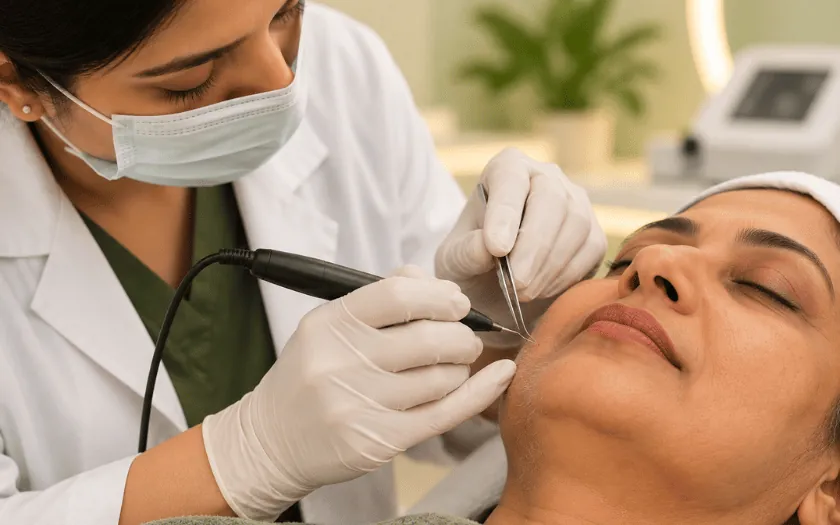 For hair laser cannot target
Why laser does not treat white or grey hair
Laser hair reduction relies on melanin, the dark pigment in the hair shaft. The laser energy is absorbed by that pigment and carried down to the follicle. White and grey hairs have lost their pigment, so the laser has nothing to target, and very fine blonde or red hairs contain too little of the right kind of pigment to respond reliably.
Turning the laser up does not solve this. Higher energy on hair without pigment mainly heats the surrounding skin, raising the risk of burns and colour change without removing the hair. For these hairs, electrolysis is the route.
What electrolysis hair removal is
Electrolysis is a needle based method of hair removal. A very fine probe, about the width of a hair, is slid into the natural opening of the follicle alongside the hair. A small, controlled electrical current is then applied to damage the part of the follicle that produces the hair, and the hair is lifted out.
Because each follicle is treated directly, hair colour and skin tone do not limit it the way they limit laser. A follicle that has been fully treated can stop producing hair, which is why electrolysis can give lasting removal of treated hairs. Some follicles need more than one treatment before they stop growing.
Who electrolysis may suit
- White or grey facial hair, often on the chin or upper lip, including postmenopausal facial hair
- Blonde, red or very fine hair that has not responded to laser
- Light hairs left behind after a course of laser
- Small areas, stray hairs or shaping where precision matters
- Facial hair removal as part of gender affirming care, where light hairs remain after laser
Electrolysis is slower than laser for large areas of dark hair, such as the full back or legs, because each hair is treated separately. For those areas, laser is usually more practical, with electrolysis kept for the hairs laser cannot reach.
When excess hair is linked to hormones, such as in PCOS, a hormonal evaluation is advised first, since new hairs may keep appearing until the cause is treated.
Combining laser and electrolysis
Many people have a mix of dark and light hairs. In that case, combination planning often makes sense: laser treats the dark hairs efficiently over a larger area, and electrolysis then targets the white, grey or light hairs that remain.
- Needs dark pigment in the hair
- Treats many hairs at once
- Suits larger areas
- Gives reduction; maintenance may be needed
- Works regardless of hair colour
- Treats one follicle at a time
- Suits smaller areas and light hairs
- Can give lasting removal of treated follicles
Sessions and what to expect
- Consultation
Your skin, hair colour, medical history and any hormonal causes are reviewed, and the area and goals are agreed.
- Preparing the area
Hairs need to be long enough to see and grip, so avoid plucking or waxing before sessions, as advised.
- Treatment
Each hair is treated individually. Most people feel a brief stinging or heat with each follicle, and numbing cream may be discussed for sensitive areas.
- Multiple sessions
Hairs grow in cycles, and not all are visible at once, so a course usually takes several sessions spread over months.
- Review
Regrowth is checked and remaining hairs are treated until the area is clear enough for you.
Session length and the number of visits depend on how many hairs there are, how coarse they are and how the skin responds.
Why operator skill matters
Electrolysis is a precise, manual technique. The probe must follow the angle of the hair into the follicle, and the current must be enough to treat the follicle without injuring the skin around it. Accurate placement reduces discomfort, regrowth and marks, while poor technique increases the risk of scarring and pigment change. Experience and careful energy choice matter more than the machine.
Before you start, it is reasonable to ask who will perform the treatment, how many sessions are likely for your area, how discomfort is managed and what aftercare is expected. Clear answers to these questions are a good sign that the course has been planned rather than sold.
Scar and pigment risks, and aftercare
Redness and slight swelling around treated follicles are common for a few hours to a day or two. Tiny scabs can form and should be left to fall off on their own.
- Temporary darkening or lightening of the skin, particularly in darker skin types
- Small pitted marks or scars, more likely with poor technique or picking at scabs
- Infection, which is uncommon with clean technique and gentle aftercare
- Ingrown hairs in some areas
Aftercare includes keeping the area clean, avoiding makeup, harsh products and heavy sweating for a short time as advised, and using sun protection. Tell your doctor about pacemakers, other implanted devices, keloid tendency, pregnancy or skin conditions before treatment, as some may change the plan.
Suitability, risks and recovery differ for each patient and are discussed during consultation.
Grey or light hairs that laser missed?
Whether electrolysis, laser or both suit you is decided after an in person assessment.
Electrolysis questions
Still have a question?
Answers about removing white, grey and light hair. Your own plan is confirmed after your skin and hair are examined.
A follicle that is fully treated can stop producing hair, so removal of treated hairs can be lasting. Some follicles need repeat treatment, and new hairs can still appear later, especially when hormones are involved.
Most people feel a quick sting or heat with each hair. Sensitivity varies by area and person, and numbing cream or shorter sessions can make it more comfortable.
Laser uses light absorbed by dark pigment and treats many hairs at once. Electrolysis uses a fine probe and current on each follicle, so it works on any hair colour but takes longer per area.
Yes. The chin, upper lip, jawline and brows are common areas. Careful technique and aftercare help reduce the risk of marks or pigment change on facial skin.
Usually not. Plucking or waxing removes the hair that guides the probe and can distort the follicle. Trimming may be allowed; follow the advice given for your course.
Yes. Because electrolysis does not depend on pigment, it can treat blonde, red, white and grey hair that responds poorly to laser.
It needs to be discussed first. Some electrolysis methods may not be suitable with pacemakers or other implanted electrical devices, so always mention them at consultation.
Book a consultation
Begin with a conversation.
Every plan starts with an in person assessment by Dr. Ashutosh Shah. Call or WhatsApp the clinic and our team will get back to you.
Book on WhatsApp
Chat with our team on WhatsApp about any treatment, consultation or appointment.
- Ask about any treatment
- Book a consultation
- Get directions to our clinics
WhatsApp opens with a short message ready to send. The clinic team replies during working hours.