

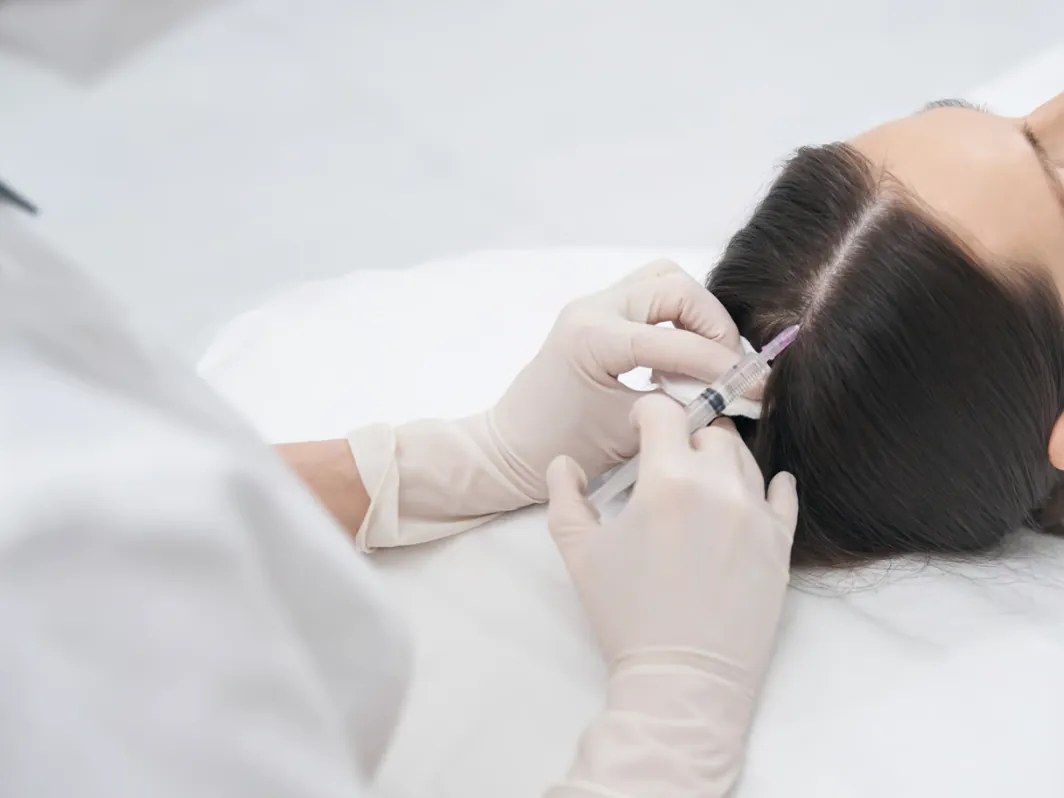
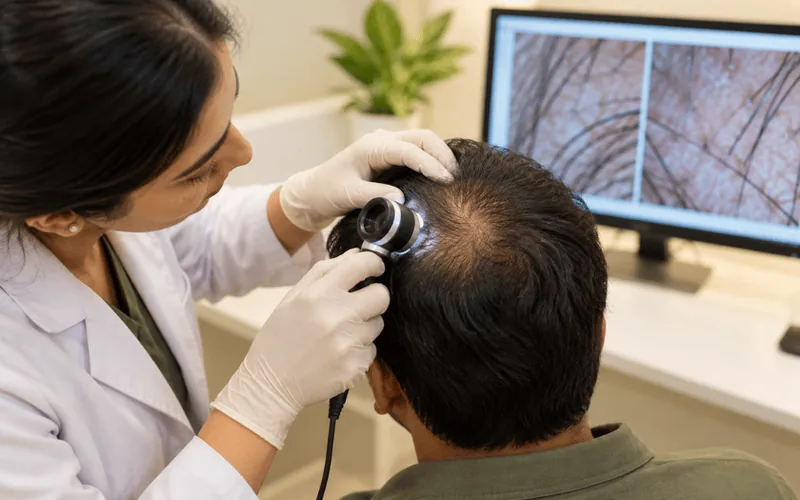
Find the cause
A structured assessment before any recommendation.
- Scalp examination
- Trichoscopy
- Blood investigations where indicated
- Hormonal assessment
- Scalp biopsy in selected cases

Years of surgical practice
Plastic surgery, with D.N.B.
Professional society memberships
Adajan & Vesu, Surat

Years of
surgical practice
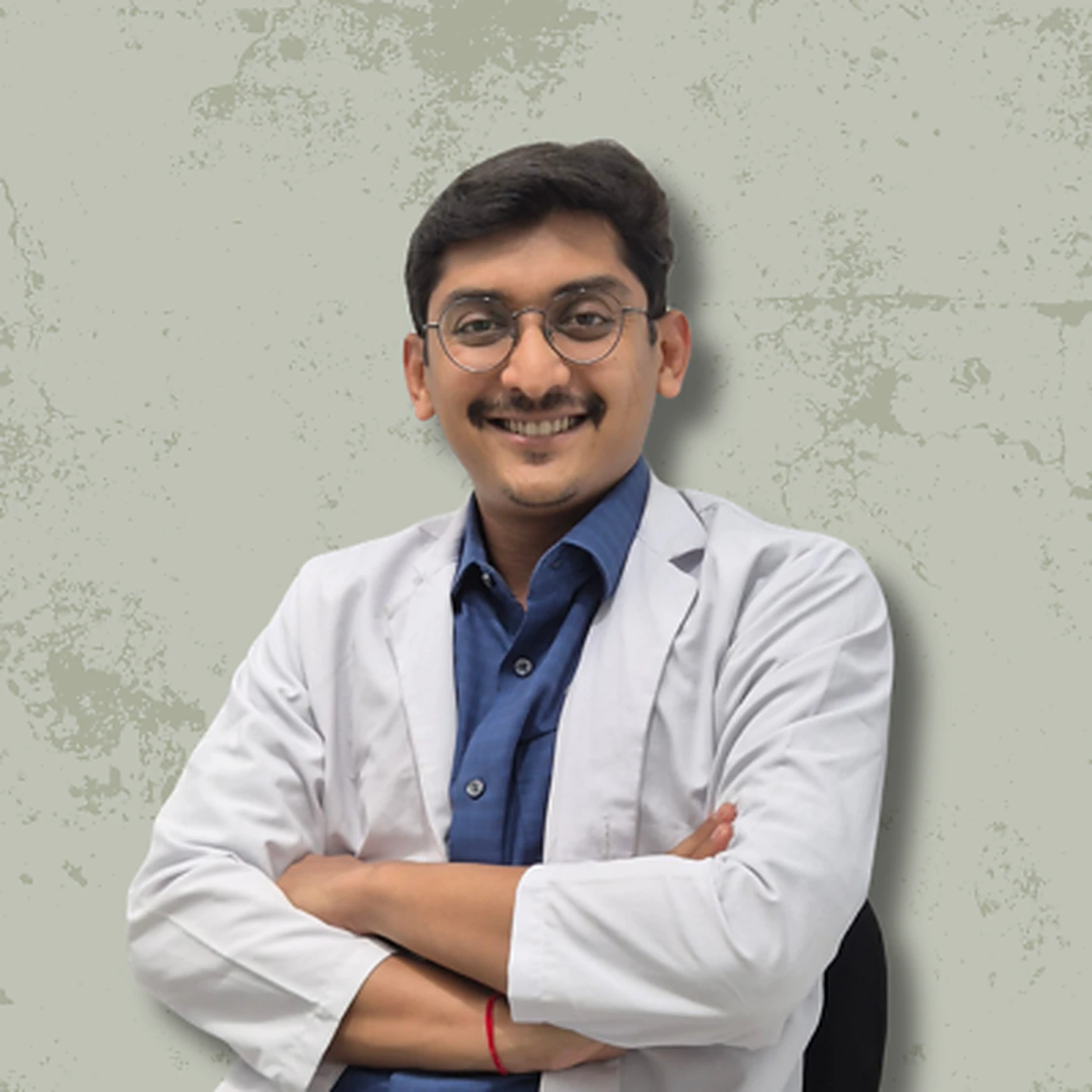
Your surgeon
M.S., M.Ch., DNB · National & international faculty
Dr. Ashutosh Shah is a plastic surgeon with more than 22 years of surgical experience, from first sessions to corrective and scar transplantation.
His reconstructive training shapes how he plans every case: the scalp, the donor area and the hairline are treated as one lifelong plan. He also teaches plastic surgeons and dermatologists through hands on workshops.
Plastic, Reconstructive & Aesthetic Surgeon
MBBS · MS (General Surgery) · M.Ch. (Plastic Surgery)
Dr. Chintan Godhani is a plastic, reconstructive and aesthetic surgeon trained in cosmetic surgery, microsurgery, trauma reconstruction, burns management and oncoplastic reconstruction. He completed his MBBS at AMC MET Medical College, Ahmedabad, his MS in General Surgery at C.U. Shah Medical College, Surendranagar, and his M.Ch. in Plastic Surgery at Shardaben Municipal Hospital and NHL Medical College, Ahmedabad.
He has experience in complex trauma care, microsurgery, burns reconstruction, congenital deformities and aesthetic surgery. His work includes facial aesthetics, body contouring, breast surgery, scar revision, hand trauma reconstruction and correction of deformities after burns, with a focus on natural, safe and patient centred results.
Plastic
surgery
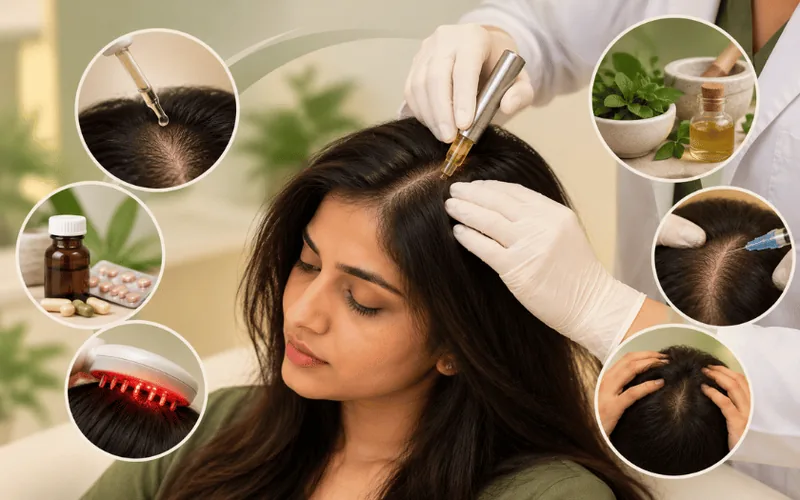
Four pathways
Hair loss has many causes, so treatment has more than one route. Your consultation decides which pathway, or which combination, suits you. Surgery is one option among four.
A structured assessment before any recommendation.
Slowing further loss of the hair you still have.

Surgery when the cause is stable and the donor allows.

Non surgical options, alone or alongside treatment.
Our philosophy
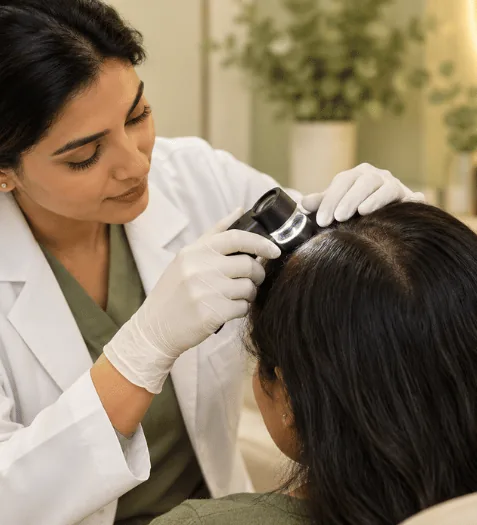
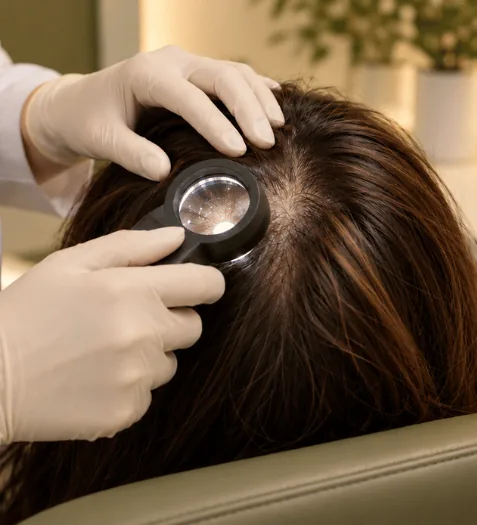


Not every patient with hair fall needs a transplant. The scalp and the reason for the loss come first.
Dandruff, folliculitis, infection, inflammation and autoimmune conditions are treated before any restoration.
Medical therapy, nutrition, hormonal correction and regenerative treatment may slow further thinning.
Camouflage, scalp micropigmentation, hair systems or transplantation, chosen for you rather than from a package.
Transplanted hair usually lasts, while untreated original hair can keep thinning. Follow up protects both.
Not everyone needs a transplant. Everyone deserves a diagnosis.
Conditions we treat
Pattern hair loss is the most common reason people visit, but it is far from the only one. Scalp disease, hormones, nutrition and scarring all need a different answer.

DHT related thinning at the hairline, temples or crown, graded and stabilised before any surgery.
Learn more →
Widening parting and reduced volume, checked for hormonal and nutritional causes first.
Learn more →
Autoimmune patches on the scalp, beard or brows, treated medically while the condition is active.
Learn more →
Sudden diffuse shedding after illness, stress, childbirth or crash dieting, with the trigger identified.
Learn more →
Loss from tight hairstyles or headwear, often reversible when caught early.
Learn more →
Inflammatory or scar related loss that must be stable before restoration is considered.
Learn more →
Itching, scaling and redness brought under control to protect the hair you have.
Learn more →
Pustules, infection and thick scaling diagnosed and treated before any procedure.
Learn more →
Thyroid, PCOS, menopause and androgen related thinning, managed with the right specialists.
Learn more →
Low ferritin, B12, vitamin D or protein corrected on the basis of tests, not guesswork.
Learn more →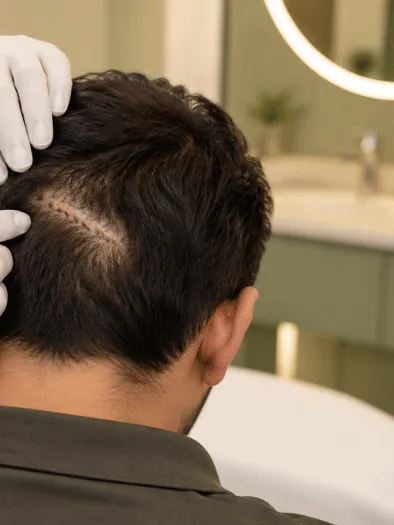
Hair restored into stable scars after assessing blood supply and scar quality.
Learn more →
Sparse brows or a patchy beard restored with your own follicles at natural angles.
Learn more →Treatments

Individual follicles are extracted and implanted one by one, with no long linear scar.
Learn more →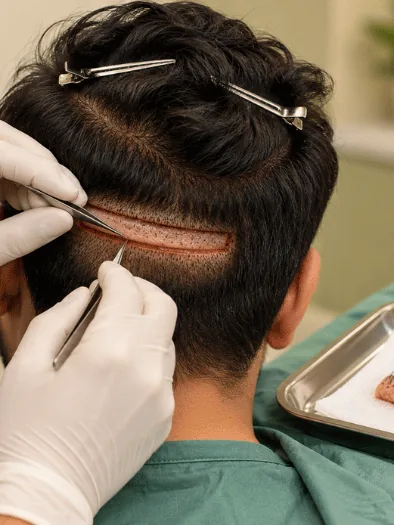
A thin strip of donor scalp is divided into grafts, which suits selected patients who need more grafts.
Learn more →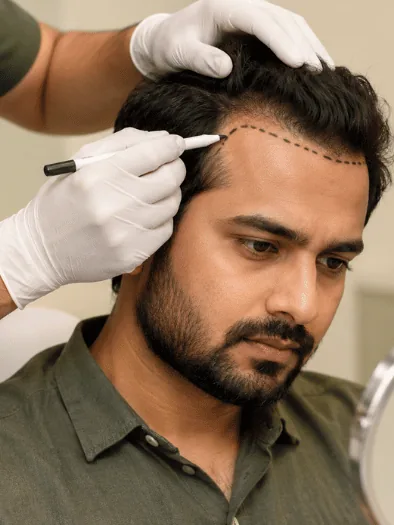
An age appropriate hairline planned around your facial proportions and your likely future loss.
Learn more →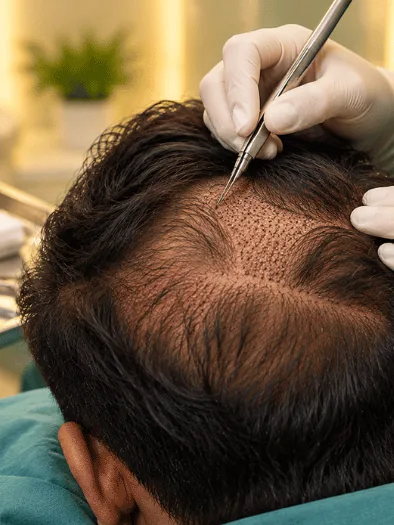
Repair of pluggy grafts, unnatural hairlines and overharvested donor areas from earlier surgery.
Learn more →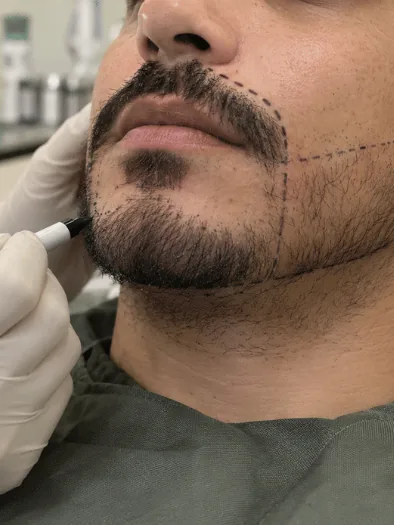
Your own follicles placed at the natural angle and direction for fuller brows or beard.
Learn more →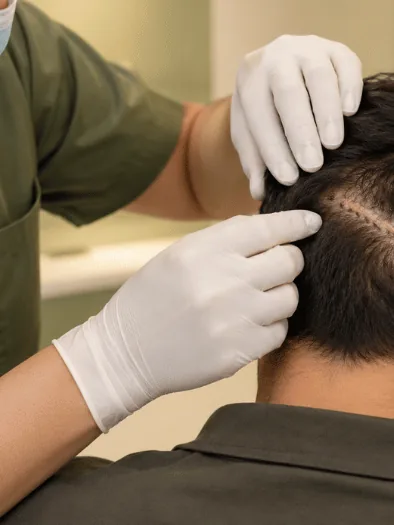
Hair restored into stable burn, injury or surgical scars after assessing blood supply and scar quality.
Learn more →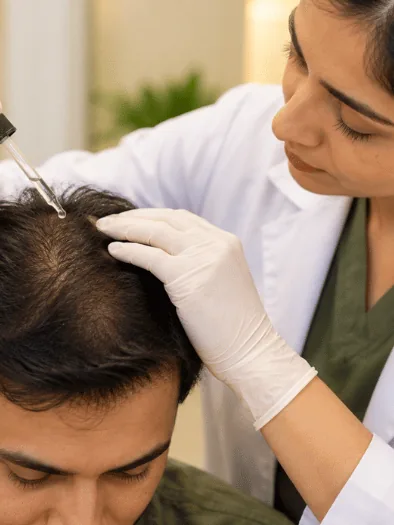
Diagnosis led treatment for early or progressive thinning, sometimes the right first step.
Learn more →
Supportive treatments that may help selected patients, explained honestly with their limits.
Learn more →
Fine pigment that creates the look of density or a shaved head, and can soften scars.
Learn more →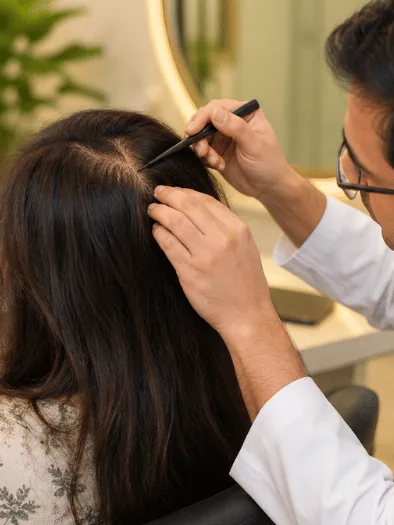
Hormonal and nutritional evaluation first, then medical care, camouflage or surgery where suitable.
Learn more →Understanding the procedure
A hair transplant moves your own healthy follicles, usually from the back of the scalp where hair resists thinning, into areas that have thinned or receded. Because the hair is yours, it keeps growing naturally once it settles.

Men and women with stable pattern hair loss, a receding hairline or thinning crown, and a healthy donor area.

Your scalp is examined, your history and goals discussed, and you are told honestly whether surgery is appropriate.

The new hairline is drawn to suit your age, face shape and future hair loss. Natural comes before dense.
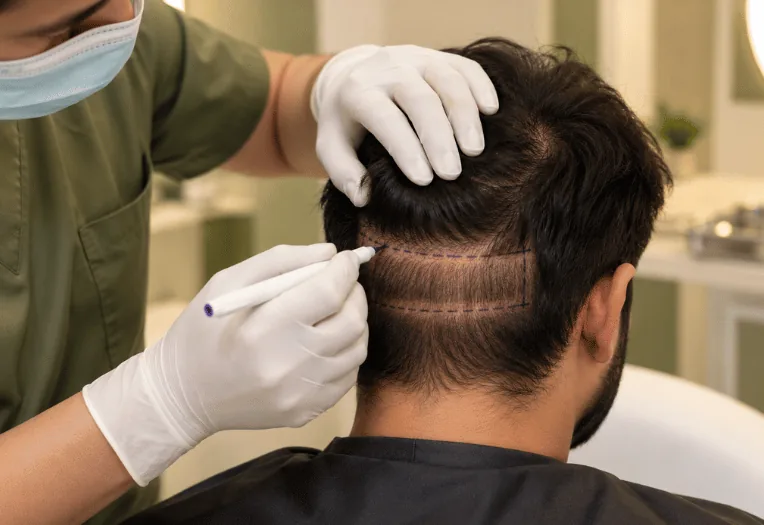
Follicular units are harvested from the donor zone by FUE or FUT under local anaesthesia, with the donor planned for life.
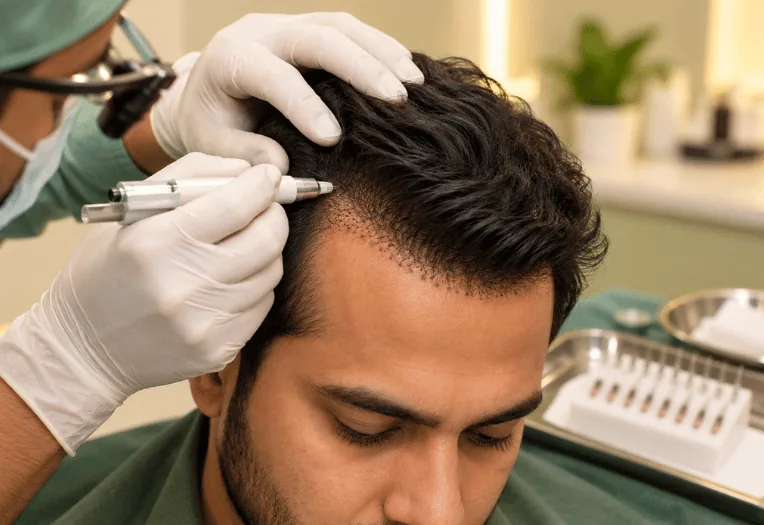
Grafts are placed one by one at the angle and direction of natural growth for a soft, natural look.
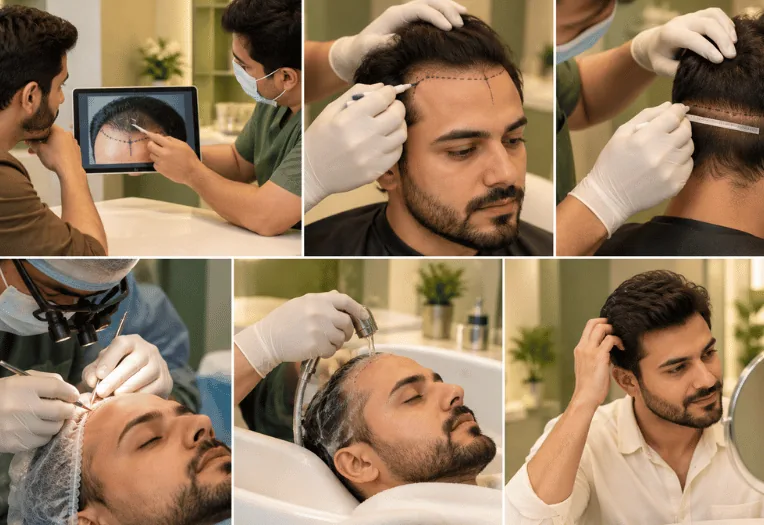
Most people return to routine within days. Transplanted hairs shed first, then regrow gradually over the following months.
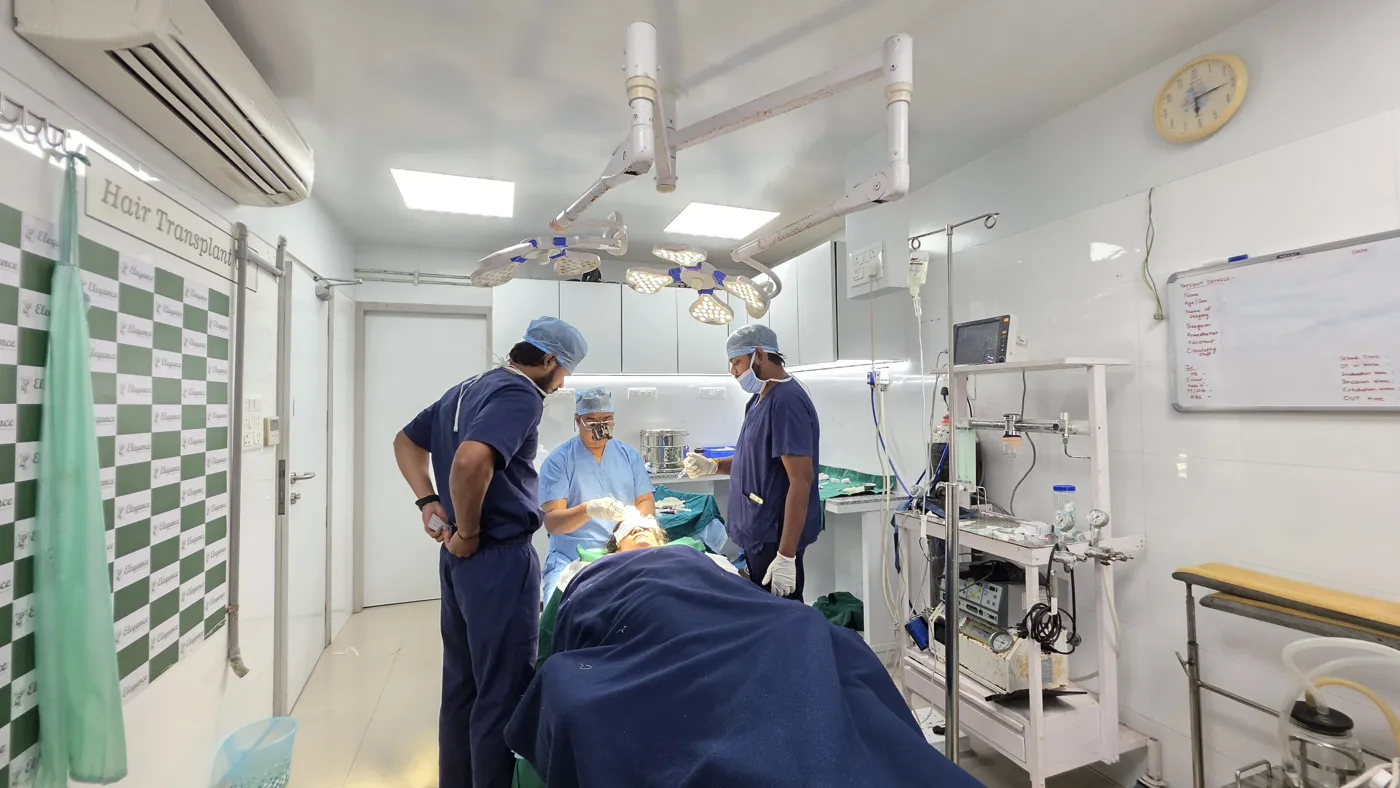
Why a plastic surgeon
Assessment, planning and the critical surgical steps are led by a qualified plastic surgeon who stays responsible for follow up.
Training in blood supply, local anaesthesia and healing guides safe graft placement and donor care.
Burns, injury scars and scarring alopecia call for reconstructive judgement as well as transplant skill.
Donor hair is limited, so every session is planned against the grafts you may need in the future.
Hairlines are designed around proportion, age and gender, never copied from one patient to the next.
The technique follows your donor area and goals, and can be combined when that serves you better.
Whoever you choose, choose an appropriately qualified, legally authorised and trained practitioner who personally evaluates, plans, performs and follows up your treatment.
Hair care videos

Videos play muted, so use the player controls to turn on sound. Shared on the Elegance Clinic YouTube channel.
Recovery & timeline
Timelines are indicative. Growth varies with hair type, donor quality and aftercare, and your own plan is discussed in consultation.
Day 1 to 3
Mild swelling and tenderness. Gentle care of the grafted area as advised.
Week 1 to 2
Small crusts settle and clear. Many patients return to desk work.
Week 2 to 8
Transplanted hairs commonly shed. This is a normal, expected phase.
Month 3 to 4
New growth begins, often fine at first.
Month 6 to 9
Density and texture continue to improve.
Month 12+
Results are usually assessed around a year after surgery. The crown can take longer.
Growth icons are illustrative, not to scale. See the full patient journey →
Training Academy · Elegance Vidhyalay
Dr. Shah runs hands on FUT and FUE workshops for doctors across India. The standards he teaches are the ones applied to every patient here, and doctor training is kept entirely separate from patient treatment.
Workshops at Elegance Vidhyalay
Live, supervised training
National & international
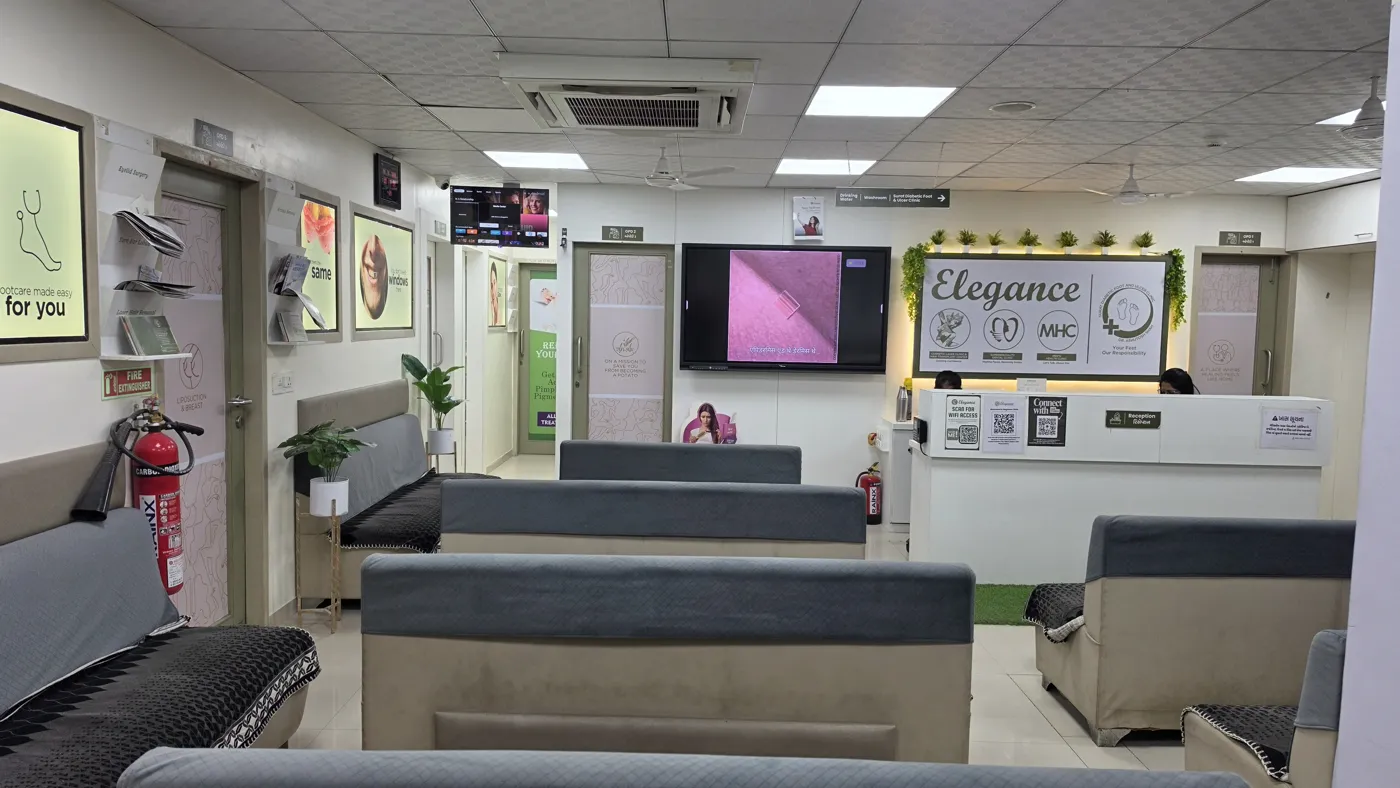
Two centres in Surat

Mon to Sat · 10:00 to 19:00 · By appointment
Mon to Sat · 10:00 to 18:00 · By appointment
Questions patients ask
These come up in almost every consultation. The full list of patient questions is in the education centre.
Send it on WhatsApp and the team will reply.
Suitability depends on the cause of your hair loss, whether it has stabilised, and the quality of your donor area. Many people are better served first by scalp care or medical treatment. An in person examination is the only reliable way to decide.
Hair taken from the resistant donor zone usually keeps growing in its new place. Your original, untreated hair can still thin with time, which is why long term care of native hair matters as much as the surgery.
Neither is better for everyone. FUE avoids a linear scar, while FUT can provide more grafts in selected patients and preserve donor area for later sessions. The choice depends on your donor area, graft needs and hairstyle preferences.
No. Donor hair is limited, and overharvesting can leave a thin, patchy donor area that is difficult to repair. Responsible planning budgets grafts across your lifetime, not just one session.
The procedure is done under local anaesthesia, so most people feel the injections at the start and pressure rather than pain afterwards. Some soreness and swelling in the first few days is common and is managed with prescribed medicines.
Transplanted hairs usually shed within the first few weeks. New growth often starts around the third or fourth month and continues to mature for about a year, and the crown can take longer. Timelines vary between people.
Yes, in selected cases such as a high hairline, traction alopecia, scars or stable female pattern loss with a good donor area. Hormonal and nutritional causes are checked first, because diffuse thinning is often better treated medically.
No. Wearing a helmet, washing your hair regularly and shaving do not cause pattern hair loss. Very tight headwear or hairstyles worn for long periods can cause traction hair loss, which is different.
Book a consultation
Every plan starts with an in person assessment by Dr. Ashutosh Shah. Call or WhatsApp the clinic and our team will get back to you.
Book on WhatsApp
Chat with our team on WhatsApp about any treatment, consultation or appointment.
WhatsApp opens with a short message ready to send. The clinic team replies during working hours.