Hair Restoration Centres at Adajan & Vesu, Surat

Hair loss treatment in Surat

Preserve what you have, restore what you can.

Hair loss treatment in Surat follows diagnosis, never the other way round. Many people improve with medical care, scalp care and lifestyle changes, and not everyone with hair loss needs surgery.

Medical hair treatment

The foundation of most hair loss care.

Medicines can slow thinning and, in many people, improve density. They tend to help more when started early, taken consistently and reviewed under medical supervision. The choice depends on your diagnosis, sex, age, health and plans for pregnancy.

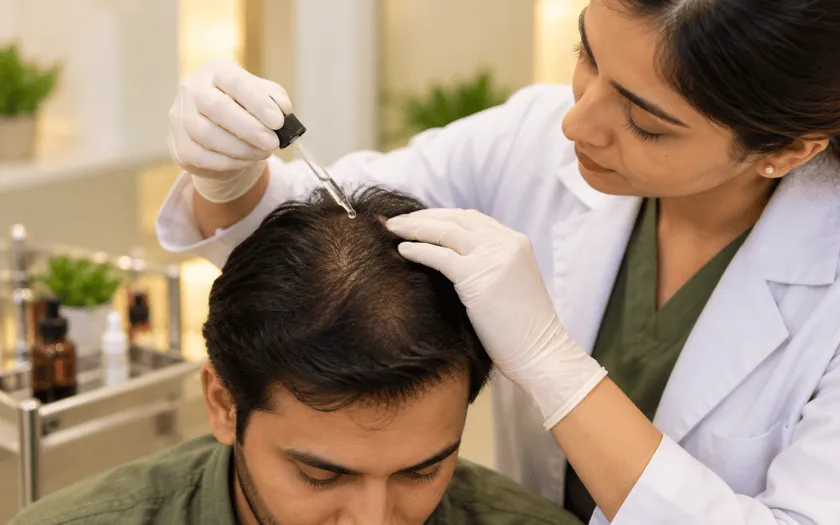
Man applying minoxidil solution to his scalp with a dropper
01

Minoxidil

Topical solution or foam, or supervised low dose oral tablets for selected men and women. An initial shedding phase is common, benefits last only with long term use, and it is avoided in pregnancy and breastfeeding.

Man taking a tablet with a glass of water
02

Finasteride

Oral or topical treatment that lowers DHT in male pattern hair loss. Careful patient selection, discussion of possible adverse effects and medical supervision matter, and pregnant women should not handle crushed or broken tablets.

Man taking a tablet with a glass of water
03

Dutasteride

An oral medicine that blocks DHT more broadly. Its use for hair loss, and topical or injectable routes, is off label in many settings and considered only where medically and legally appropriate, with side effect counselling and follow up.

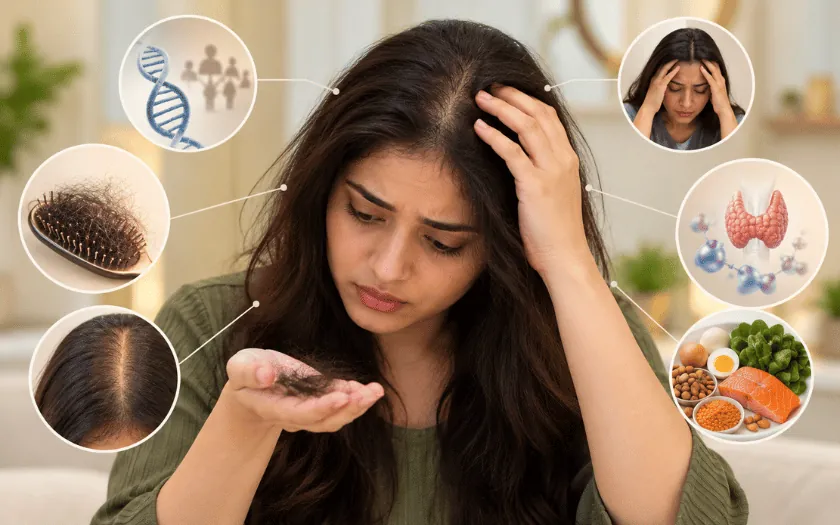
Woman holding shed hair surrounded by common causes of hair loss
04

Anti androgen treatment for women

Spironolactone or other hormonal management for selected women, often in coordination with a gynaecologist or endocrinologist, especially when PCOS is part of the picture.

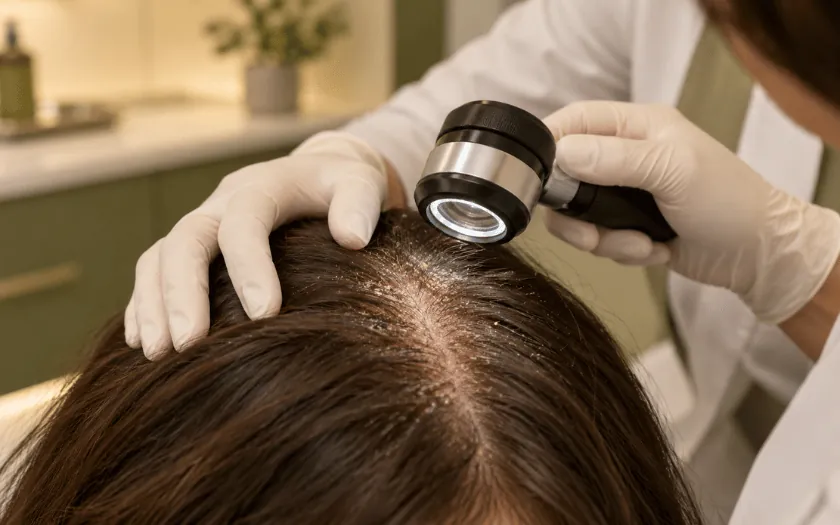
Doctor examining dandruff on a woman's scalp with a dermatoscope
05

Medicated shampoos & scalp care

Antifungal, keratolytic and anti inflammatory preparations, gentle cleansers and the right conditioner. Washing frequency is tailored to your scalp, and oil is not a treatment for lost follicles.

Man taking a supplement beside foods rich in protein, iron and vitamins
06

Nutritional supplementation

Directed at proven deficiencies such as iron, vitamin B12, vitamin D, zinc or protein, not given as a blanket. High dose biotin can interfere with some blood test results.

Man applying minoxidil solution to his scalp with a dropper
07

Peptides & topical serums

Caffeine, adenosine and peptide formulations such as Redensyl, Procapil or Capixyl type products. They may support hair care, but are not equivalent to proven medical treatments.

Read the full guide: Medical hair treatment →

Regenerative & adjunctive therapies

Supportive therapies, explained honestly.

Injectable and regenerative options can support a medical plan in selected patients. Evidence differs widely between them, so each is offered only when it fits your diagnosis, with a clear explanation of what it can and cannot do.

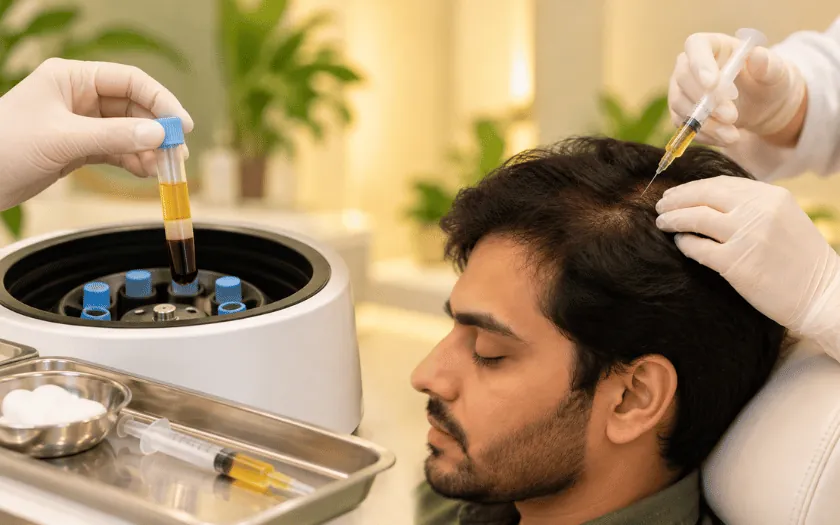
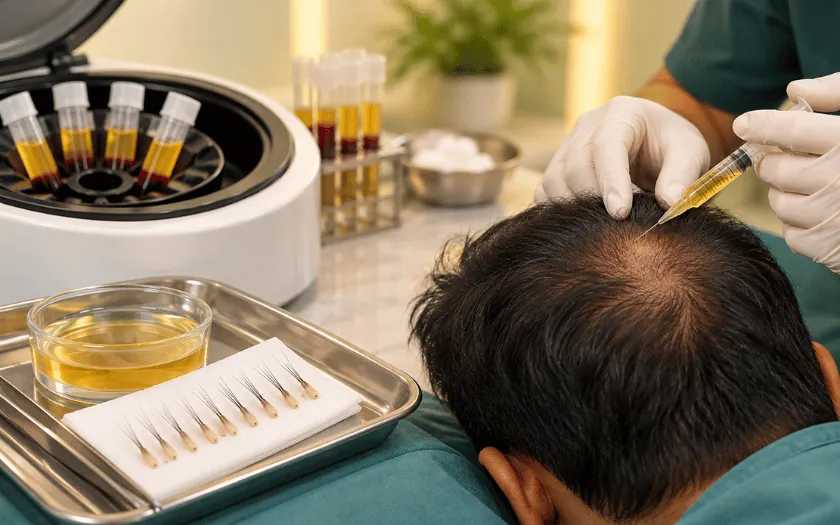
PRP prepared in a centrifuge and injected into the scalp
01

PRP (platelet rich plasma)

Prepared from your own blood and injected into the scalp over a planned schedule, then maintained. Results vary; temporary soreness, redness or swelling can occur, and it is not suitable for everyone.

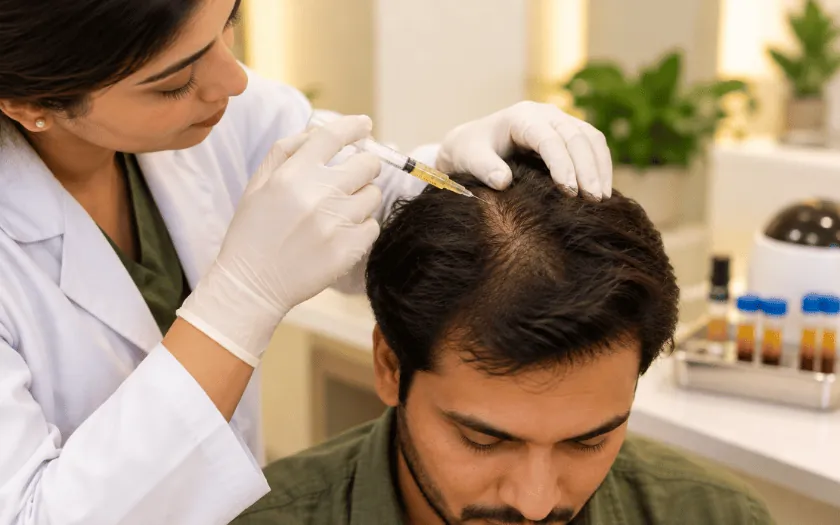
Doctor giving a regenerative injection into a man's scalp
02

Growth factor concentrate

A preparation derived from your own blood platelets, where offered. How it is made, what it contains and how it differs from PRP are explained before any decision.

PRP prepared alongside grafts during an FUE hair transplant
03

Mesotherapy

Microinjections of nutritional cocktails, peptide solutions, non cross linked hyaluronic acid, drug based solutions or combinations. Evidence differs by product.

PRP prepared in a centrifuge and injected into the scalp
04

Hair fillers

Injectable peptide or hyaluronic acid based products used in selected cases over a session plan. Limitations are discussed, and swelling, discomfort or allergy are possible.

PRP prepared alongside grafts during an FUE hair transplant
05

Dutasteride mesotherapy

Small doses of dutasteride injected into the scalp. This may be an off label use and is offered only after informed consent.

Doctor giving a regenerative injection into a man's scalp
06

Exosomes & cell derived products

An emerging area. Regulatory status, preparation quality and evidence vary, and these products do not guarantee regeneration of hair.

PRP prepared in a centrifuge and injected into the scalp
07

Stem cell related treatments

Adipose derived approaches, autologous cell based concepts, conditioned media, exosomes and commercial "stem cell" products are different things. Not every growth factor preparation is a stem cell treatment.

PRP prepared alongside grafts during an FUE hair transplant
08

Threads for scalp

Considered adjunctive and experimental where used. Threads are not a headline hair loss treatment.

Doctor giving a regenerative injection into a man's scalp
09

Botulinum toxin for hair loss

Scalp injections have limited evidence and are not a first line treatment. Salon "hair botox" is a different thing altogether: a conditioning treatment for the hair shaft.

An important note

Support, not a shortcut.

PRP, peptides, fillers and mesotherapy are supportive treatments. They are not a substitute for an accurate diagnosis, and they are most useful alongside the medical and scalp care your condition actually needs.

If a treatment is unlikely to help you, you will be told so plainly.

Read the full guide: Regenerative treatment →

Device based therapies

Light, needles and delivery, in their proper place.

Devices can add to a treatment plan, but they play an adjunctive role. What matters is choosing the right device, using it correctly and keeping expectations realistic.

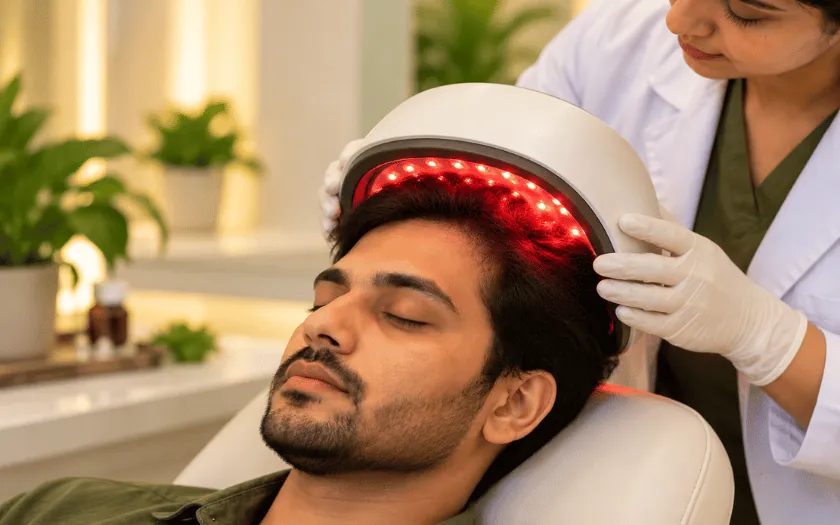
Man receiving low level laser hair growth therapy with a helmet device
01 · Light

Low level laser therapy

Low level laser or light therapy (LLLT) delivered through helmets, caps, in clinic or home devices.

  • Regular use over months is needed
  • Suited to selected pattern hair loss
  • Adjunctive, alongside medical care
  • Eye safety and device quality matter
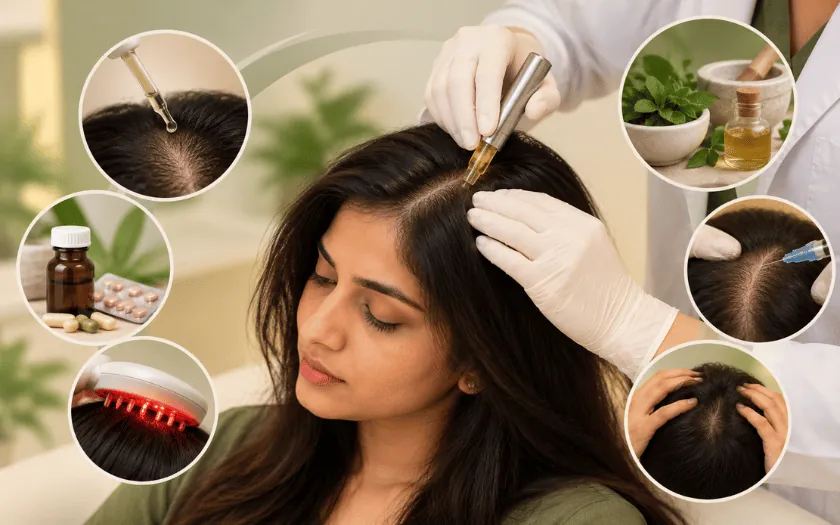
Woman receiving scalp treatment with medical, regenerative and light therapy options
02 · Light

LED light therapy

LED photobiomodulation uses light emitting diodes. LEDs emit broader, non coherent light, while lasers emit a single focused wavelength. They are not interchangeable.

  • Evidence varies between devices
  • Output and wavelength differ widely
  • Used only as a support therapy
PRP prepared in a centrifuge and injected into the scalp
03 · Needling

Microneedling

Controlled scalp needling, often combined with topical treatments, at planned intervals.

  • Sterile technique to prevent infection
  • Not for active infection or inflamed scalp
  • Home derma rollers carry infection and injury risks
Woman receiving scalp treatment with medical, regenerative and light therapy options
04 · Delivery

Electroporation

Transdermal infusion that uses mild electrical pulses to support delivery of topical solutions without needles, where offered.

  • A delivery aid, not a treatment on its own
  • Benefit depends on what is delivered
Man receiving low level laser hair growth therapy with a helmet device
05 · Infusion

Scalp oxygenation

Oxygen or infusion based scalp treatments may feel refreshing and help cleanse the scalp.

  • No reliable evidence that oxygen regrows hair
  • Offered only with clear, realistic expectations

Read the full guide: Device based therapy →

Patient waiting lounge at Elegance Clinic, Surat

Nutritional & deficiency correction

Correcting deficiency, not selling drips.

When tests confirm a deficiency that may be contributing to hair loss, it is corrected safely and monitored. IV therapy is not a routine cosmetic treatment; it needs a medical indication, investigations and supervision.

  1. i

    Iron infusion for documented deficiency

    Considered when iron deficiency is confirmed and oral iron is not tolerated, not effective or not fast enough, given under medical supervision.

  2. ii

    Vitamin B12 and vitamin D

    Replacement guided by test results, choosing between oral and injectable routes according to the level and the cause of the deficiency.

  3. iii

    Protein and nutrition counselling

    Practical dietary guidance, with a dietician consultation when eating pattern or weight loss needs closer support.

  4. iv

    Monitoring and referral

    Repeat tests to confirm correction and avoid excess, and endocrinology referral when a hormonal or metabolic cause is suspected.

Read the full guide: Nutritional treatment →

Lifestyle & multidisciplinary management

Caring for the whole person, not just the scalp.

Hair often reflects general health. Everyday habits and, when needed, the right specialist can make medical treatment work better and help results last.

Man resting after exercise beside a healthy meal and water
01

Sleep

Regular, adequate sleep supports recovery and hormonal balance.

Man resting after exercise beside a healthy meal and water
02

Stress management

Practical ways to manage ongoing stress, which may contribute to shedding.

Man taking a supplement beside foods rich in protein, iron and vitamins
03

Exercise

Regular activity supports metabolic health, including insulin sensitivity.

Man taking a supplement beside foods rich in protein, iron and vitamins
04

Protein intake

Enough good quality protein in daily meals, since hair is made largely of protein.

Man resting after exercise beside a healthy meal and water
05

Sustainable weight loss

Steady, balanced weight loss rather than crash diets, which can trigger shedding.

Man resting after exercise beside a healthy meal and water
06

Stopping smoking

Support to quit, as smoking harms circulation and general health.

Man taking a supplement beside foods rich in protein, iron and vitamins
07

Hair care changes

Looser hairstyles, less heat and fewer harsh chemical treatments.

Patient waiting area at Elegance Clinic, Surat
08

Specialist referral

Coordination with an endocrinologist, gynaecologist or dietician when needed.

Doctor examining a man's scalp with a digital trichoscope and screen
09

Psychological support

Compassionate referral for trichotillomania and the emotional impact of hair loss.

Doctor examining a man's scalp with a digital trichoscope and screen
10

Physician evaluation

Assessment for systemic illness when symptoms suggest a wider health problem.

Read the full guide: Lifestyle and specialist care →

Questions patients ask

Straight answers, before you decide.

Honest answers to common questions about hair loss treatment. Your own plan depends on your diagnosis.

No. PRP is an optional supportive therapy that may help some people. Many patients do well with medical treatment and scalp care alone, and PRP is suggested only when it suits your diagnosis.

Minoxidil works only while it is used. If it is stopped, hair gained or maintained with it is usually lost gradually over the following months. How long to continue is a decision made with your doctor.

DHT levels return to their previous level, and pattern hair loss usually resumes its natural course over time. Discuss any wish to stop or change treatment with your doctor rather than stopping abruptly on your own.

Supplements help mainly when there is a real deficiency. They do not treat pattern hair loss by themselves, and high dose biotin can interfere with some blood test results.

There is no reliable scientific evidence that masturbation causes hair loss. Pattern hair loss is driven mainly by genetics and the sensitivity of hair follicles to DHT.

No. Shaving cuts hair at the surface and does not change the follicle beneath. Regrowing hair can feel coarser because of its blunt tip, but it is not thicker or more numerous.

No. Salon "hair botox" is a conditioning treatment for the hair shaft and contains no botulinum toxin. Scalp botulinum toxin injections are a medical procedure with limited evidence for hair loss and are not a first line treatment.

No. Many people are well served by medical treatment, and some conditions need to be stable before surgery is considered. A transplant moves existing donor hair and does not stop native hair from thinning, so medical care often continues afterwards.

Book a consultation

Begin with a conversation.

Every plan starts with an in person assessment by Dr. Ashutosh Shah. Call or WhatsApp the clinic and our team will get back to you.

Call NowBook Consultation