
Hair replacement
Scalp micropigmentation in Surat
Tiny dots of pigment that reduce scalp show or recreate a shaved look.
Scalp micropigmentation in Surat, often called SMP, places fine dots of pigment in the scalp skin to imitate hair follicles. It can make thinning areas look denser, recreate a closely shaved look or soften scars. It does not grow hair, and the pigment fades over the years, so touch ups are usually needed.
Last updated · Medical review: Dr. Ashutosh Shah, M.B.B.S., M.S., M.Ch., D.N.B. (Plastic Surgery), Gujarat Medical Council Reg. No. G-26257
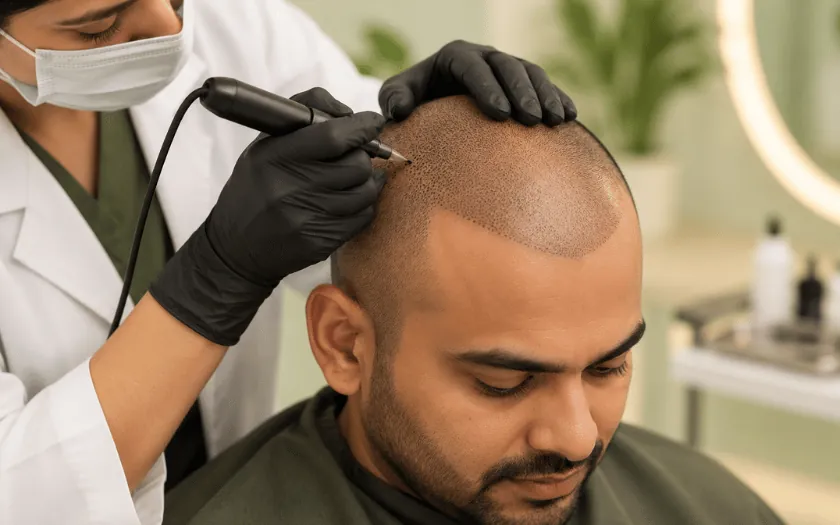 Scalp assessed first
What scalp micropigmentation is
SMP is a specialised form of cosmetic tattooing for the scalp. Instead of drawing lines, very small dots of pigment are placed close together in the upper layers of the skin. From normal viewing distance these dots read as tiny hair follicles or as the shadow of short hair, which reduces the contrast between hair and scalp.
Because it is pigment in the skin, SMP is a camouflage. It adds no length or volume, and it does not affect the follicles or slow hair loss. If pattern hair loss is still active, the area of thinning can widen around the pigment over time, which is why diagnosis and, where suitable, medical treatment are part of planning.
Who SMP can suit
SMP may suit people who want a low maintenance look day to day and are comfortable with the idea of pigment in the skin. It is often considered for:
- Diffuse thinning, to reduce scalp show between existing hairs
- Advanced loss in people happy to keep a closely shaved style
- Scars from earlier FUT strip surgery, FUE donor marks, injury or other scalp surgery
- People who are not transplant candidates or prefer to avoid surgery
- Adding the look of density behind a transplanted hairline
Who should avoid or delay SMP
- Anyone with active scalp inflammation, infection, psoriasis or dermatitis in the area
- Active or unstable scarring alopecia
- A tendency to form keloid or thick raised scars
- Known allergy to tattoo pigments
- Pregnancy and breastfeeding, when it is usually postponed
- Conditions that affect healing or bleeding, such as uncontrolled diabetes or blood thinning medicines, until discussed with your doctor
Density, shaved head and scar camouflage
Density effect
For people who keep their hair longer, pigment is placed between existing hairs so that the scalp shows through less. The hair still carries the look; SMP simply darkens the background.
Shaved head effect
For people with advanced loss who keep their hair very short, rows of fine dots can recreate the look of closely shaved stubble with a defined hairline. The hairline should be designed to suit your age and face, since a very low or sharp line can look unnatural as you get older.
Scar and donor camouflage
SMP can soften the appearance of a linear strip scar, scattered FUE marks in an overharvested donor area, or other settled scalp scars. Scar tissue takes pigment differently from normal skin, so more than one session is often needed and results vary. Scars should be fully healed and stable first. See also scarring alopecia.
How SMP usually works
- Medical assessment
The cause of hair loss, the scalp skin and any scars are examined, and other options are discussed.
- Design and shade
The hairline, the area to be covered and the pigment shade are planned to suit your skin tone, hair colour and age.
- Patch test
A small test area can show how your skin reacts and how the pigment settles before full treatment.
- Treatment sessions
SMP is usually built up over more than one session, with healing time in between, so density and shade can be adjusted gradually.
- Aftercare and review
You follow written aftercare, and the result is reviewed once the skin has settled.
SMP may be offered or arranged after assessment. Whoever performs it, sterile technique, single use needles and suitable pigments are essential.
Aftercare and healing
The scalp is often red and slightly tender for a short time after each session, and small flakes or crusts can form as the skin heals. The dots may look darker or sharper at first and soften as the skin settles.
- Keep the area dry and avoid heavy sweating for the period you are advised
- Do not pick or scratch at crusts
- Avoid swimming, steam rooms and direct sun while the skin heals
- Use only the products recommended for the healing period
- Seek review for spreading redness, pus, pain or swelling
Colour change, fading and touch ups
SMP is long lasting but not permanent. Pigment in the skin fades gradually, and how quickly varies with skin type, sun exposure, skin care products and the depth of placement. Touch up sessions are usually needed over the years to keep the dots crisp and the shade even.
If pigment is placed too deep or an unsuitable pigment is used, dots can spread and blur, or shift towards a blue or green tone. Correcting this can be difficult, and laser removal, where suitable, may need several sessions and may not clear pigment completely. Careful planning at the start matters more than speed.
- Reduce scalp show in thinning areas
- Recreate a closely shaved look
- Soften the look of settled scars
- Need no daily application
- Grow hair or halt hair loss
- Add length or volume to long hair
- Stay exactly the same shade for life
- Be removed easily if you change your mind
SMP alongside a hair transplant
SMP and transplantation are not rivals. A transplant moves living hair into key areas such as the hairline, and SMP can add the look of density behind it or camouflage donor marks. For people with limited donor hair, this combination can make the most of a finite supply. The order and timing are planned together, and the scalp must be fully healed after surgery before any pigment is placed. Read about donor area planning.
- A medical diagnosis before any pigment is placed
- Honest comparison of SMP, transplant, systems and medical treatment
- Hairline design that allows for future hair loss
- Consultations at two centres in Surat: Adajan and Vesu
Suitability, risks and recovery differ for each patient and are discussed during consultation.
Is SMP right for your scalp?
An examination helps decide whether SMP, a transplant, treatment or a combination suits you.
Where SMP is used
Scalp micropigmentation, common uses
Which use suits you depends on your hair, your scalp and the look you want to keep.

SMP questions
Still have a question?
What people ask most about scalp micropigmentation. Your own plan follows an examination.
Most people describe discomfort rather than pain, and sensitivity varies across the scalp. Scar tissue and the crown can feel different from other areas. Ways to reduce discomfort can be discussed beforehand.
Usually more than one, so density and shade can be built up gradually as the skin heals. The number depends on the area, your skin and whether scars are being treated.
It can if pigment is placed too deep or an unsuitable pigment is used. Suitable pigments, correct depth and sun protection reduce the risk of unwanted colour change.
The dots imitate dark follicles or stubble, so the contrast with grey or white hair needs careful thought. A lighter shade, or keeping hair very short, may help. This is discussed before any treatment.
Often yes. Pigment in the skin does not usually stop a later transplant, but the plan should account for both. Tell your surgeon about any SMP so the hairline and density can be planned together.
Heavy sweating, swimming and strong sun are usually avoided while the skin heals after each session. Longer term, sun protection helps the pigment fade more slowly.
Pigment can sometimes be lightened with laser, but removal may need several sessions and may not clear it completely. This is why design, shade and a patch test deserve time before treatment.
Book a consultation
Begin with a conversation.
Every plan starts with an in person assessment by Dr. Ashutosh Shah. Call or WhatsApp the clinic and our team will get back to you.
Book on WhatsApp
Chat with our team on WhatsApp about any treatment, consultation or appointment.
- Ask about any treatment
- Book a consultation
- Get directions to our clinics
WhatsApp opens with a short message ready to send. The clinic team replies during working hours.