
Dark hair responds better
The laser needs pigment in the hair to work. Fine, light, red, grey or white hair responds poorly or not at all.
Smooth skin, planned carefully.
Laser hair reduction in Surat is about removing unwanted hair, the opposite of hair restoration. Every course begins with a look at your skin, your hair and, where needed, the hormones behind it.
How laser reduction works
Laser energy is absorbed by the dark pigment in the hair shaft and passed to the follicle, which is weakened so that regrowth becomes finer and sparser.
The laser needs pigment in the hair to work. Fine, light, red, grey or white hair responds poorly or not at all.
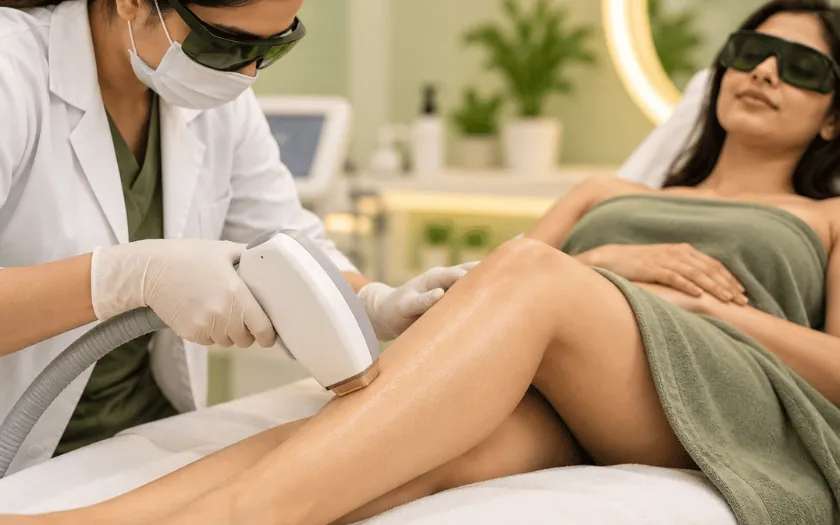
Only hairs in the active growth phase respond at a time, so treatment is spread over several sessions weeks apart.

Skin type, tan, medicines and skin conditions guide the choice of settings, so darker skin can be treated with appropriate care.
Treatment areas
Each area has its own hair type, skin sensitivity and goals. The plan, spacing and aftercare are adjusted to suit where you are being treated and why.
Back, chest and shoulders, beard shaping and the neck. Results and session numbers vary with hair density.
Face, underarms, arms, legs and bikini line, with attention to hormonal causes of excess hair.
Several areas planned together, with a session plan that suits your skin type and schedule.
Upper lip, chin and jawline in women and men. Maintenance sessions are often needed over time.
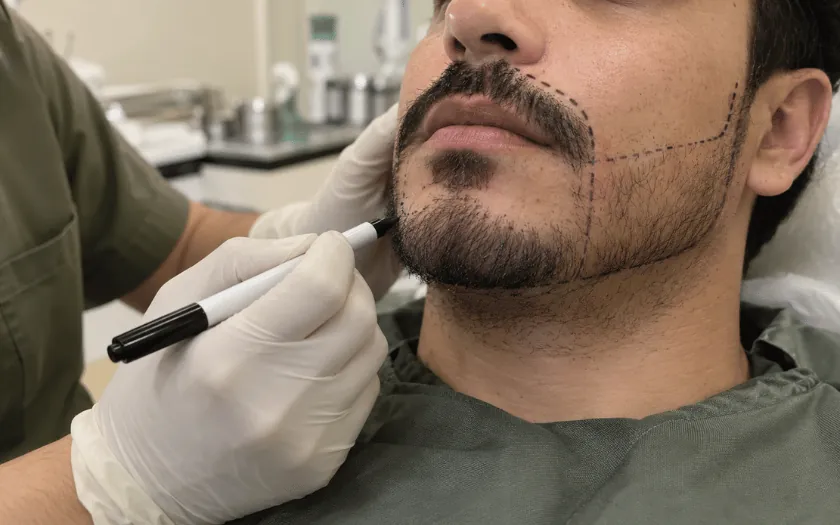
Defining the cheek and neck lines, which can also reduce ingrown hairs and shaving bumps.
A common starting area. Simple aftercare includes avoiding irritating products for a short while.
Larger areas treated in planned sessions, with care for sun exposure between visits.
Full or partial areas, with settings chosen for your skin tone and hair thickness.
Treated discreetly, with privacy respected throughout and clear guidance on aftercare.
Facial and body hair reduction as part of gender affirming care, in a respectful and private setting. Light hairs may need electrolysis.
Hormonal evaluation comes first. Laser tends to work better alongside medical treatment, and maintenance sessions are usually expected.
Hormonal change can bring coarser facial hair. Dark hairs may respond to laser, while grey or white hairs need electrolysis.
Some surgeries need hair cleared from the area first. Laser and electrolysis are planned on a timeline set with your surgical team.

Around donor or graft areas, careful settings protect hair that may be needed for restoration now or later.
White & grey hair
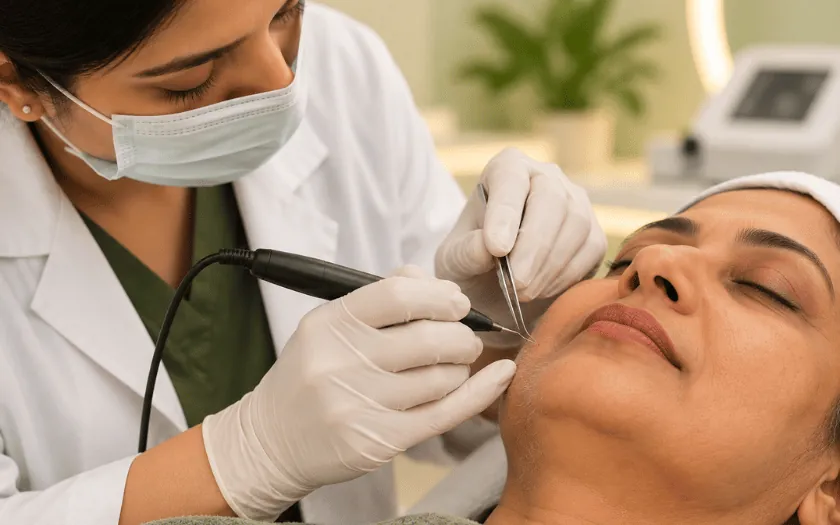
Laser does not reliably treat white or grey hair because these hairs lack the pigment the laser needs. Electrolysis treats each follicle directly, so it works regardless of hair colour.
A very fine probe is placed into each follicle and a small current is applied to destroy it. It is a needle based method that can give lasting removal of treated hairs.
Where dark and light hairs are mixed, laser may clear the dark hairs first and electrolysis can follow for the rest.
Hairs are treated one at a time, so a course usually takes several sessions spread over months.
Accurate probe placement and the right energy matter a great deal. Experience reduces discomfort and skin injury.
Redness and swelling are common for a short time. Small scars or changes in skin colour can occur, especially with poor technique or picking.
Hair removal near scars
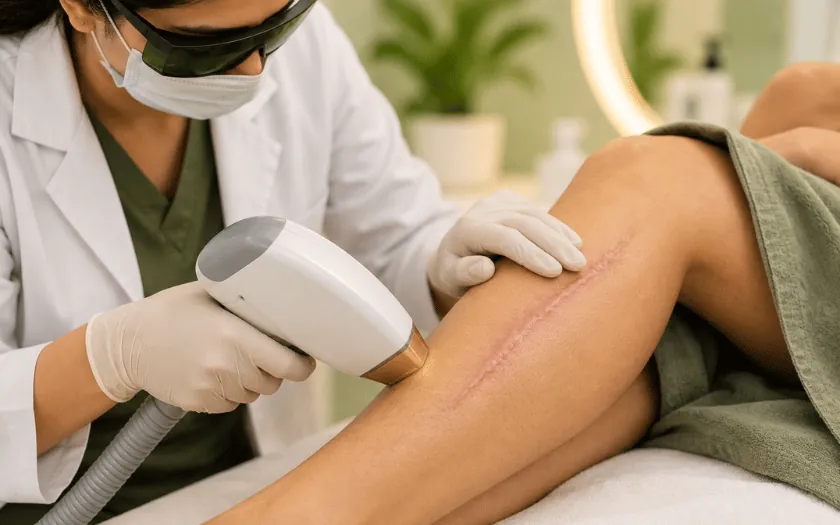
Scar tissue and the skin around it can react differently to heat. Treating near a scar is possible in many cases, but it calls for extra caution.
Lower or adjusted settings may be used near scars to reduce the chance of burns, blistering or colour change.
The scar should be mature and settled. Keloid tendency, recent surgery and active skin conditions are checked before treatment.
A small test area is treated first and reviewed, so the settings can be confirmed before a wider session.
What to expect
Your skin type, hair colour, medical history and medicines are reviewed. Where hormonal causes are suspected, an evaluation may be advised first.
A small area is treated to check how your skin responds and to confirm safe settings.
Several sessions are planned weeks apart to catch hairs as they enter the growth phase. Sun protection between visits helps protect the skin.
Some hairs may return over time, especially with hormonal causes. Occasional maintenance sessions can keep the area smooth.
Questions patients ask
Clear expectations make laser hair reduction more comfortable and more satisfying. Here are the questions we hear most.
Laser gives hair reduction, not guaranteed removal. Many people see a lasting drop in hair growth, and remaining hairs are often finer, but some regrowth can occur and maintenance sessions may be needed.
Most people describe a quick snapping or warm sensation. Cooling and settings adjusted to the area help keep it comfortable. Sensitive areas such as the upper lip or bikini line may feel stronger.
It varies with the area, hair colour and thickness, skin type and hormones. Several sessions spaced weeks apart are usually needed, and a plan is made after your assessment.
Yes, in many cases, with appropriate laser settings chosen after a skin assessment and patch test. Darker skin needs more careful energy selection to reduce the risk of burns or pigment change.
Not reliably. Laser needs pigment in the hair, which white and grey hair lack. Electrolysis, which treats each follicle individually, is the usual option for these hairs.
Laser can reduce facial hair in PCOS, but the hormones keep stimulating new growth. A hormonal evaluation and medical treatment alongside laser often give better results, and maintenance sessions are usually needed.
No. Laser hair reduction removes unwanted hair. It is a separate service from hair restoration, which aims to regrow or replace lost hair on the scalp, brows or beard.
Book a consultation
Every plan starts with an in person assessment by Dr. Ashutosh Shah. Call or WhatsApp the clinic and our team will get back to you.
Book on WhatsApp
Chat with our team on WhatsApp about any treatment, consultation or appointment.
WhatsApp opens with a short message ready to send. The clinic team replies during working hours.