
Hair loss and hair transplant blog
Read, understand, then decide.
Clear, practical articles to help you understand hair loss and your treatment options.

DHT and Hair Loss: How the Hormone Thins Hair and What Can Help
DHT and hair loss are linked through miniaturisation: in people with inherited sensitivity, DHT slowly shrinks scalp follicles. Here is how it works and which treatments can slow it.
Read article →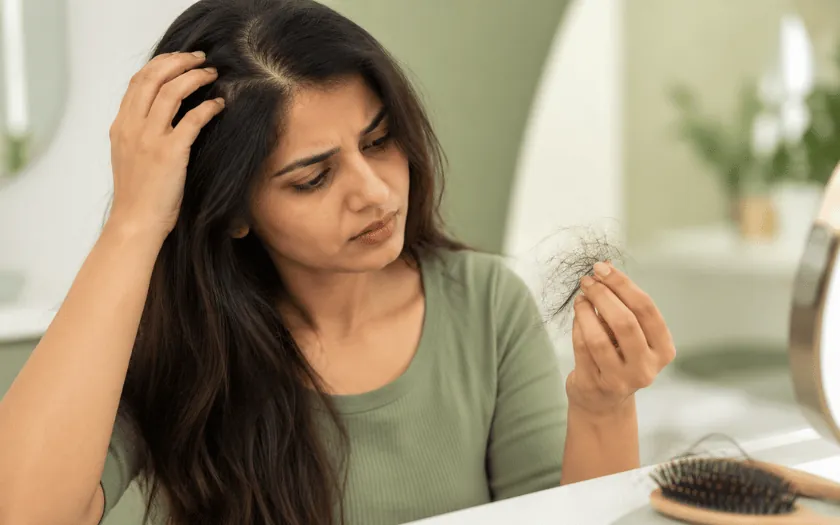
Stress and Hair Loss: Why Hair Sheds After a Hard Time and When It Recovers
Stress and hair loss are linked. A major physical or emotional stress can push many hairs into the resting phase, causing sudden shedding two to three months later. It usually settles.
Read article →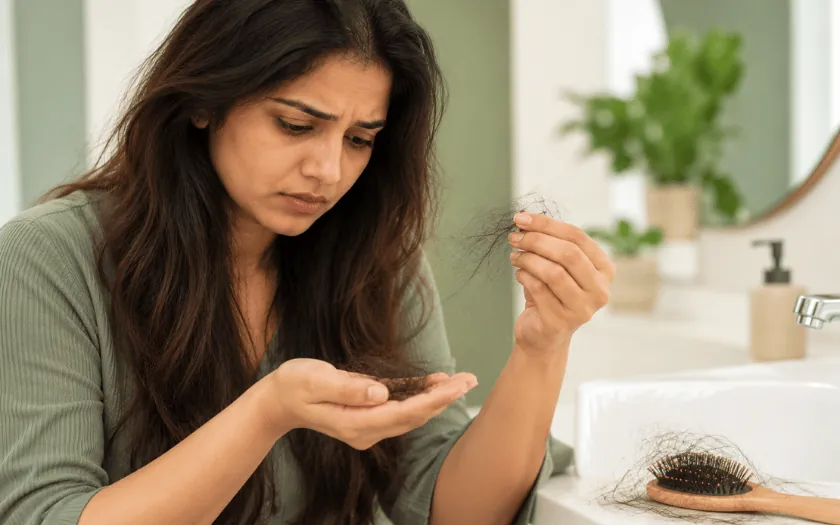
Postpartum Hair Loss: Why It Happens, When It Stops and How to Care for Your Hair
Postpartum hair loss is heavy shedding that often starts around three months after birth as estrogen levels fall. It usually peaks near four months and settles by the baby's first birthday.
Read article →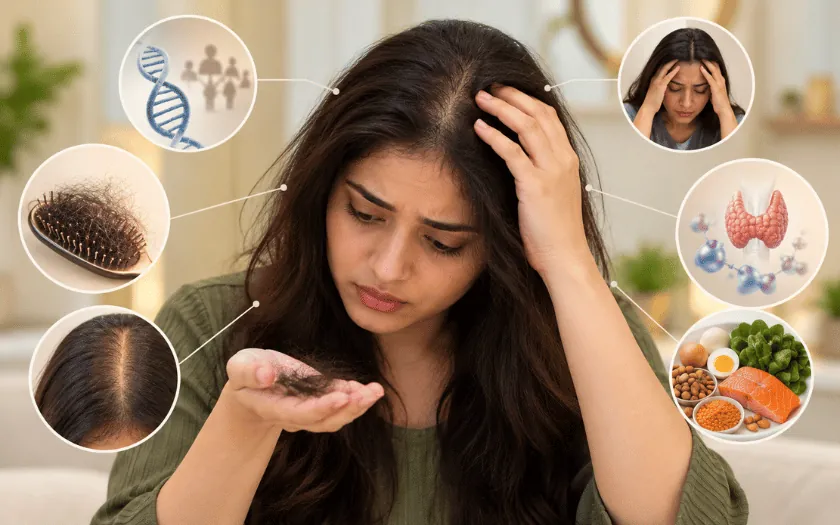
Thyroid and Hair Loss: How an Underactive or Overactive Thyroid Affects Your Hair
Thyroid and hair loss are linked because thyroid hormones help control the hair growth cycle. Both an underactive and an overactive thyroid can cause diffuse shedding, which often improves with treatment.
Read article →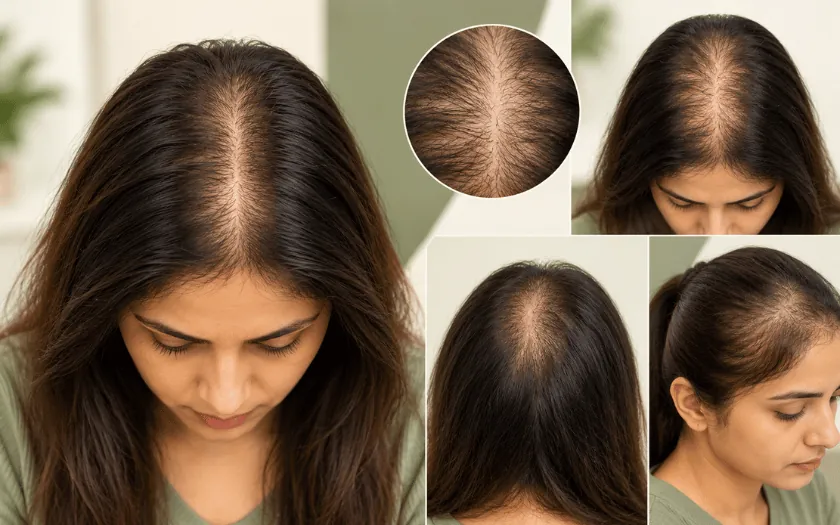
PCOS Hair Loss: Why Hormones Thin Scalp Hair and What Treatment Can Do
PCOS hair loss is scalp thinning linked to higher androgen levels in polycystic ovary syndrome. It usually widens the parting and thins the crown. Treatment aims to slow it and needs patience.
Read article →
Iron Deficiency Hair Loss: Low Ferritin, Anaemia and What Testing Can Show
Iron deficiency hair loss usually shows as diffuse shedding, most often in women. Low iron stores, measured by ferritin, can contribute to hair fall, and a blood test is the safe first step.
Read article →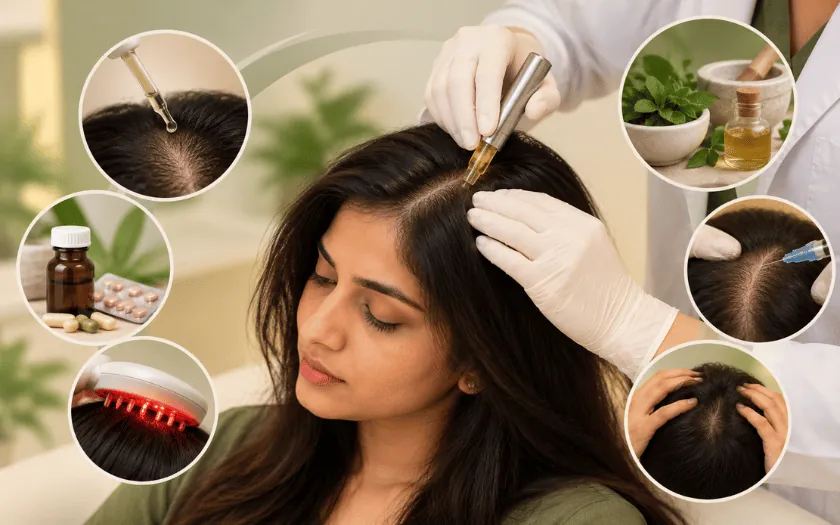
How to Stop Hair Fall: What Actually Helps and When to See a Doctor
How to stop hair fall depends on the cause. Find the trigger first, correct what can be corrected, and use proven medical treatment for pattern hair loss.
Read article →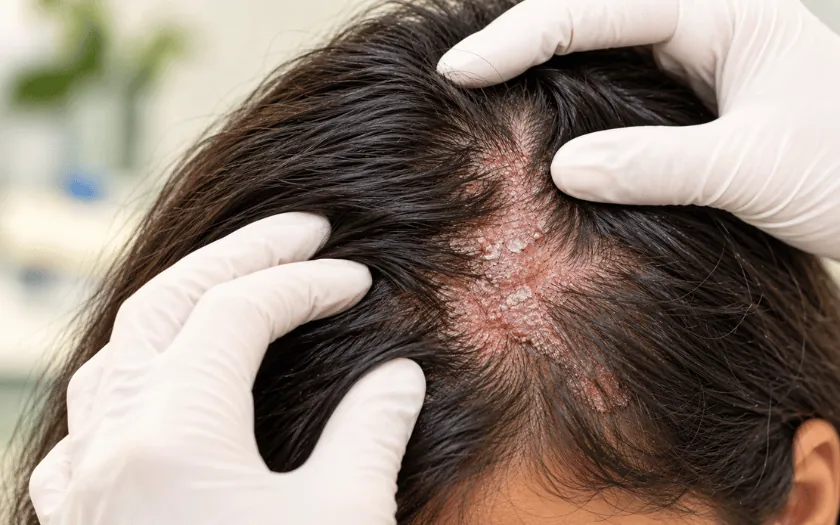
Scalp Psoriasis vs Dandruff: How to Tell the Difference
Scalp psoriasis vs dandruff: dandruff gives fine loose flakes, while scalp psoriasis forms thick, raised, well defined patches with silvery or grey scale. Here is how to tell them apart.
Read article →
Biotin for Hair: Does It Really Help Hair Loss?
Biotin for hair helps mainly when you are truly deficient, which is uncommon. For most people with hair loss, extra biotin has little evidence behind it, and it can upset some blood tests.
Read article →
Does Minoxidil Work? Results, Timeline and Shedding Explained
Does minoxidil work? For many people with early pattern hair loss it slows thinning and regrows some hair, but results take months, vary widely and last only while it is used.
Read article →
Minoxidil vs Finasteride: Which Hair Loss Medicine Suits You?
Minoxidil vs finasteride: minoxidil stimulates follicles to grow, while finasteride lowers DHT to slow male pattern loss. They work differently, and many men use both under medical advice.
Read article →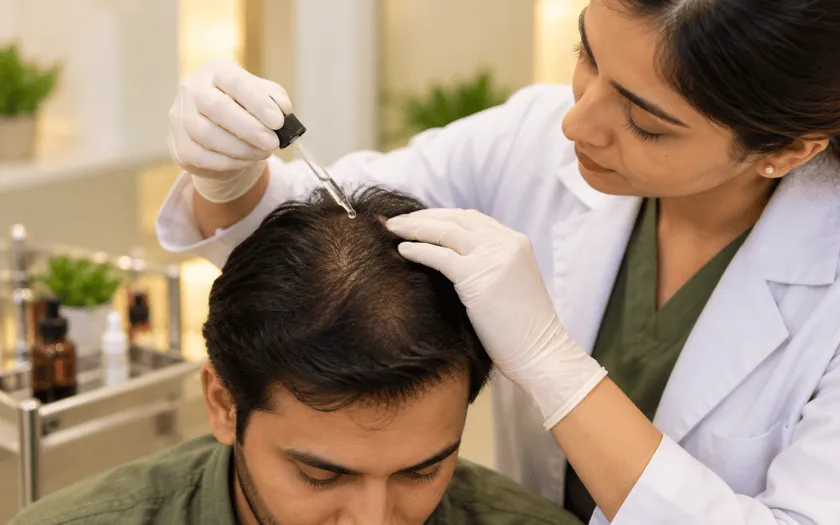
Finasteride Side Effects: What Men Should Know Before Starting
Finasteride side effects are uncommon for most men, but they can include reduced sex drive, erection or ejaculation problems and mood changes. Knowing the warning signs helps you use it safely.
Read article →Book a consultation
Begin with a conversation.
Every plan starts with an in person assessment by Dr. Ashutosh Shah. Call or WhatsApp the clinic and our team will get back to you.
Book on WhatsApp
Chat with our team on WhatsApp about any treatment, consultation or appointment.
- Ask about any treatment
- Book a consultation
- Get directions to our clinics
WhatsApp opens with a short message ready to send. The clinic team replies during working hours.