Hair replacement
Permanent makeup in Surat
Pigment work for brows, scars, the hairline and reconstruction, used thoughtfully.
Permanent makeup in Surat, also called cosmetic tattooing or micropigmentation, places pigment in the skin to rebuild eyebrows, soften settled scars, add depth to a hairline or restore the look of an areola after reconstruction. Despite the name, it fades over the years, and results depend on your skin.
Last updated · Medical review: Dr. Ashutosh Shah, M.B.B.S., M.S., M.Ch., D.N.B. (Plastic Surgery), Gujarat Medical Council Reg. No. G-26257
 Skin assessed first
What permanent makeup means
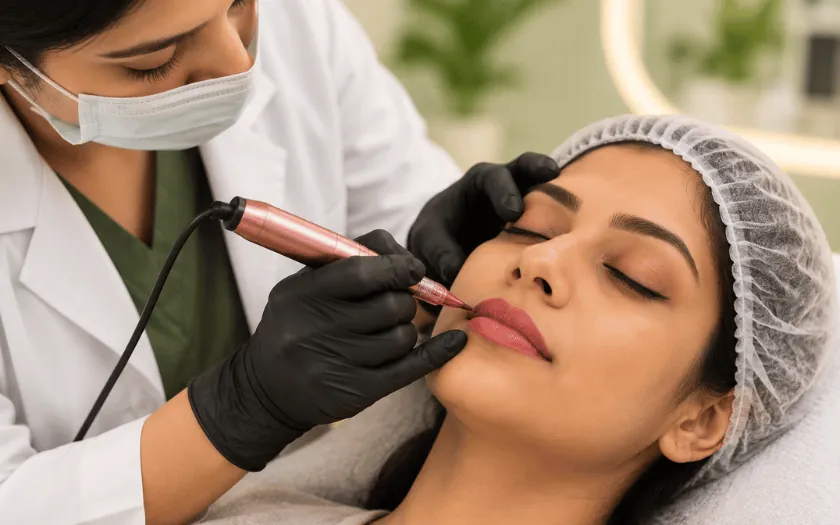
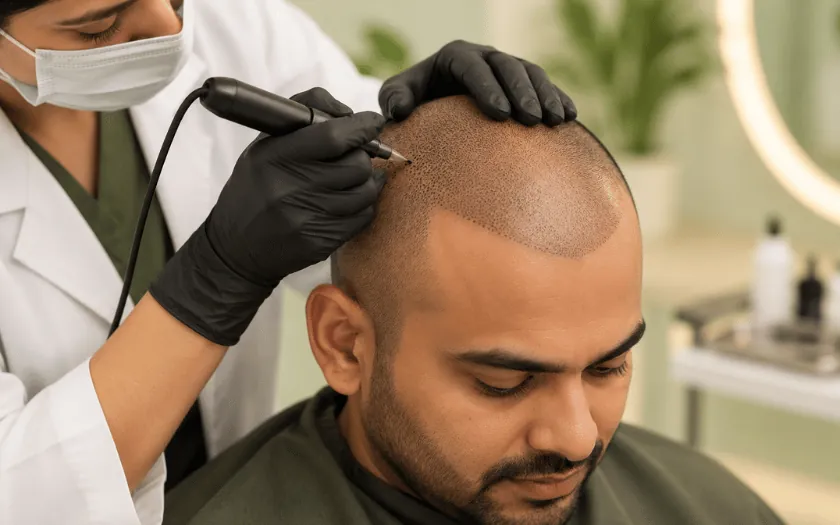
Permanent makeup is an umbrella term for cosmetic tattooing of the face and body. Pigment is placed in the upper layers of the skin with fine needles, either by hand or with a small machine, to create colour, shape or the illusion of hair. Microblading of the brows and scalp micropigmentation are two well known forms.
The word permanent can mislead. Pigment in the skin usually fades gradually and may change tone over time, so most people need occasional top ups. At the same time, it does not wash off, and removal can be difficult. That combination is why planning, shade choice and a patch test deserve care.
In a hair restoration setting, permanent makeup is used mainly for camouflage: rebuilding brows, reducing the contrast of scars, and adding visual depth where hair is thin. Some reconstructive uses, such as areola pigmentation, also fall under the same technique.
Eyebrow simulation
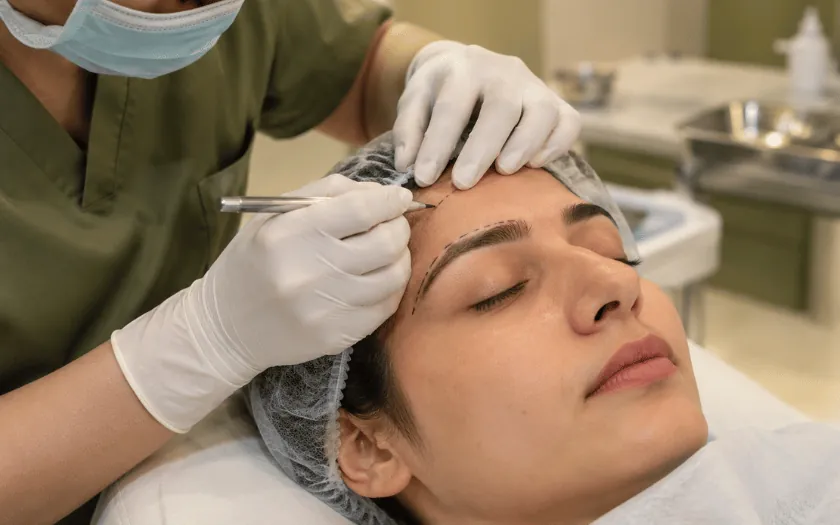
Brows can be rebuilt in different styles depending on the skin and the look you want:
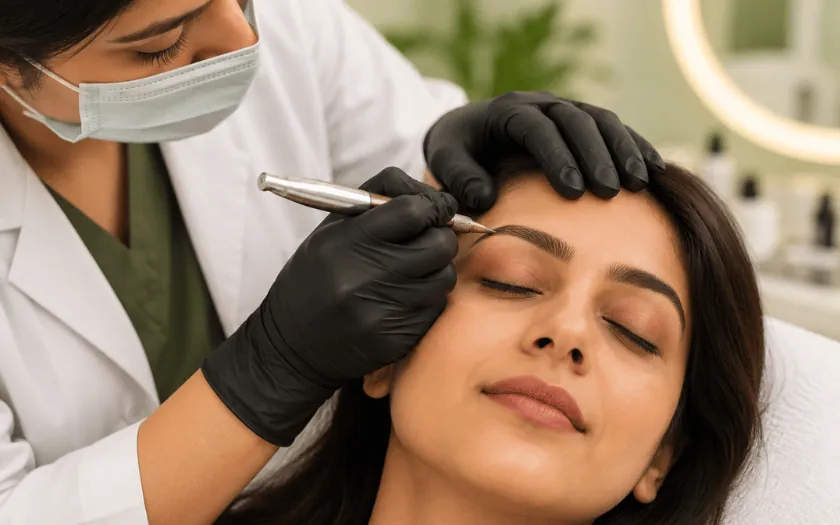
- Stroke technique imitates individual hairs and suits drier or normal skin. See microblading.
- Powder or shaded brows give a soft, filled in look and often hold better in oily skin.
- Combination brows use strokes at the front and shading through the body of the brow.
Where brows are absent because of alopecia areata, thyroid disease or other conditions, the cause should be assessed first. An eyebrow transplant may be discussed where real hair is wanted and the cause is stable.
Scar camouflage
Pigment matched to the surrounding skin or hair can reduce the contrast of a settled scar, for example a pale scar on the scalp, face or body. It does not remove the scar, change its texture or flatten it.
- The scar should be fully mature: flat, pale and no longer red or healing
- Raised, thick or keloid scars are generally not suitable
- Scar tissue takes pigment unevenly, so more than one session is often needed
- Skin coloured pigment does not tan, so the match can look different after sun exposure
Conditions that can spread after skin injury, such as active vitiligo, need specialist advice before any pigment work. For scars on the scalp, scalp micropigmentation or a scar hair transplant may also be compared.
Hairline visual enhancement
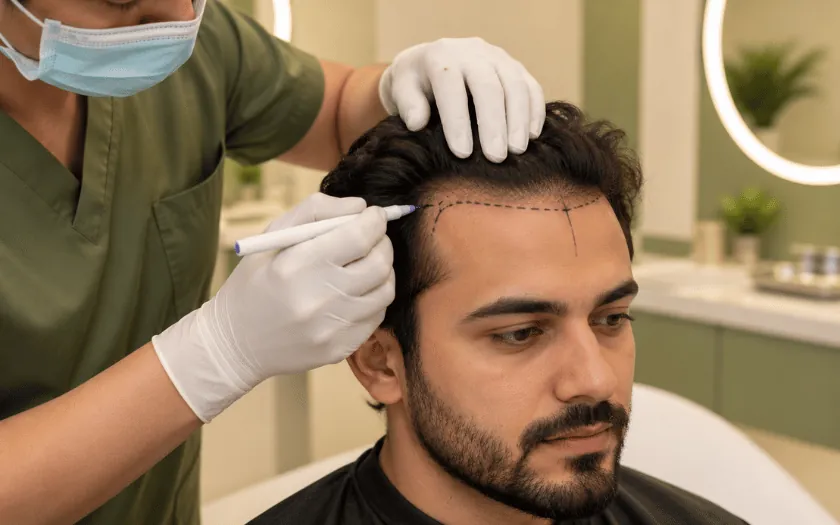
Subtle pigment along a hairline can soften a sharp edge, reduce the see through look of a thin hairline, or add depth behind transplanted hair. It is usually most natural when it is understated. A hairline designed with pigment should allow for future hair loss, because a line that suits you now may look out of place in later years. Read about hairline design.
Areola and reconstructive work
After breast reconstruction, the nipple and areola may be absent or pale. Areola micropigmentation can restore colour and, with shading, the appearance of depth. This is sensitive work that should be coordinated with the treating surgeon.
- Healing after surgery should be complete before pigment is placed
- Skin that has had radiotherapy can heal differently and needs extra care
- Colour is matched to the other side or to what looks natural for you
- Suitability is assessed individually
Safety, patch testing and who should avoid it
Pigment work breaks the skin, so hygiene and skin health come first. Single use needles, sterile technique and suitable pigments are essential. A patch test can show whether your skin reacts to the pigment or numbing cream before full treatment.
Possible effects include redness, swelling, infection, allergic reaction, uneven colour, blurring, colour change as the pigment fades and, rarely, scarring. Permanent makeup is usually avoided or postponed with:
- Active infection, eczema, psoriasis or acne in the area
- A tendency to keloid or thick raised scars
- Known pigment allergy
- Pregnancy and breastfeeding
- Recent isotretinoin use or medicines that affect healing, until your doctor advises
- Uncontrolled diabetes, bleeding disorders or blood thinners, until discussed with your doctor
Aftercare and fading
Treated skin is often red and may flake as it heals. Keep it clean and dry as advised, do not pick at it, and avoid sun, swimming and steam while healing. Over the years, sun protection helps the pigment fade more slowly, and top ups keep the colour even. Permanent makeup may be offered or arranged after assessment.
How we approach pigment work
At Elegance Clinic, pigment work is considered alongside every other option. A scar may respond better to medical scar treatment or a scar hair transplant; thin brows may have a treatable cause. The skin, scar or hair loss is assessed first, so pigment is chosen for the right reason.
- Medical assessment of the skin, scar or hair loss first
- Coordination with the treating surgeon for reconstructive work
- Honest guidance on fading, top ups and removal
- Consultations at two centres in Surat: Adajan and Vesu
Suitability, risks and recovery differ for each patient and are discussed during consultation.
Considering pigment work?
We assess the skin, scar or hair loss first and help you compare every option.
Permanent makeup options
Pigment work, used thoughtfully
Each use has its own suitability checks. The right choice follows an assessment of your skin.
Permanent makeup questions
Still have a question?
Clear answers about pigment work. Suitability is confirmed only after your skin is examined.
Not entirely. Pigment usually fades gradually and can change tone over the years, so occasional top ups are common. It also does not wash off, and removal can be difficult.
A small test can show whether your skin reacts to the pigment or the numbing cream, and how the colour settles in your skin, before a larger area is treated.
Usually not well. Pigment usually works better on scars that are mature, flat and pale. Red, raised or keloid scars often need medical treatment first, and some are not suitable for pigment at all.
Only once the reconstructed area has fully healed and the treating surgeon agrees. Skin that has had radiotherapy may need more time and extra care.
Most people can. A few report temporary warmth or tingling in treated areas during a scan. Tell the radiology team about any cosmetic tattooing beforehand.
Minor issues can sometimes be adjusted as the pigment fades. Larger changes may need lightening, sometimes with laser, over several sessions, and complete removal is not always possible.
Book a consultation
Begin with a conversation.
Every plan starts with an in person assessment by Dr. Ashutosh Shah. Call or WhatsApp the clinic and our team will get back to you.
Book on WhatsApp
Chat with our team on WhatsApp about any treatment, consultation or appointment.
- Ask about any treatment
- Book a consultation
- Get directions to our clinics
WhatsApp opens with a short message ready to send. The clinic team replies during working hours.