


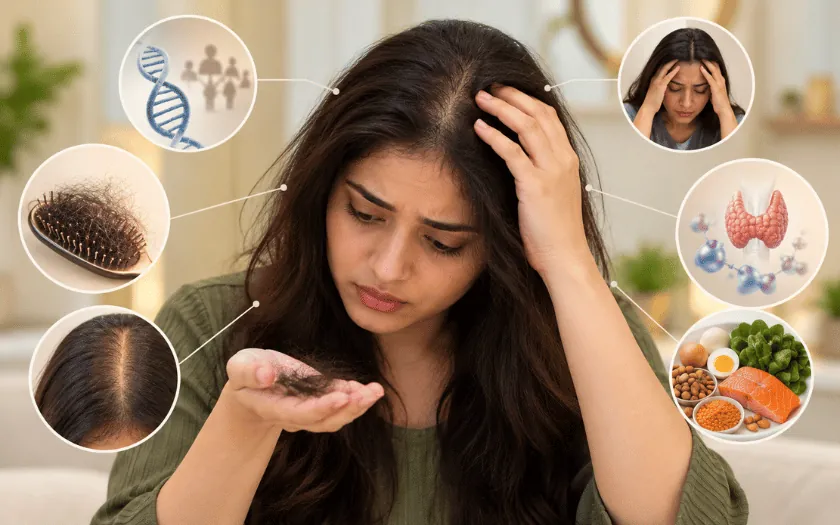
Hormonal & metabolic
Changes in hormones and metabolism may contribute to shedding or thinning.
- Underactive or overactive thyroid
- PCOS and androgen excess
- Menopause
- Insulin resistance and poorly controlled diabetes
- Chronic illness
Understand the cause, before the treatment.
Hair loss causes are many, from scalp inflammation and hormones to nutrition, stress and scarring conditions. A clear diagnosis comes first, because the right treatment depends on it.
Scalp conditions
Itching, scaling, redness or bumps on the scalp are common. Most are treatable, and some can add to shedding if they are left alone. Each needs the right diagnosis before the right shampoo or medicine.
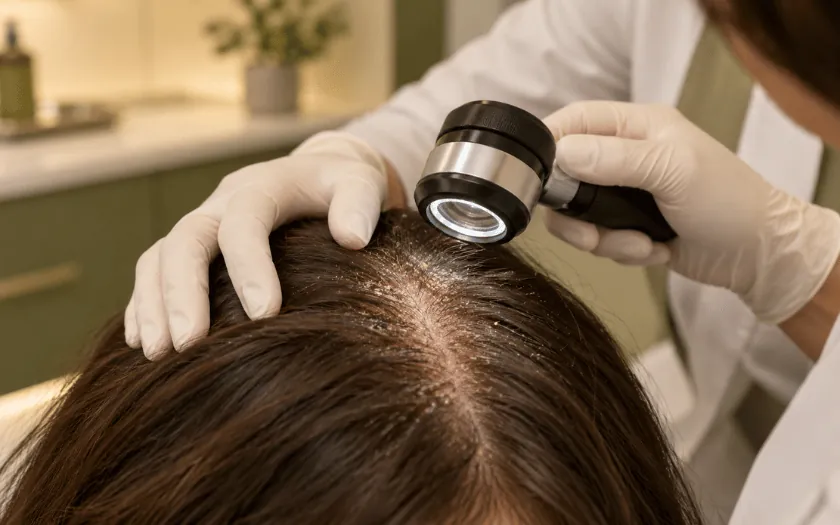
Oily or dry flakes, itching and redness that often worsen with season. Medicated antifungal shampoos and anti inflammatory care help, and a maintenance routine reduces recurrence.
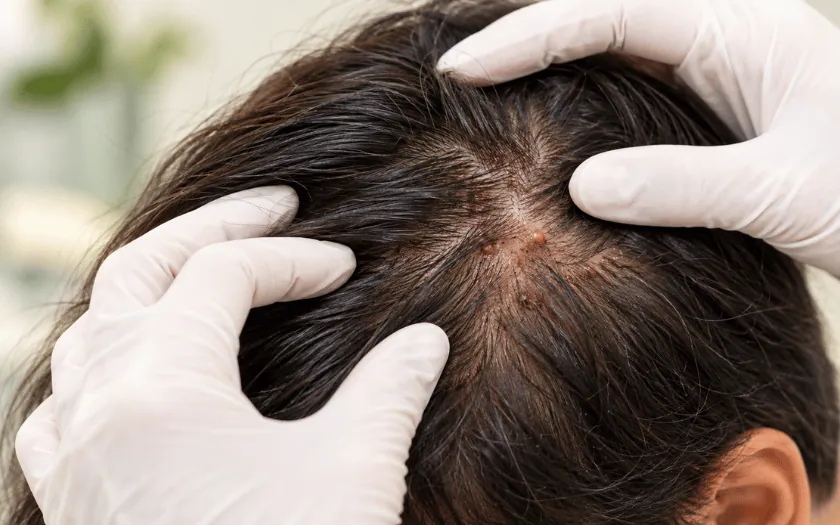
Bacterial or fungal inflammation of hair follicles, including acne necrotica, boils, and folliculitis after a transplant or in the donor area. Culture or biopsy is advised when it persists or recurs.
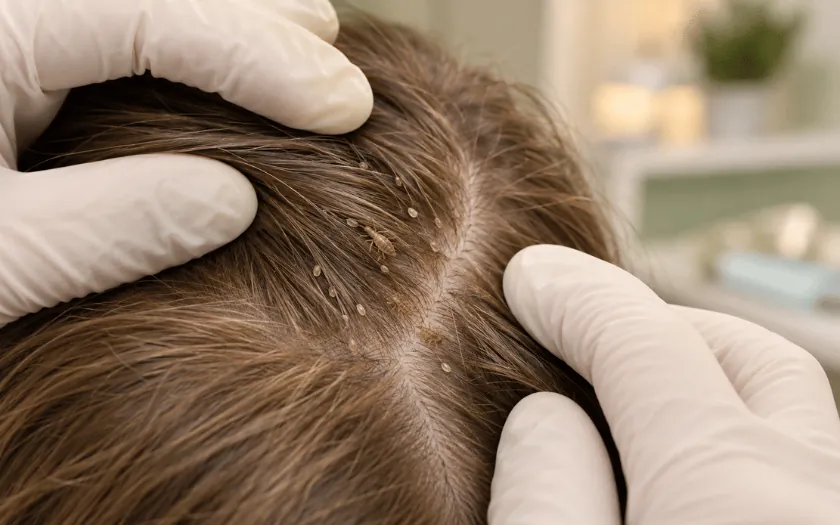
Itching and visible nits, spread by close head to head contact. Treating the whole family together, cleaning combs and bedding, and following up prevents reinfestation.
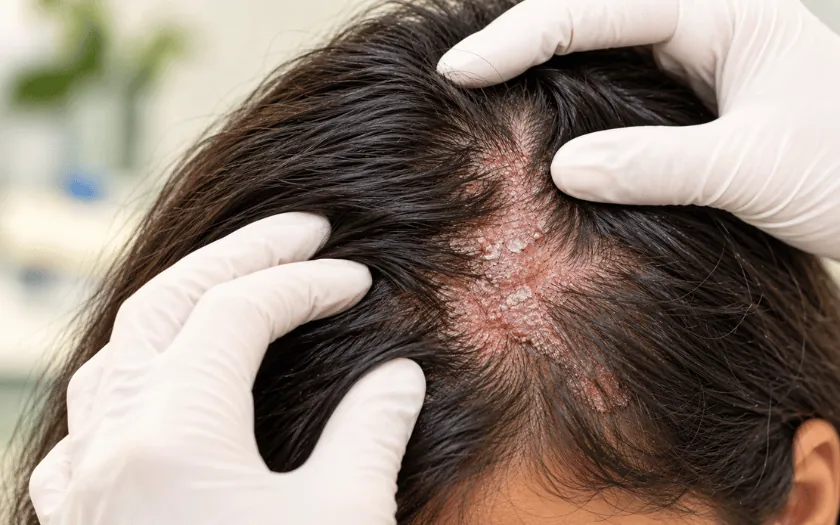
Thicker, well defined silvery scales that can extend beyond the hairline, unlike simple dandruff. It may cause temporary shedding and usually needs ongoing medical treatment.
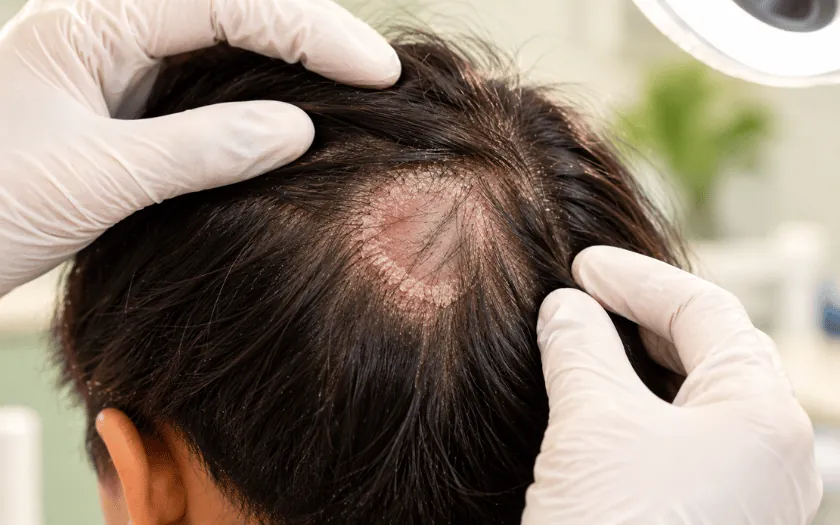
Broken hairs, patchy loss and sometimes painful inflammatory swelling, most often in children. Oral antifungal treatment is often needed, because creams do not reach the infected hair.
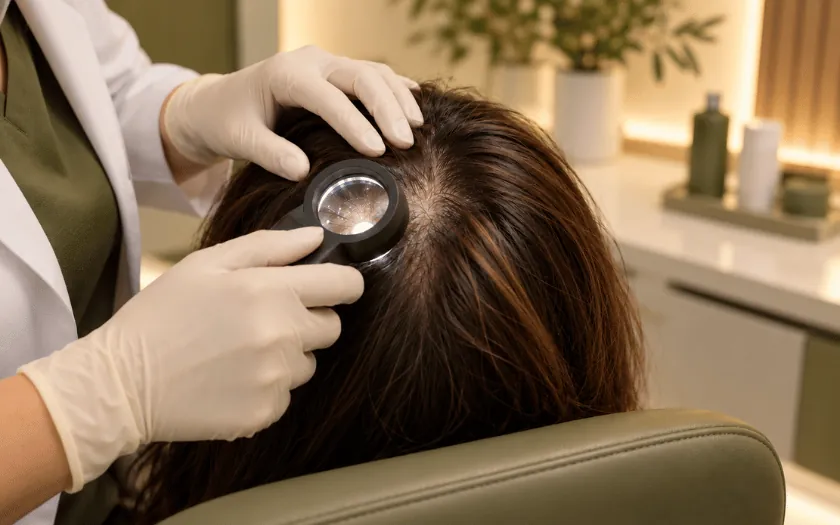
Reactions to hair dyes, shampoos, oils, adhesives for hair systems, the minoxidil vehicle or post procedure products. Patch testing can identify the trigger so it can be avoided.

Lumps and pigmented spots are examined carefully. When removal is indicated, closure is planned with reconstructive care to respect hair direction and appearance.
Types of alopecia
Alopecia simply means hair loss. The pattern, speed and cause differ widely, and so does the treatment. Some types respond to medicines, some settle on their own, and a few need surgery to wait.

A genetic tendency where DHT gradually miniaturises follicles at the hairline, temples and crown. Graded on the Norwood scale; stabilising loss with medical care comes before deciding on transplant timing.
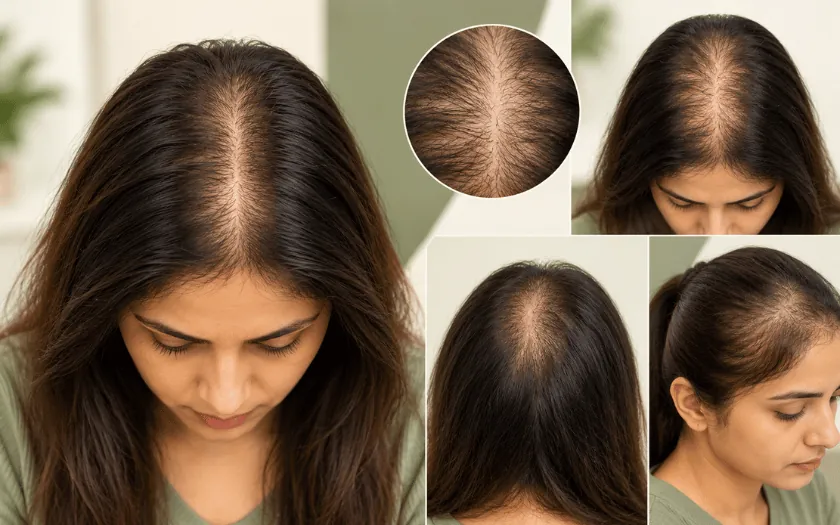
A widening central parting, reduced ponytail volume and diffuse thinning, graded on the Ludwig or Sinclair scales. Hormonal and nutritional evaluation matters, including PCOS and menopause related change.
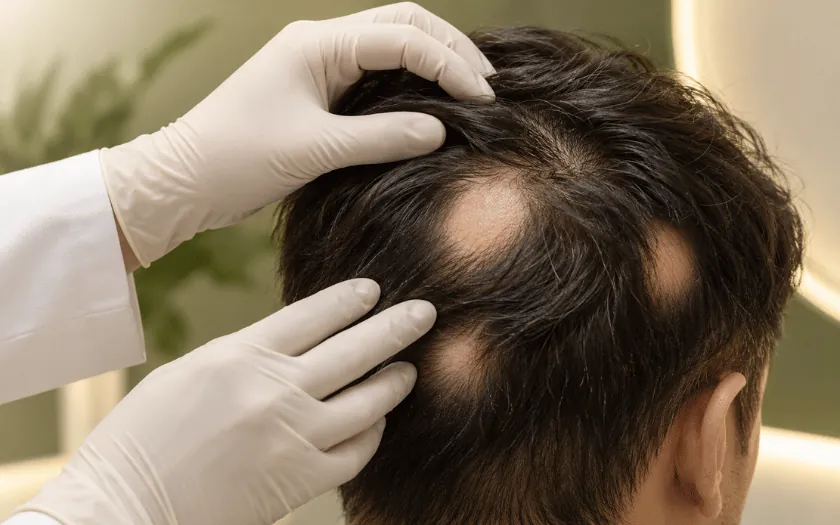
An autoimmune condition causing round patches of loss on the scalp, beard or eyebrows, sometimes with nail changes. Transplantation is avoided while the disease is active, as new grafts can also be affected.
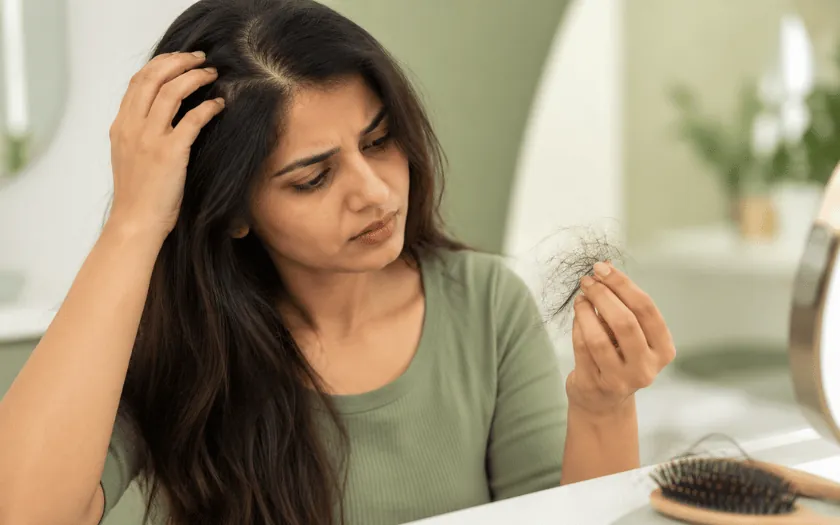
Diffuse shedding a few months after stress, fever, illness, surgery, childbirth, crash dieting, deficiency, thyroid disorder or some medicines. It often settles once the trigger is corrected, though no fixed timeline can be promised.
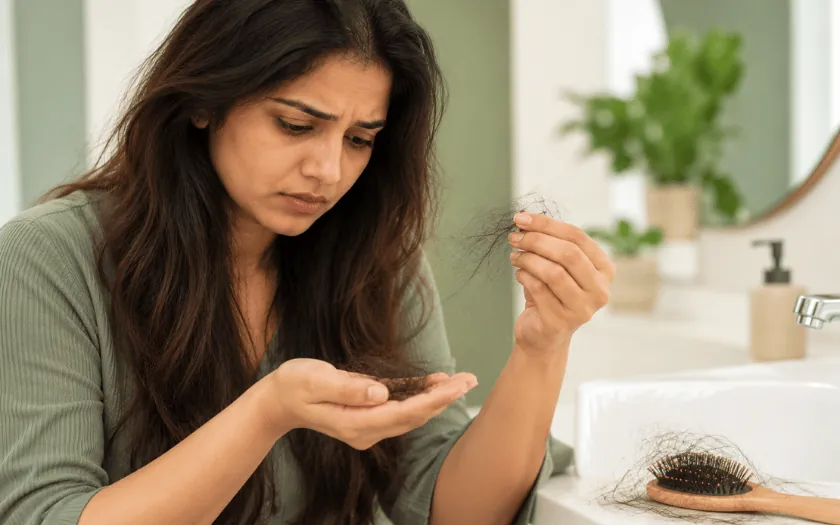
Sudden loss of actively growing hair, most commonly with chemotherapy and certain toxic or medical exposures. Regrowth usually begins after the cause stops, though pace and texture vary.
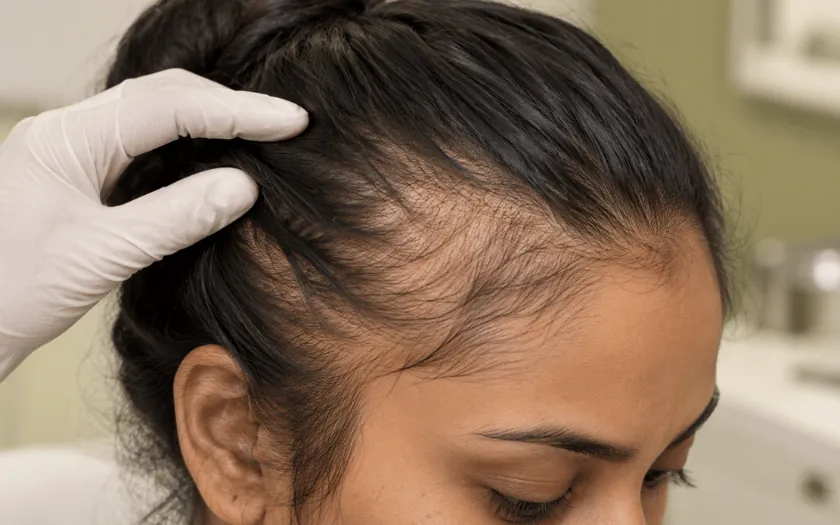
Loss at the front and temples from tight ponytails, braids, turbans, extensions or repeated pulling. It is often reversible when caught early, but can become permanent once scarring sets in.
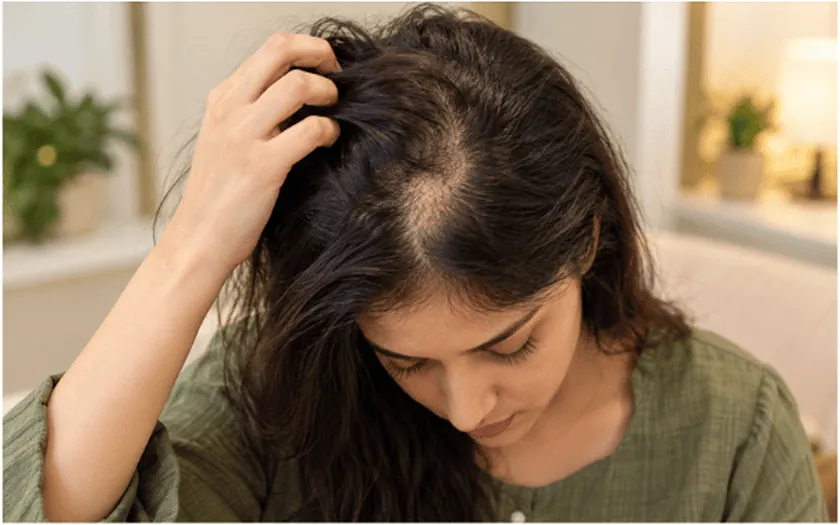
A repeated urge to pull hair, leaving irregular broken hairs. Care is gentle and shared with mental health professionals, and any surgery waits until the behaviour is well controlled.

Loose anagen and short anagen syndromes, pressure alopecia, drug induced loss, and shedding after infection, COVID or high fever. Most are explained through history and examination.
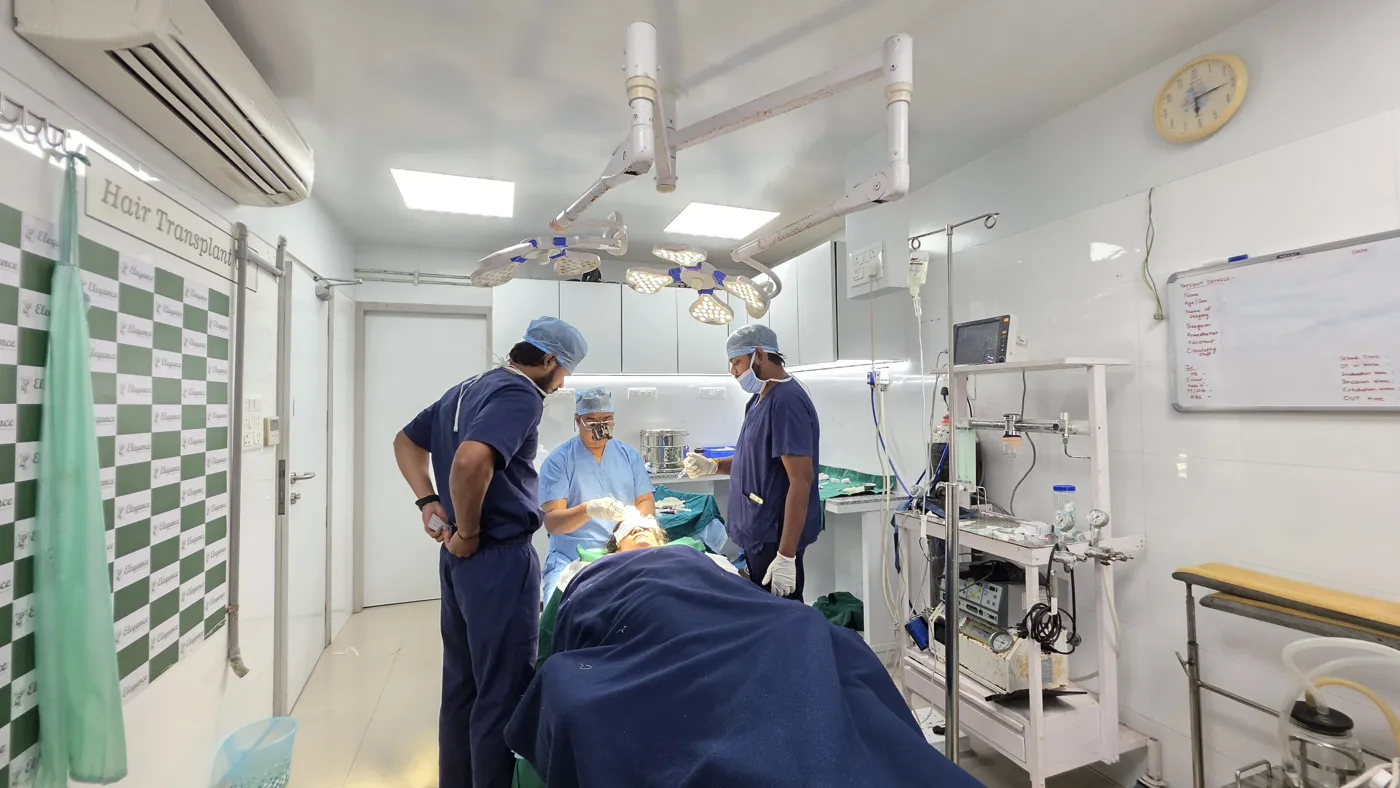
Scarring (cicatricial) alopecia
In scarring alopecia, inflammation or injury replaces follicles with scar tissue. Lost hair does not return on its own, so the first goal is to stop the process. Transplantation is considered only once the condition is clinically inactive, and after assessing blood supply, scar quality and the likely survival of grafts.
Lichen planopilaris, frontal fibrosing alopecia, discoid lupus erythematosus, central centrifugal cicatricial alopecia, folliculitis decalvans, dissecting cellulitis and acne keloidalis nuchae.
Scars after infection, surgery, trauma or burns, radiation related alopecia, and stable congenital scars.
Selected cases may need dermoscopy, a scalp biopsy and blood tests, followed by medical treatment until the disease is stable.
Depending on the scar, planning may include test grafting, staged transplantation, scar revision, tissue expansion or flap surgery.
Understanding the hair cycle
Each follicle grows, rests and sheds on its own timetable, so the scalp is never bald all at once. Knowing these phases helps explain why shedding can appear months after a trigger.
The active growing phase, which lasts several years on the scalp. Most scalp hairs are in anagen at any one time, and its length decides how long hair can grow.
A short phase of a few weeks in which growth stops and the follicle shrinks and detaches from its blood supply.
A resting phase of around three months. The hair stays in place while a new hair begins to form beneath it.
The old hair is released and falls, usually while combing or washing, and the follicle returns to anagen.
Normal or not?
Some hair fall every day is a normal part of this cycle. A temporary rise is common after illness, fever, stress or childbirth, and often settles once the body recovers.
Persistent thinning, a widening parting, a more visible scalp, a receding hairline or reduced density deserves a medical evaluation. Counting fallen hairs alone cannot tell you the cause; examination of the scalp and hair can.
Causes of hair fall
Hair loss often has more than one contributor. The factors below may contribute to hair fall; whether they do in your case is confirmed through history, examination and, where needed, tests.
Changes in hormones and metabolism may contribute to shedding or thinning.
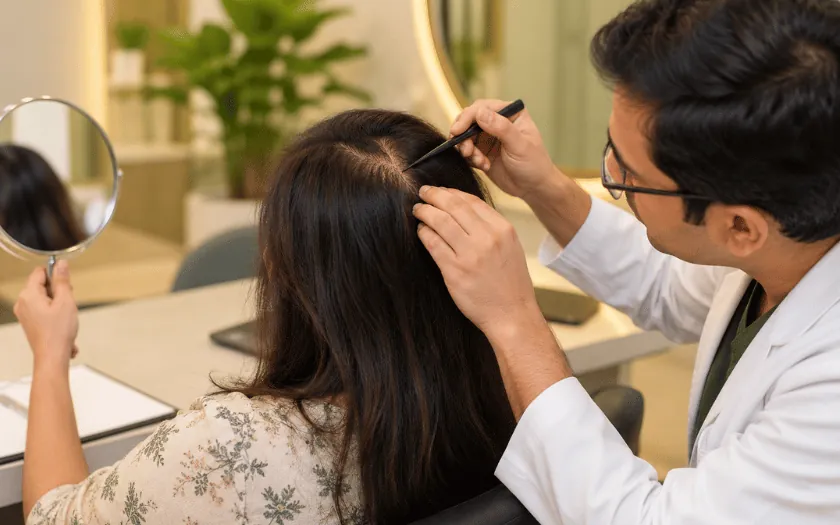
Menstrual, hormonal and nutritional factors are assessed together rather than blamed on a single cause.

Deficiencies may contribute to diffuse shedding and are identified with targeted tests.

Daily habits may contribute to shedding, breakage or gradual thinning.

Illness and some medicines may contribute to temporary or lasting loss.
Hair loss diagnosis
Every plan begins with understanding your hair loss in detail. This is how an assessment is usually built, step by step.
When the hair loss started, how it has progressed, and whether parents or siblings have similar thinning.
For women, menstrual pattern, pregnancy, breastfeeding, contraception and menopause, along with any thyroid or hormonal conditions.
Weight loss, dieting and eating pattern, current and recent medicines, supplements, and styling, colouring or chemical treatments.
A close look at the scalp skin, hair pattern and hair shafts, with a gentle hair pull test to gauge active shedding.
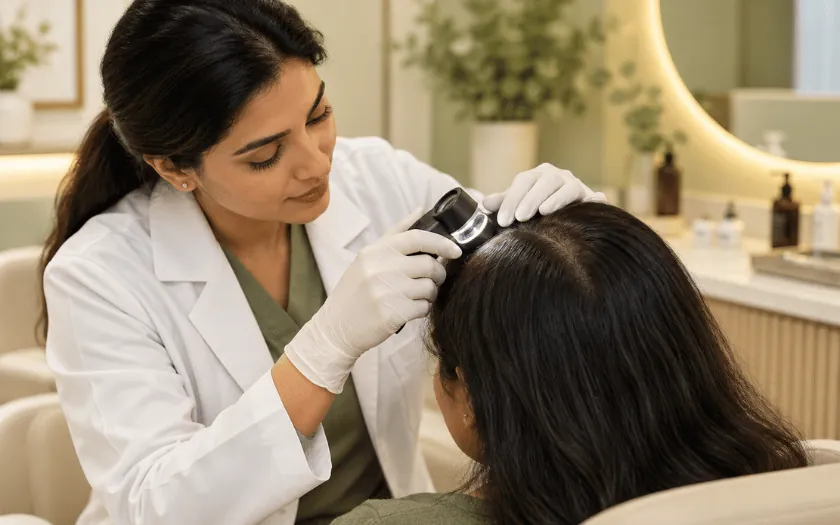
Magnified dermoscopic examination of follicles and scalp, and standardised photographs so progress can be compared fairly over time.
Measuring hair density and thickness, and assessing the donor area for anyone who may consider a transplant in future.
Blood tests chosen for your situation, and a scalp biopsy in selected cases such as suspected scarring alopecia.
A clear explanation of the diagnosis and a plan that may combine scalp care, medical treatment, supportive therapies and, only when suitable, surgery.
Blood tests
There is no fixed test panel sold to every patient. Depending on your history and examination, investigations may include a complete blood count, ferritin and iron profile, thyroid profile, vitamin B12, vitamin D, zinc, blood glucose or HbA1c, and liver and kidney function.
Hormonal evaluation is considered in selected women, and autoimmune tests only where the clinical picture suggests them.
Questions patients ask
Common questions about hair fall and scalp health. A consultation is the only way to know what applies to you.
Yes. Hairs naturally complete their growth cycle and shed every day, often while combing or washing. It becomes a concern when shedding stays high for months, or when you notice a widening parting, a receding hairline or more visible scalp.
Significant physical or emotional stress can trigger telogen effluvium, a diffuse shedding that usually appears a few months later. It often settles once the stress eases, but other causes should be checked if it continues.
It can. Rapid weight loss, very low calorie diets and inadequate protein may trigger shedding and lead to deficiencies such as low iron. Steady, balanced weight loss is kinder to hair.
Ordinary dandruff does not cause hair loss, but a very inflamed, itchy scalp from seborrhoeic dermatitis may be associated with increased shedding. Controlling the inflammation usually helps.
No. Hairs seen after washing were already due to shed. Washing as often as your scalp needs, with a suitable gentle or medicated shampoo, keeps the scalp healthy.
A helmet does not cause pattern hair loss. A tight helmet worn for long hours with sweat and friction may irritate the scalp, so keep the liner clean and ensure a good fit. Always wear your helmet.
Oil can condition the hair shaft and reduce dryness, but it cannot regrow follicles that have been lost. Heavy oiling may even worsen dandruff in some people.
See a doctor if shedding lasts more than a few months, if you notice patches, thinning or a receding hairline, or if there is scalp pain, redness, scaling or scarring. Early evaluation gives more options.
Book a consultation
Every plan starts with an in person assessment by Dr. Ashutosh Shah. Call or WhatsApp the clinic and our team will get back to you.
Book on WhatsApp
Chat with our team on WhatsApp about any treatment, consultation or appointment.
WhatsApp opens with a short message ready to send. The clinic team replies during working hours.