
Hair replacement
Microblading in Surat
Fine strokes of pigment that imitate brow hairs.
Microblading in Surat is a form of eyebrow camouflage in which fine, hair like strokes of pigment are placed in the skin of the brow. It can rebuild the shape and fullness of sparse eyebrows without surgery. It does not add real hair, and it fades over time, so top ups are usually needed.
Last updated · Medical review: Dr. Ashutosh Shah, M.B.B.S., M.S., M.Ch., D.N.B. (Plastic Surgery), Gujarat Medical Council Reg. No. G-26257
 Cause of brow loss checked first
What microblading is
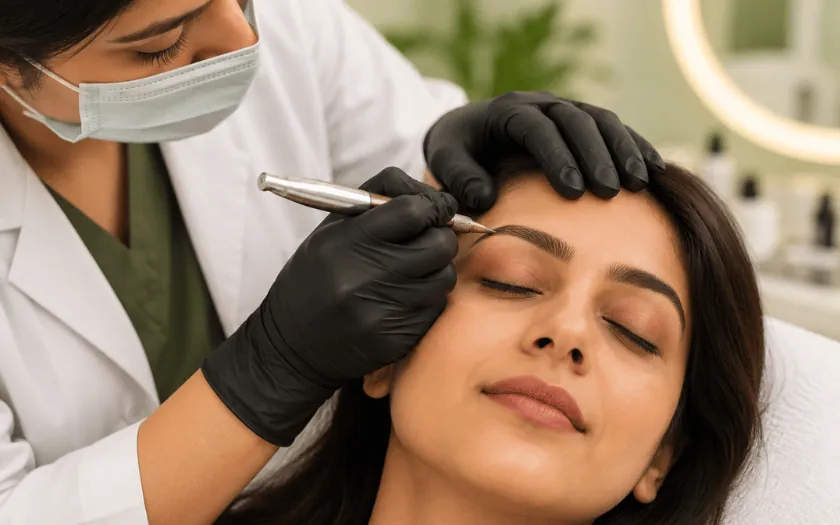
Microblading is a manual cosmetic tattooing technique. A small hand held tool with a row of very fine needles makes shallow strokes in the upper layers of the skin and deposits pigment into them. Each stroke is drawn in the direction a natural brow hair would grow, so from normal distance the brow looks fuller and more defined.
Because the strokes are pigment, not hair, microblading is camouflage. It works well for shape and definition, but it does not create the texture or movement of real hair, and it does not treat the reason the brows are thin.
Who microblading can suit
Eyebrows can thin for many reasons, and some of them need medical attention first. Thyroid disease, iron deficiency, alopecia areata, frontal fibrosing alopecia and skin conditions can all affect the brows. Microblading is often considered for:
- Brows thinned by years of plucking or threading
- Gaps, uneven shape or asymmetry between the brows
- Light or very fine brow hair that barely shows
- Stable brow loss after a medical condition has been treated
- People who prefer to avoid surgery or are not suited to an eyebrow transplant
If brow loss is recent, patchy or spreading, it is worth having it assessed before any pigment is placed. See our guide to types of alopecia.
The technique, step by step
- Consultation and brow mapping
The brow shape is measured and drawn to suit your face, bone structure and natural brow, and agreed with you before any pigment is used.
- Shade choice and patch test
A pigment shade is matched to your hair and skin tone. A small patch test can show whether your skin reacts before full treatment.
- Numbing
A topical numbing cream is commonly applied to reduce discomfort.
- Creating the strokes
Fine strokes are made along the mapped shape and pigment is worked into them.
- Follow up visit
Once the skin has healed, a follow up session is usually used to fill gaps and refine the result, because some strokes fade unevenly as the skin heals.
Microblading may be offered or arranged after assessment. Sterile technique, single use blades and suitable pigments are essential wherever it is done.
Healing and aftercare
Straight after treatment the brows often look darker and sharper than the final result. Over the following weeks they may flake, look patchy for a while, and then soften and lighten as the skin settles. This is a normal part of healing.
- Keep the brows dry and clean as advised, and avoid soaking them
- Do not pick, rub or scratch flakes
- Avoid makeup on the brows until healed
- Avoid swimming, steam, heavy sweating and direct sun while healing
- Seek review for spreading redness, swelling, pus or increasing pain
Fading and top ups
Microblading is semi permanent. How long it looks crisp varies from person to person. Oily skin, strong sun, frequent exfoliation and skin care products containing retinoids or acids can make strokes fade or blur faster. Top up sessions are usually needed to keep the shape and colour even.
Over time, strokes can soften and blur, and some pigments can change tone as they fade. Placing strokes at the correct depth and choosing a suitable shade reduce the chance of an unwanted colour.
Microblading versus eyebrow transplantation
- Pigment in the skin, not hair
- No surgery and a short recovery
- Fades and needs top ups
- Useful where the brow skin is healthy but hair is sparse
- Moves living hair follicles, usually from the scalp
- A surgical procedure under local anaesthesia
- Transplanted hairs grow and need regular trimming
- Needs a stable cause of loss and suitable donor hair
Some people combine the two, using microblading to define shape while transplanted hair adds texture. The right choice depends on the cause of brow loss and your preference. Read about eyebrow and other non scalp hair transplants.
Risks and who should avoid it
Possible effects include redness, swelling, infection, allergic reaction to pigment, uneven or blurred strokes, colour change and, rarely, scarring. Microblading is usually avoided or postponed in the following situations:
- Active eczema, psoriasis, acne, infection or irritation in the brow area
- A tendency to form keloid or thick raised scars
- Known allergy to tattoo pigments or to the numbing cream
- Pregnancy and breastfeeding
- Recent use of isotretinoin, or other medicines that affect skin healing, until your doctor advises
- Blood thinning medicines or bleeding disorders, until discussed with your doctor
- Brow loss that is new or spreading and has not yet been diagnosed
How we approach brow camouflage
At Elegance Clinic, thinning eyebrows are treated as a medical question first. The brows and scalp are examined, and blood tests may be suggested where a cause such as thyroid disease or iron deficiency is suspected. Only then are camouflage options compared.
- Diagnosis of brow loss before any pigment is placed
- Honest comparison of microblading, eyebrow transplant and medical treatment
- Brow shape planned around your face and natural brow
- Consultations at two centres in Surat: Adajan and Vesu
Suitability, risks and recovery differ for each patient and are discussed during consultation.
Why are your brows thinning?
We look at the cause first, then compare microblading, eyebrow transplant and treatment.
Microblading questions
Still have a question?
Honest answers about microblading. The cause of brow thinning is checked at consultation.
A numbing cream is commonly used, and most people describe a scratching feeling rather than sharp pain. Sensitivity varies from person to person.
Fresh pigment sits near the surface and looks darker at first. As the skin heals and flakes, the colour usually softens and lightens to the settled shade.
It can be done, but crisp strokes often blur and fade faster in oily skin. A soft shading technique may give a longer lasting look, and this is discussed during planning.
It can camouflage brow loss, but alopecia areata can come and go, and the skin should be calm. Many people treat the condition first and consider pigment once the pattern is more settled.
Microblading sits in the skin and is not expected to stop existing brow hair from growing. Avoid heavy plucking so your natural hairs can blend with the strokes.
Sometimes. Faded work can often be refreshed, while a poor shape or wrong colour may need lightening first, sometimes with laser. Correction can take several sessions and results vary.
Book a consultation
Begin with a conversation.
Every plan starts with an in person assessment by Dr. Ashutosh Shah. Call or WhatsApp the clinic and our team will get back to you.
Book on WhatsApp
Chat with our team on WhatsApp about any treatment, consultation or appointment.
- Ask about any treatment
- Book a consultation
- Get directions to our clinics
WhatsApp opens with a short message ready to send. The clinic team replies during working hours.