
For doctors
Hands on hair transplant workshop in India for doctors
FUT, FUE and the judgement around them, taught in the operating room.
Each hands on hair transplant workshop at Elegance Vidhyalay in Surat, India, teaches qualified doctors the complete surgical pathway, from case selection and hairline design to extraction, graft handling, implantation and complication management, alongside a working surgical team.
Last updated · Medical review: Dr. Ashutosh Shah, M.B.B.S., M.S., M.Ch., D.N.B. (Plastic Surgery), Gujarat Medical Council Reg. No. G-26257
 For doctors only
How each hair transplant workshop is run
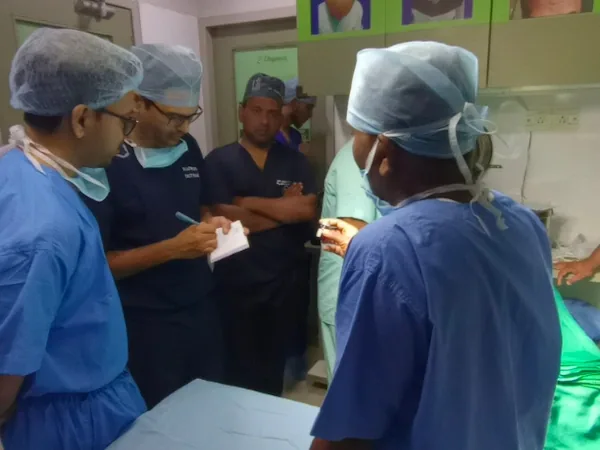
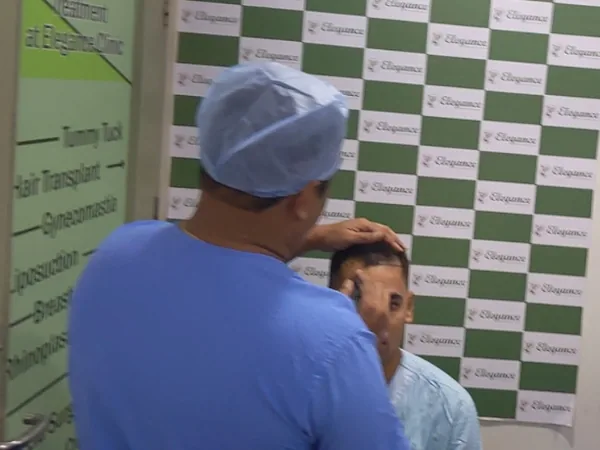
The workshops are practical. Doctors learn in the operating room and on live patients who have consented, with teaching sessions on planning, technique and case discussion around the surgery itself.
Batches are kept at a size that allows close supervision during hands on work. Module content and emphasis may be adapted to the experience of each batch, so a doctor starting out and a doctor refining an existing practice both get useful time at the table.
Why judgement is taught as carefully as technique
Most problems in hair transplant do not come from a single slip of the hand. They come from choosing the wrong patient, promising too much, taking too many grafts from the donor area or designing a hairline that will not suit the patient in later years. For this reason, time is given to case selection, donor budgeting and complication prevention, not only to extraction and implantation speed.
Who the workshops are for
- Plastic surgeons who wish to add or strengthen hair restoration
- Dermatologists who want surgical training in hair transplant
- Doctors already performing transplants who want structured refinement
Eligibility is confirmed when you enquire. The training is for qualified doctors only, and independent practice afterwards remains subject to your own registration and scope of practice.
Seven workshop modules
- FUT training
Strip harvesting, trichophytic closure, slivering and dissection of follicular units, with a hands on component.
- FUE training
Punch selection, controlled extraction and how to avoid overharvesting the donor area, with a hands on component.
- Hairline design
Age appropriate design, temple points and micro irregularity, and the differences between male and female hairlines.
- Graft handling and implantation
Graft sorting and storage, recipient site creation, and implantation techniques including implanters.
- Donor management
The safe donor area, lifetime graft budgeting, and the role of beard and body hair as donor sources.
- Complication management
Common complications, how to prevent them and structured protocols for managing them.
- Practice setup
Operation theatre set up and sterility, team training, ethics and informed consent.
Following the whole surgical pathway
Technique alone does not make a safe transplant. The teaching follows a patient from consultation to follow up, so doctors see where each decision is made:
- Diagnosis and case selection
- When not to operate
- Donor assessment and graft planning
- Hairline marking and consent
- Local anaesthesia and monitoring
- Extraction, graft handling and implantation
- Dressing and aftercare instructions
- Review and complication care
Ethics, taught alongside skill
The academy puts steady emphasis on patient safety, donor conservation and ethical practice. That includes honest patient selection, realistic expectations, clear roles for every member of the team, accurate graft counting and responsibility for the patient after surgery. Medical education, in this view, must go beyond textbooks to practical safety, ethics and real clinical results.
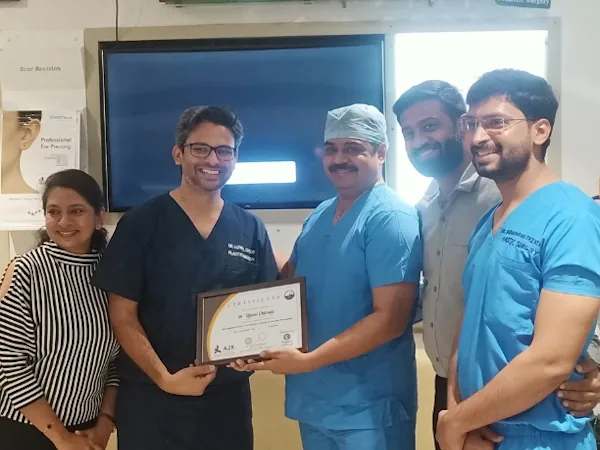
Certificate of participation
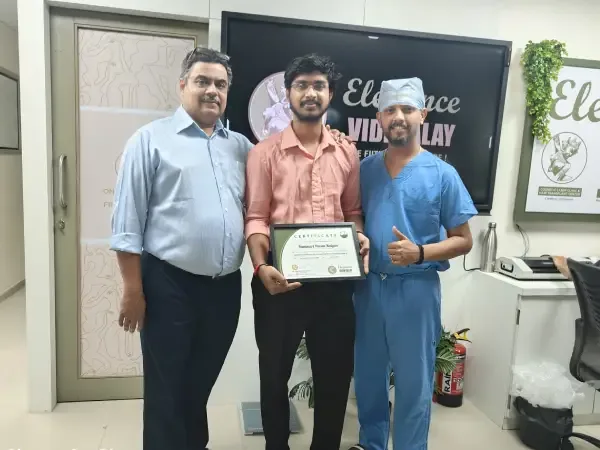
Doctors who complete a programme receive a certificate of participation from the academy. It records the training attended. It is not a licence or a specialist qualification.
Dates and registration
Programmes run through the year. Dates, course details, fees and registration steps are shared directly with doctors who enquire, so the information you receive is current.
Suitability, risks and recovery differ for each patient and are discussed during consultation.
Interested in the next batch?
Send an enquiry and the academy team will share the next programme details.
Inside the workshops
Workshop photographs
Training sessions, operating room teaching and certificates at Elegance Vidhyalay.


Workshop questions
What doctors ask first.
About content, experience levels and what happens after you enquire.
No. The workshops are designed for qualified doctors who wish to begin or refine hair transplant practice. Your background is discussed when you enquire so the emphasis suits you.
Teaching takes place in the operating room with patients who have consented. Hands on components are supervised, and the operating surgeon remains responsible for each patient throughout.
Yes. FUT covers strip harvesting, closure and dissection, and FUE covers punch selection and controlled extraction. Both are taught with hands on components.
Yes. A dedicated module covers common complications, how to prevent them and structured protocols for managing them when they occur.
Yes. The practice setup module covers operation theatre set up, sterility, team training, ethics and informed consent.
In Surat, Gujarat. Venue details are shared with registered doctors along with the programme dates.
Fees, inclusions and registration steps are sent with the course details after you enquire, so you receive current information for the next programme.
Book a consultation
Begin with a conversation.
Every plan starts with an in person assessment by Dr. Ashutosh Shah. Call or WhatsApp the clinic and our team will get back to you.
Book on WhatsApp
Chat with our team on WhatsApp about any treatment, consultation or appointment.
- Ask about any treatment
- Book a consultation
- Get directions to our clinics
WhatsApp opens with a short message ready to send. The clinic team replies during working hours.