
Understanding Hair Loss
Postpartum Hair Loss: Why It Happens, When It Stops and How to Care for Your Hair
Postpartum hair loss is heavy shedding that often starts around three months after birth as estrogen levels fall. It usually peaks near four months and settles by the baby's first birthday.
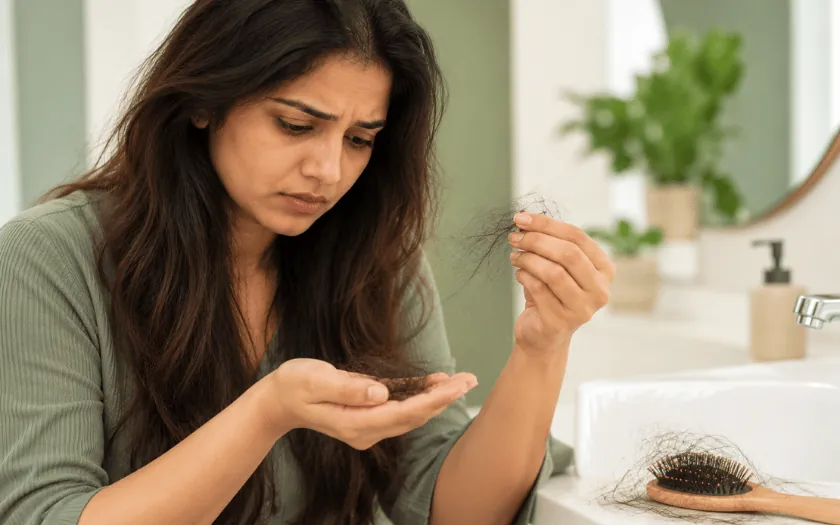
Postpartum hair loss is heavy hair shedding that many women notice a few months after giving birth. It happens because pregnancy hormones, especially estrogen, fall back to normal after delivery, and hairs that were kept in their growing phase all move into rest and shed together. It is usually temporary, and most women see their hair return to normal fullness by their baby's first birthday.
- Shedding commonly starts around two to three months after birth and often peaks near four months.
- It is a form of telogen effluvium, not true hair loss.
- Gentle hair care helps hair look fuller while it recovers.
- If hair has not recovered by around one year, an assessment is worthwhile.
What is postpartum hair loss?
Postpartum hair loss is a form of telogen effluvium, which means excessive shedding of resting hairs. It is sometimes called postpartum hair fall. Although it can look dramatic in the shower or on the pillow, the follicles are not damaged. They are simply resetting their cycle.
It is very common. Many new mothers are not told about it in advance, so the sudden change can feel worrying at a time that is already tiring. Knowing that this shedding follows a predictable pattern, and that it usually settles without treatment, can ease much of that anxiety. If the change in your hair is affecting your mood or confidence, it is fine to talk about it with your doctor, as looking after your emotional health after birth matters just as much.
Why does hair fall out after pregnancy?
During pregnancy, higher estrogen levels keep more hairs in the growth phase than usual. Many women notice that their hair feels thicker and sheds less while they are pregnant.
After childbirth, estrogen falls. The extra hairs that were held in the growth phase then move into the resting phase together. A few months later, as new hairs start to grow, these resting hairs are pushed out. The result is a period of noticeably heavier shedding.
Other factors after delivery can add to this. Blood loss during birth, low iron, disturbed sleep, thyroid changes and the physical demands of caring for a newborn may all play a part. These are worth checking if shedding is heavy or prolonged.
When does postpartum hair loss start and stop?
Every woman is different, but a typical timeline looks like this:
| Time after birth | What many women notice |
|---|---|
| 0 to 2 months | Hair often still feels full from pregnancy |
| 2 to 3 months | Shedding begins, often suddenly |
| Around 4 months | Shedding commonly reaches its peak |
| 4 to 6 months | Shedding gradually slows; short new hairs appear |
| By 12 months | Most women see normal fullness return |
Short new hairs often appear along the hairline and temples first. They can stick up and look fluffy for a while. This is a good sign that regrowth is under way.
What does it look like?
You may notice:
- Clumps of hair in the shower drain or on the hairbrush
- More hair than usual on the pillow or clothes
- Thinning around the temples and the front hairline
- A slightly thinner ponytail
Postpartum shedding is spread across the scalp. Round bald patches, scaling, pain or redness are not typical and should be checked by a doctor.
How to care for your hair during postpartum hair fall
There is no specific treatment that stops normal postpartum shedding, because it settles on its own. Care is about protecting the hair you have and helping it look fuller:
- Use a volumising shampoo and avoid heavy conditioning shampoos that weigh fine hair down.
- Apply a light conditioner to the lengths and ends rather than the scalp.
- Be gentle: use a wide tooth comb, avoid brushing wet hair roughly and pat hair dry.
- Avoid tight hairstyles such as tight buns or ponytails, which can pull on hair. Repeated pulling over time can cause traction alopecia.
- Lower the heat: use cooler settings on dryers and straighteners, and use them less often.
- Consider a shorter cut if you like. It does not reduce shedding, but it can look fuller and is easier to manage with a baby.
Nutrition after delivery
Regular, balanced meals with enough protein, iron rich foods, fruit and vegetables support overall recovery. Many women continue a postnatal supplement advised by their obstetrician. Iron or other supplements should be based on blood tests and medical advice, particularly while breastfeeding. Our article on iron deficiency hair loss explains why checking ferritin can matter.
Can I use hair loss treatments while breastfeeding?
Some hair loss medicines are not recommended during pregnancy or breastfeeding, because they may pass to the baby. Do not start any medicine, oil with added drugs or supplement for hair loss without checking with your doctor first. In most cases, gentle care and time are all that is needed for normal postpartum shedding.
When should you see a doctor?
Postpartum shedding is normal, but some signs suggest another cause may be involved:
- Hair has not returned to its usual fullness around your baby's first birthday
- Your parting is widening or the crown is thinning steadily
- You have patches of hair loss, scalp pain or scaling
- You feel very tired, cold, shaky or low in mood, or notice weight changes
- You had heavy bleeding during or after delivery
These can point to low iron, a thyroid problem after pregnancy or an underlying pattern such as female pattern hair loss that pregnancy has made more noticeable. Our article on thyroid and hair loss explains the thyroid link.
If your hair is not recovering as expected after pregnancy, book a consultation at Elegance Hair Restoration Centre in Surat for a calm, careful assessment. You can book an appointment at our Adajan or Vesu centre.
Related treatments and conditions
Sources
- American Academy of Dermatology: Hair loss in new moms
- Cleveland Clinic: Postpartum hair loss
- American Academy of Dermatology: Do you have hair loss or hair shedding?
- DermNet: Telogen effluvium
This article is for general information only. Treatment depends on each patient’s condition and should be decided after consultation with a qualified doctor. Medically reviewed by Dr. Ashutosh Shah, M.B.B.S., M.S., M.Ch., D.N.B. (Plastic Surgery), Gujarat Medical Council Reg. No. G-26257. See the medical disclaimer.
More in Understanding Hair Loss
Questions patients ask
Straight answers, before you decide.
These are the questions that come up most often in consultation. If yours is not here, send it on WhatsApp and the team will reply.
Postpartum shedding is mainly linked to the fall in estrogen after birth, and it affects women whether or not they breastfeed. Breastfeeding does raise nutritional needs, so eating well and following advice on postnatal supplements matters. If shedding is heavy or lasts beyond a year, a doctor can check for other causes such as low iron.
Postpartum shedding can look alarming, but it does not cause hair loss on its own. The follicles remain healthy and start producing new hairs as the cycle resets. Most women regain normal fullness within about a year. Steady thinning that continues past this point may be a separate condition and is worth having assessed.
Not always. Some women shed heavily after one pregnancy and much less after another, and some hardly notice it at all. The amount can vary with hormones, general health, iron levels, stress and sleep. Having shed heavily once does not mean the same will happen next time.
Oiling can soften hair and reduce breakage for some women, but it does not stop shedding from the root, because the process is hormonal. Gentle massage is fine if it feels comfortable. Avoid products with unknown added ingredients while breastfeeding, and speak to a doctor if shedding is very heavy or prolonged.
Short regrowth hairs grow at the same pace as the rest of your hair, roughly around one centimetre a month, though this varies. They may stand up or look wispy for several months before they blend in. Gentle styling products and softer partings can help them lie flatter while they grow.