
Types of alopecia
Telogen effluvium: when hair sheds after a trigger
Heavy shedding is worrying, but this type often settles once the cause is found.
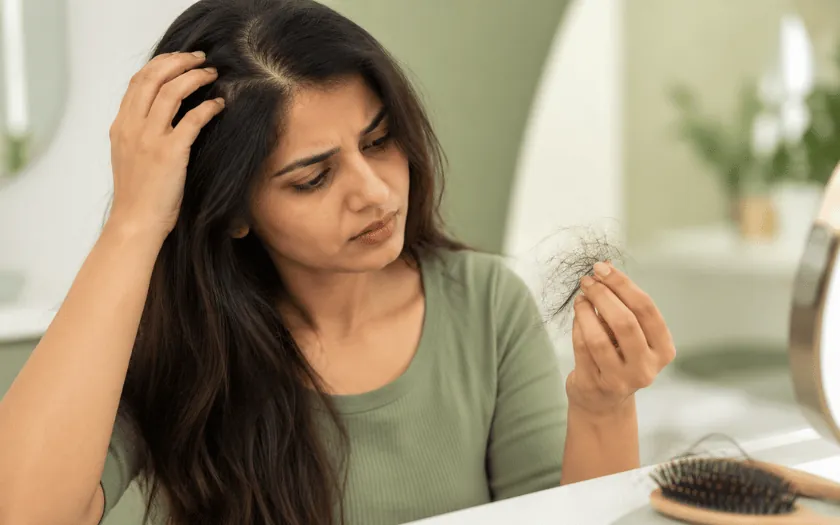
Telogen effluvium is diffuse hair shedding that happens when a trigger pushes many growing hairs into the resting phase at the same time. The shedding usually shows up a few months after the event, so the link is easy to miss. Finding and correcting the trigger is the heart of care.
Last updated · Medical review: Dr. Ashutosh Shah, M.B.B.S., M.S., M.Ch., D.N.B. (Plastic Surgery), Gujarat Medical Council Reg. No. G-26257
 Trigger found, then treated
What is telogen effluvium?
Every hair follicle cycles through a long growing phase (anagen), a short transition phase (catagen) and a resting phase (telogen), after which the old hair is shed and a new one begins to grow. Normally only a small share of hairs rest at any time, so daily shedding goes unnoticed.
In telogen effluvium, a physical or emotional stress on the body causes a larger than usual number of hairs to switch into the resting phase together. Because the resting phase lasts a few months, the extra shedding appears some time after the trigger, often around two to three months later. You can read more about the hair growth cycle here.
The follicles are not damaged. They are simply out of step, which is why new hair usually grows back once the cause settles.
Acute and chronic forms
Acute telogen effluvium follows a clear trigger and tends to settle. When shedding continues for more than about six months, it is described as chronic telogen effluvium. The chronic form often needs a more detailed search for ongoing causes, and a check that pattern thinning is not developing underneath.
Telogen effluvium causes
- High fever or significant illness, including infections such as dengue, typhoid or COVID
- Surgery, accidents or major blood loss
- Childbirth, often called postpartum hair fall
- Emotional stress, bereavement or a difficult life event
- Rapid weight loss or crash dieting, including low protein diets
- Nutritional deficiency, such as low iron stores, vitamin D or vitamin B12
- Thyroid disorders
- Starting, stopping or changing certain medicines, including some hormonal treatments
Sometimes more than one trigger overlaps, and sometimes no clear trigger is found. See causes of hair fall for a wider view.
Signs and diagnosis
What people notice
- Much more hair on the pillow, in the shower drain or on the comb
- Diffuse thinning all over rather than one patch or a receding hairline
- A ponytail that feels thinner
- Shed hairs with a small pale bulb at the root, which is a normal resting hair
- Short new hairs along the hairline as regrowth begins
How it is confirmed
- Careful history
Illness, surgery, childbirth, diet, stress and medicines in the months before the shedding started are reviewed, since the trigger is often forgotten.
- Hair pull test
A gentle pull on small groups of hair shows whether shedding is still active.
- Trichoscopy
Magnification helps check for miniaturisation, which would point to pattern loss alongside or instead of shedding.
- Blood tests where indicated
Blood count, iron stores, thyroid function and vitamin levels are commonly checked depending on the history.
More detail is on our hair loss diagnosis page.
Telogen effluvium treatment
There is no single medicine for telogen effluvium itself. The plan focuses on the cause and on supporting the next cycle of growth.
- Correcting the trigger, such as treating a thyroid disorder, reviewing a medicine with the prescribing doctor, or recovering from illness
- Correcting proven deficiencies, guided by blood tests. See nutritional hair loss treatment.
- Balanced nutrition, with enough protein and without crash diets
- Stress and sleep support, see lifestyle care for hair loss
- Gentle hair care, avoiding harsh chemical treatments and tight styles while hair is fragile
- Medical treatment such as minoxidil, which the doctor may consider in some cases, particularly chronic shedding or when pattern thinning is also present
Supportive treatments like PRP are not a substitute for finding the cause. A hair transplant is not a treatment for telogen effluvium, because the follicles are expected to recover on their own.
Recovery expectations
Once the trigger is corrected, shedding often slows over the following months and new growth begins. Because hair grows slowly, it can take much longer for length and fullness to look normal again. Recovery varies from person to person, and no fixed timeline can be promised.
Telogen effluvium can also unmask pattern thinning that was developing quietly. If fullness does not return as expected, a review helps check for this.
Cost factors and when to see a doctor
The cost of telogen effluvium treatment in Surat depends mainly on which blood tests are needed, any medicines or supplements prescribed, and the number of review visits. It is discussed after consultation.
Consider an assessment if:
- Heavy shedding continues for more than a few months
- You feel unwell, tired, breathless or notice weight change
- You have patches, a receding hairline or scalp symptoms, which suggest a different cause
- Shedding follows a new medicine; do not stop a prescribed medicine without speaking to your doctor
- The shedding is causing you real worry
Consultations are available at our centres in Adajan and Vesu, Surat.
Suitability, risks and recovery differ for each patient and are discussed during consultation.
Shedding a lot? Let's find out why.
A careful history and the right tests often reveal the trigger.
Shedding questions
Still have a question?
Answers to common questions about sudden shedding. A diagnosis is confirmed only after an examination.
On its own it does not usually cause hair loss, because the follicles remain alive and are expected to grow new hair. If thinning persists, another cause such as pattern hair loss may be present and should be checked.
Hairs pushed into the resting phase stay in place for a few months before they shed. That delay is why the shedding often starts well after the fever, surgery or stressful event.
Increased shedding a few months after delivery is common and often settles. If it is very heavy, continues for a long time or comes with tiredness, blood tests for iron and thyroid can be helpful.
Supplements help mainly when a deficiency is proven. Taking them without testing is unlikely to speed recovery, and biotin can interfere with some blood test results, so tell your doctor if you take it.
Cutting hair does not change how many hairs shed or regrow. Some people find a shorter style makes the shedding less noticeable and easier to manage while hair recovers.
No. Washing and combing only release hairs that were already due to fall. Gentle handling is sensible, but avoiding washing does not reduce the total amount of shedding.
Book a consultation
Begin with a conversation.
Every plan starts with an in person assessment by Dr. Ashutosh Shah. Call or WhatsApp the clinic and our team will get back to you.
Book on WhatsApp
Chat with our team on WhatsApp about any treatment, consultation or appointment.
- Ask about any treatment
- Book a consultation
- Get directions to our clinics
WhatsApp opens with a short message ready to send. The clinic team replies during working hours.