
Types of alopecia
Alopecia areata: patchy hair loss, explained calmly
Sudden bald patches can be alarming. The follicles are usually still alive.
Alopecia areata is an autoimmune condition in which the immune system targets growing hair follicles, causing smooth round or oval patches of hair loss. Because the follicles are not destroyed, hair can often regrow, although the course is unpredictable and care is planned around how active and how widespread it is.
Last updated · Medical review: Dr. Ashutosh Shah, M.B.B.S., M.S., M.Ch., D.N.B. (Plastic Surgery), Gujarat Medical Council Reg. No. G-26257
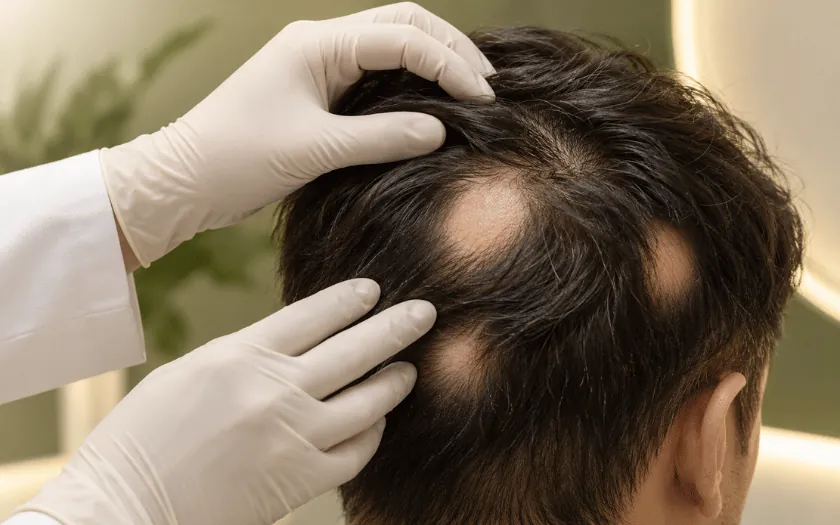 Surgery waits while active
What is alopecia areata?
In alopecia areata, the immune system mistakenly attacks hair follicles in their growing phase. The follicle is pushed into rest and the hair falls out, but the stem cells that can grow new hair are usually spared. This is why it is classed as a non scarring alopecia and why regrowth remains possible.
It can affect children and adults of any age and any hair type. It is not contagious, it is not caused by poor hygiene, and it is not a sign that you have done anything wrong.
Forms it can take
- Patchy alopecia areata, the most common form, with one or several patches
- Ophiasis pattern, a band of loss along the sides and back of the scalp
- Alopecia totalis, loss of all scalp hair
- Alopecia universalis, loss of scalp and body hair
- Diffuse alopecia areata, sudden widespread thinning that can resemble other types of shedding
Alopecia areata causes and signs
The exact cause is not fully understood. Genetic tendency plays a part, and it is more common in people with a personal or family history of other autoimmune or allergic conditions, such as thyroid disease, vitiligo, eczema or asthma. Stress or illness may come before an episode in some people, but they are not the root cause.
Signs to look for
- Smooth, round or oval bald patches that appear quickly, often noticed by a barber or family member
- Short broken hairs at the edge of a patch that narrow towards the scalp
- Patches in the beard in men, known as beard alopecia
- Loss of eyebrow or eyelash hair
- Nail changes, such as fine pitting or ridges, in some people
- Regrowth that is white or fine at first, then often regains colour
The skin in a patch usually looks normal. Some people feel mild tingling or itching before hair falls.
How it is diagnosed
Diagnosis is usually made from the appearance of the patches and the history. Trichoscopy, a magnified examination of the scalp, can show features typical of alopecia areata and help separate it from fungal infection, trichotillomania, traction alopecia or scarring alopecia.
- History
When the patches appeared, whether they are spreading, past episodes, and any personal or family history of autoimmune conditions.
- Examination
Scalp, beard, eyebrows, eyelashes, body hair and nails are checked to understand the extent.
- Trichoscopy
A close look at hair shafts and follicle openings to confirm the pattern and gauge activity.
- Tests when needed
Blood tests such as thyroid function may be advised. A fungal test or biopsy is used only when the picture is unclear.
Alopecia areata treatment options
Treatment is chosen according to the extent of loss, how long it has been present, the age of the person and how much it affects daily life. Small patches may regrow on their own, and watchful waiting can be reasonable in some cases. Treatment can encourage regrowth but does not change the underlying tendency, so new patches may still appear.
- Steroid injections into patches, often used for limited patches in adults
- Topical treatments, such as steroid preparations, sometimes combined with minoxidil
- Topical immunotherapy, used for more extensive loss under specialist care
- Oral medicines, including newer immune modulating treatments for severe or widespread disease, which need specialist supervision and monitoring
Which of these may be offered or arranged depends on your assessment. Prescription decisions belong to the treating doctor. For more on medicines in general, see medical hair treatment.
Why a transplant is avoided during active disease
While alopecia areata is active, transplanted follicles can be attacked in the same way as native hair. Surgery would use up precious donor hair with an uncertain outcome. For this reason a hair transplant is generally not advised for alopecia areata, particularly while patches are appearing or spreading.
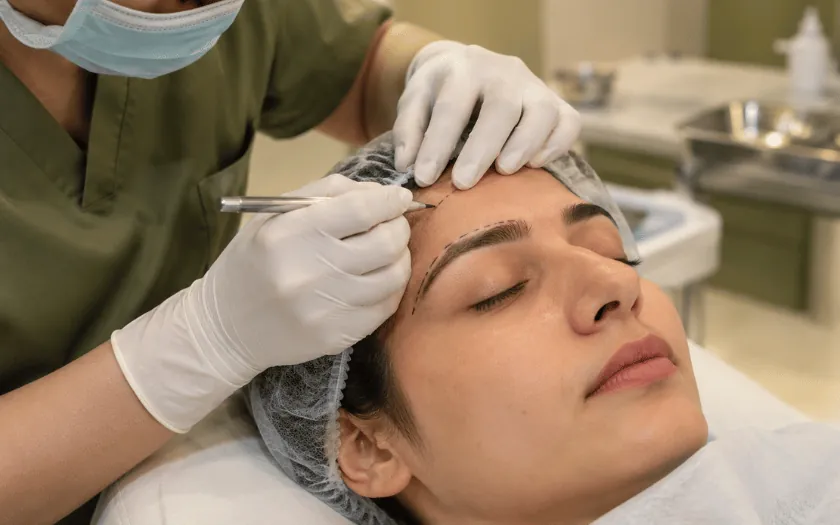
In the meantime, non surgical options can help people feel comfortable and confident. These include hair fibres for small patches, eyebrow pencils or microblading for brows, and medical wigs for extensive loss.
Side effects, results and emotional wellbeing
Steroid injections can cause temporary thinning or dimpling of the skin at the injection site. Topical immunotherapy can cause itching, redness and swelling. Oral treatments carry wider effects and require regular blood tests. Your doctor should explain the likely benefits and risks before you begin.
Outcomes vary widely. Many people with a few patches see regrowth, while extensive or long standing disease can be harder to treat. Relapses are common, which is normal for the condition and not a failure on your part.
Sudden hair loss can feel distressing, especially for children and teenagers. Talking to someone you trust, or to a counsellor, can help. See lifestyle and supportive care for more on whole person support.
Cost factors and when to see a doctor
The cost of alopecia areata treatment in Surat depends on the extent of loss, the type of treatment, how many sessions or review visits are needed, and whether blood tests or monitoring are required. It is discussed after examination.
See a doctor promptly if you notice:
- A new bald patch on the scalp, beard or eyebrows
- Patches that are spreading or joining together
- Loss of eyebrows or eyelashes
- Patchy loss in a child
- Redness, scaling, pus or pain in a patch, which may suggest another cause
Consultations are available at our centres in Adajan and Vesu, Surat.
Suitability, risks and recovery differ for each patient and are discussed during consultation.
A new patch? Get it checked.
An early diagnosis helps you understand the options and what to expect.
Where it appears
Areas alopecia areata can affect
The extent helps decide which treatment options are considered.

Alopecia areata questions
Still have a question?
Answers to common questions about patchy hair loss. A diagnosis is confirmed only after an examination.
No. It is an autoimmune condition and cannot spread from person to person through touch, combs, towels or shared pillows.
Stress may come before an episode in some people, but it is not thought to be the root cause. Genetic and immune factors are the main drivers. Managing stress is still worthwhile for overall wellbeing.
New hair in a healing patch often grows without pigment at first. In many people the colour returns gradually as the follicle recovers.
Yes. Children can be affected, and treatment choices for them are gentler and carefully selected. Emotional support at school and at home matters as much as the treatment itself.
Yes. Beard alopecia causes round patches in the beard and is assessed and treated along similar lines to scalp patches. A beard transplant is not advised while the condition is active.
That is a personal choice. Some people find it easier to manage appearance with a shaved head, others prefer to style around patches or use a wig. Shaving does not change how the condition behaves.
It can. Treatment encourages regrowth but does not remove the underlying tendency, so new patches may appear later. Early review of any new patch helps keep options open.
Book a consultation
Begin with a conversation.
Every plan starts with an in person assessment by Dr. Ashutosh Shah. Call or WhatsApp the clinic and our team will get back to you.
Book on WhatsApp
Chat with our team on WhatsApp about any treatment, consultation or appointment.
- Ask about any treatment
- Book a consultation
- Get directions to our clinics
WhatsApp opens with a short message ready to send. The clinic team replies during working hours.