
Types of alopecia
Trichotillomania: understanding hair pulling, without judgement
You are not alone, and this is not a lack of willpower. Help is available.
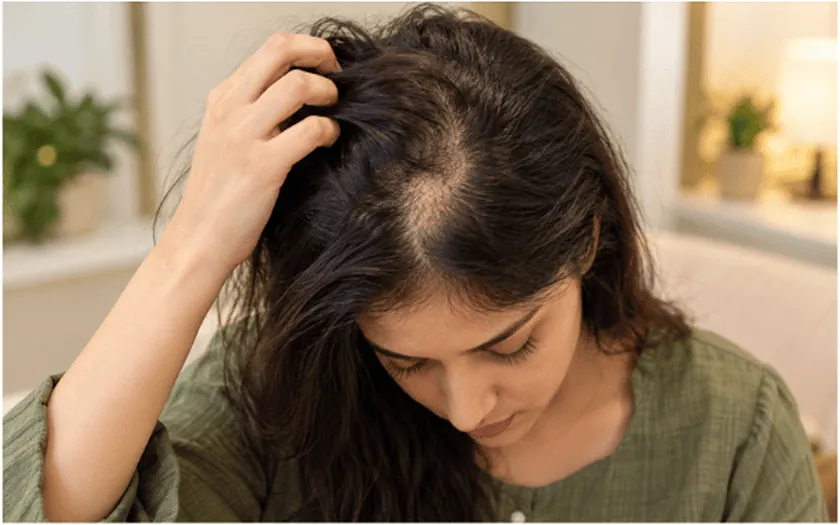
Trichotillomania is a condition in which a person feels a repeated urge to pull out their own hair, from the scalp, eyebrows, eyelashes or elsewhere, and finds it hard to stop despite wanting to. It is a recognised health condition, and care tends to work better as a gentle partnership between skin and hair doctors and mental health professionals.
Last updated · Medical review: Dr. Ashutosh Shah, M.B.B.S., M.S., M.Ch., D.N.B. (Plastic Surgery), Gujarat Medical Council Reg. No. G-26257
 Private, non judgemental care
What is trichotillomania?
Trichotillomania, sometimes called hair pulling disorder, belongs to a group of conditions known as body focused repetitive behaviours. Skin picking and nail biting belong to the same family. Mental health professionals classify it among obsessive compulsive and related conditions.
People describe it in different ways. For some, pulling happens automatically, while reading, studying, watching a screen or lying in bed, and they may not notice until hair is on the floor. For others it is focused: a build up of tension or an urge that feels relieved, briefly, by pulling. Many people experience both.
It often begins in childhood or the teenage years, but it can start at any age. It affects people of every background. Many people hide it for years out of embarrassment, and many feel real relief when they learn it has a name and that others share it.
Trichotillomania causes and signs
What may contribute
There is no single cause. Research points to a mix of genetic tendency, how the brain regulates habits and emotions, and life circumstances. Pulling is often linked with:
- Stress, anxiety or feeling overwhelmed
- Boredom, restlessness or long periods of sitting still
- Low mood or difficult emotions
- Particular sensations, such as a coarse or uneven hair that feels wrong
- Other conditions, such as anxiety, depression or obsessive compulsive disorder, in some people
It is not caused by bad parenting, and it is not something a person chooses.
Signs a doctor may notice
- Irregular patches of thinning with odd, angular shapes rather than round patches
- Hairs broken at many different lengths within a patch
- Patches often on the side of the dominant hand, or on the crown
- Thinning or missing eyebrows or eyelashes
- Normal looking scalp skin, sometimes with small scratch marks
How it is diagnosed
A diagnosis is made kindly and privately. The doctor will talk with you about the hair loss, your routine and how you have been feeling, and will examine the scalp, brows and lashes. There is no need to explain everything at once; you can share what feels comfortable.
Trichoscopy, a magnified examination of the scalp, is very helpful. It shows hairs broken at different lengths and other features that separate trichotillomania from alopecia areata, fungal infection or traction alopecia, which can look similar. A biopsy is rarely needed and is used only when the picture is unclear.
Some people swallow or chew the hair they pull. If this happens, please mention it, even if it feels awkward. Swallowed hair can collect in the stomach, and stomach pain, nausea, vomiting or feeling full quickly need prompt medical attention.
Trichotillomania treatment and support
Care has two parts that work together: support for the urge and behaviour, and care for the hair and scalp.
Mental health support
- Habit reversal training, a type of behavioural therapy that helps you notice the urge and replace pulling with a different, harmless action
- Cognitive behavioural therapy (CBT), which looks at the thoughts, feelings and situations linked with pulling
- Support for related concerns, such as anxiety or low mood, from a psychologist, counsellor or psychiatrist
- Medicines, which a psychiatrist may consider in some people, particularly when anxiety or depression is also present
A referral to mental health professionals may be offered or arranged after assessment. See psychological support and lifestyle care.
Practical steps that many people find helpful
- Noticing when and where pulling happens, without blaming yourself
- Keeping hands busy with a stress ball, fidget item or textured object
- Creating small barriers, such as wearing a cap, gloves or plasters on the fingertips at high risk times
- Keeping tweezers out of easy reach
- Gentle routines for sleep, rest and stress
Hair and scalp care
Scalp care focuses on soothing irritation and treating any infection. While hair regrows, hair fibres, soft caps, scarves or medical wigs can help you feel more comfortable. Some people find a wig or short hair also reduces the chance to pull.
Why surgery waits until pulling is controlled
Because the follicles are usually alive, hair often regrows once pulling reduces, and surgery is rarely needed. A hair transplant is not advised while pulling continues, because transplanted hair can be pulled out too, and donor hair is limited. In the uncommon situation where long term pulling has left lasting thin areas, restoration may be discussed only after the behaviour has been well controlled for some time, with the support of the mental health team.
Recovery and setbacks
Recovery is rarely a straight line. Many people have good weeks and harder weeks, especially during exams, work pressure or life changes. A slip is not a failure; it is information that can help you and your therapist adjust the plan. Hair regrowth itself takes time and usually follows months after pulling reduces. Results vary from person to person.
For parents: if your child pulls their hair, try to respond calmly and without punishment. Pointing it out repeatedly can increase stress. A gentle conversation and a professional assessment are a good start.
Cost factors and when to seek help
The cost of trichotillomania treatment in Surat depends on the assessment, any scalp treatment, the number of review visits and the type of mental health support involved, which may be arranged separately. It is discussed after consultation.
It is worth seeking help if:
- Pulling is leaving visible patches or thin brows or lashes
- You feel unable to stop despite trying
- It is affecting your mood, confidence, studies, work or relationships
- You swallow hair or have stomach symptoms
- Your child is pulling their hair
If you ever feel overwhelmed, hopeless or unsafe, please contact a mental health professional, your family doctor or emergency services straight away. Consultations for hair and scalp care are available at our centres in Adajan and Vesu, Surat.
Suitability, risks and recovery differ for each patient and are discussed during consultation.
Take the first step, privately.
A calm, confidential conversation about your hair, your scalp and the support that may help.
Hair pulling questions
Still have a question?
Answers to common questions about trichotillomania. Every conversation is private and free of judgement.
It is a recognised mental health condition, grouped with other body focused repetitive behaviours. That label simply means effective help exists; it does not mean anything is wrong with who you are.
In most people it does, because the follicles are usually still alive. Regrowth is slow. After many years of pulling in the same spot, some follicles may be damaged, and regrowth there can be limited.
The urge is linked with how the brain manages habits, tension and emotions, not with willpower alone. Behavioural therapies are designed to work with that, which is why support usually helps more than trying to stop by force.
Stay calm and avoid scolding or punishment, which can raise stress. Notice when it happens, offer gentle alternatives for busy hands, and arrange an assessment with a doctor and, where needed, a child mental health professional.
Yes. Brows and lashes are common sites. While they regrow, eyebrow pencils or other cosmetic options can help, and any eye irritation should be checked by a doctor.
Yes. Hair and skin doctors see hair pulling regularly, and consultations are confidential. Sharing what is happening helps the doctor rule out other causes and point you towards the right support.
A transplant does not treat the urge to pull, and transplanted hair can be pulled out too. It is considered only rarely, when pulling has been well controlled for a long time and some areas have not regrown.
Book a consultation
Begin with a conversation.
Every plan starts with an in person assessment by Dr. Ashutosh Shah. Call or WhatsApp the clinic and our team will get back to you.
Book on WhatsApp
Chat with our team on WhatsApp about any treatment, consultation or appointment.
- Ask about any treatment
- Book a consultation
- Get directions to our clinics
WhatsApp opens with a short message ready to send. The clinic team replies during working hours.