
Types of alopecia
Traction alopecia: hair loss from repeated pulling
Caught early, it is often reversible. Left for years, it can become lasting.
Traction alopecia is hair loss caused by steady or repeated tension on the hair, usually from tight hairstyles, extensions or head coverings. It most often affects the front hairline and temples. When the pulling stops early, follicles often recover; long standing traction can scar them and make the loss permanent.
Last updated · Medical review: Dr. Ashutosh Shah, M.B.B.S., M.S., M.Ch., D.N.B. (Plastic Surgery), Gujarat Medical Council Reg. No. G-26257
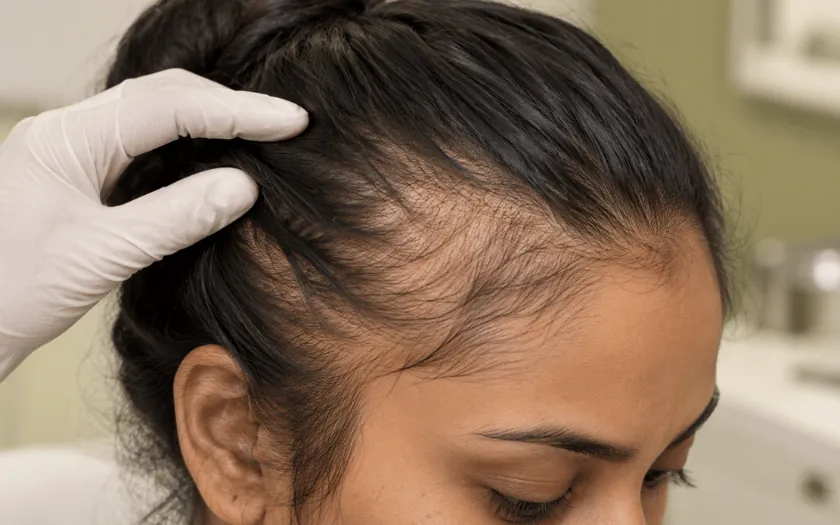 Early change, better outlook
What is traction alopecia?
Hair follicles are anchored in the skin, and they tolerate everyday handling well. When the same hairs are pulled tight for long periods, day after day, the follicles become inflamed and start to loosen. Over time they produce weaker hairs, and eventually some may stop producing hair at all.
The name is sometimes misheard or misspelt, but traction alopecia is the correct medical term. It is a mechanical form of hair loss, which means the cause is physical and, importantly, within your control once it is recognised.
Traction alopecia starts as a non scarring condition. With years of continued tension, it can move into a scarring stage in which follicles are replaced by scar tissue and hair no longer returns on its own.
Traction alopecia causes
- Tight ponytails, buns and top knots, especially when worn daily
- Tight braids, cornrows and plaits
- Turbans, headscarves or hair ties that are wrapped tightly over the same area
- Hair extensions, weaves and clip in pieces that add weight and pull
- Hair systems or patches fixed with clips or tight bonding
- Repeated use of rollers, tight headbands or helmets that rub the same spot
- Chemical relaxing or straightening combined with tension, which weakens the hair further
It can affect anyone, including children whose hair is tied tightly for school, dancers and athletes who wear tight buns, and men who wear their hair tied or who use hair systems. See hair weaving for traction risks with that method.
Signs and diagnosis
Early and later signs
- Thinning at the front hairline, temples or around the ears
- A fringe of short, fine hairs remaining along the very edge of the hairline
- Small red bumps, tenderness, itching or a pulling sensation after styling
- Headache or scalp soreness with tight styles that eases when hair is let down
- Broken hairs where bands or clips sit
- In later stages, smooth, shiny skin with few follicle openings
How it is assessed
Diagnosis is based on the pattern of loss and your hairstyle history. Trichoscopy helps show whether follicle openings are still present, which suggests potential for regrowth, or whether scarring has set in. It also helps separate traction from female pattern thinning, frontal fibrosing alopecia or alopecia areata. A biopsy is occasionally needed when the picture is unclear.
Traction alopecia treatment
The most important step is to reduce the tension. Without this, no treatment is likely to work for long.
- Loosen and rotate styles
Wear hair down or loosely tied, change the position of partings and ties, and take regular breaks from braids and extensions.
- Choose gentler accessories
Use soft, fabric covered ties instead of rubber bands, and avoid heavy extensions and tight clips on fragile areas.
- Treat inflammation
If the scalp is inflamed, the doctor may prescribe topical treatment or other measures. Folliculitis may need its own treatment.
- Encourage regrowth
In early, non scarred traction, medical treatment such as minoxidil may be considered to support regrowth, alongside the change in styling.
- Review over time
Photographs at each visit show whether the hairline is recovering.
When a transplant may be considered
If traction has progressed to stable, scarred loss, a hair transplant may be considered once the area has been quiet for some time and the scalp is healthy. It is only suitable if the habits that caused the loss are changed, because transplanted hair can be damaged by the same tension. Read more on scarring alopecia and scar hair transplantation.
Protecting your hairline
- If a style hurts, feels tight or causes bumps, it is too tight
- Alternate between styles and give hair rest days
- Avoid sleeping in tight styles or with extensions pulled back
- Keep extensions and weaves light, and remove them on time
- Avoid combining chemical relaxers with tight braiding
- Tie children's hair gently and loosely
Cost factors and when to see a doctor
The cost of traction alopecia treatment in Surat depends on the stage: early cases may need only advice, medicines and reviews, while scarred cases considered for surgery depend on the area and grafts needed. It is discussed after assessment.
See a doctor if your hairline or temples are thinning, if tight styles cause pain or bumps, if thinning continues after you have loosened your styles, or if you are considering restoration for long standing loss. Consultations are available at our centres in Adajan and Vesu, Surat.
Suitability, risks and recovery differ for each patient and are discussed during consultation.
Noticed a thinning edge? Act early.
An examination shows how much can still recover and what to change.
Traction alopecia questions
Still have a question?
Answers to common questions about hair loss from pulling. A diagnosis is confirmed only after an examination.
In early cases, regrowth can begin some months after the tension is removed, but it is gradual and varies between people. If follicles have scarred, hair in those spots does not return on its own.
A turban or headscarf tied very tightly over the same area, along with hair pulled tightly underneath, can contribute to traction. Tying it more loosely and varying how hair is gathered underneath can reduce the strain.
Light extensions fitted without pulling and removed on time are lower risk. Heavy or tightly bonded extensions worn for long periods can cause traction, especially if hair is already thin.
Yes. Tight daily ponytails or braids can affect a child's hairline. Gentle, loose styles and regular breaks are usually enough to prevent it.
They may feel soothing, but they do not replace removing the tension. Vigorous massage on an already sore hairline may even add strain. Medical treatment, when needed, is chosen after examination.
Tight styles that caused the loss would put transplanted hair at the same risk. A transplant is usually only considered when you are ready to keep hair loose over that area for the long term.
Book a consultation
Begin with a conversation.
Every plan starts with an in person assessment by Dr. Ashutosh Shah. Call or WhatsApp the clinic and our team will get back to you.
Book on WhatsApp
Chat with our team on WhatsApp about any treatment, consultation or appointment.
- Ask about any treatment
- Book a consultation
- Get directions to our clinics
WhatsApp opens with a short message ready to send. The clinic team replies during working hours.