
Hair Transplant
Is Hair Transplant Safe? Risks, Side Effects and Who Should Wait
Is hair transplant safe? For a suitable patient treated by a trained team, it is generally a safe procedure under local anaesthesia, but no surgery is risk free and side effects do occur.
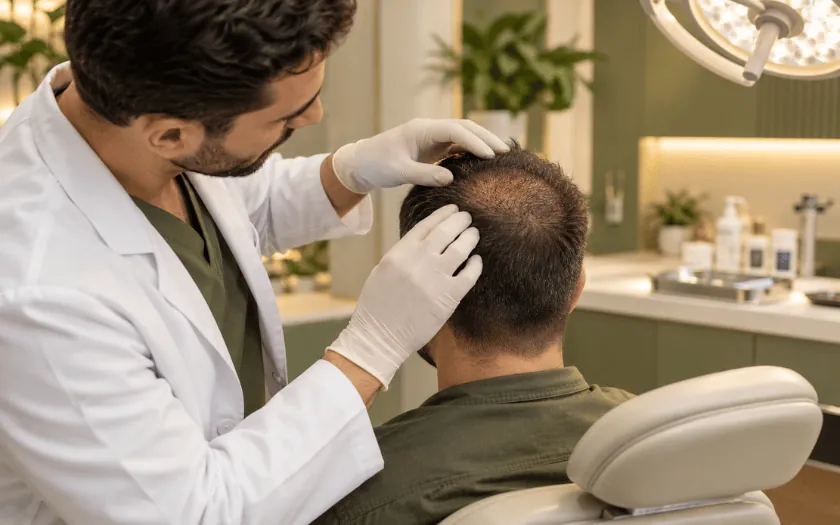
Is hair transplant safe? For most healthy people with pattern hair loss, a hair transplant done by a trained surgical team is generally a safe procedure, usually carried out under local anaesthesia. Still, no surgery is risk free. Mild side effects such as swelling and scabbing are common, and rare problems such as infection, bleeding or poor growth can occur.
- Most side effects are temporary and settle within days to weeks.
- Serious complications are uncommon but real, including infection, bleeding and reactions to anaesthetic.
- Safety depends heavily on patient selection, surgical setting and the experience of the team.
- Some people should not have a transplant, or should wait until a condition is controlled.
Is hair transplant safe for most people?
A hair transplant moves hair follicles from the back and sides of the scalp, called the donor area, to thinning or bald areas. It is a skin level procedure and does not involve the skull or brain. Most patients are awake throughout, with the scalp numbed by local anaesthetic, and go home the same day.
For a healthy adult with hereditary hair loss, enough donor hair and realistic goals, the procedure is considered generally safe. Safety comes from three things working together: the right patient, the right plan and a careful surgical team in a properly equipped setting.
Common hair transplant side effects
These are expected parts of healing rather than complications. They vary in degree from person to person.
- Swelling: often across the forehead, sometimes around the eyes, usually settling within a few days.
- Scabbing and crusting: small crusts form on each graft and fall away over one to two weeks.
- Tightness and tenderness: the scalp can feel tight, sore or itchy while it heals.
- Numbness: patches of reduced feeling in the donor or recipient area, which often improve over weeks to months.
- Shedding: transplanted hairs usually fall out within a few weeks before regrowing. Some nearby native hair may also shed temporarily, called shock loss.
- Small pimples: a mild inflammation of hair follicles called folliculitis can appear as new hairs grow through.
Less common hair transplant risks
Published reviews of complications list several problems that are less frequent but important to know about.
Infection and bleeding
Bleeding and infection are uncommon and usually manageable when recognised early. Sterile technique, careful wound care and prompt review of any warning signs reduce the risk.
Scarring
Every method leaves some scarring in the donor area. A strip method leaves a fine line, while individual extraction leaves many small dot scars. Some people form wider or raised scars, especially if they are prone to keloids.
Poor graft growth
Sometimes fewer grafts grow than expected. Graft handling, smoking, diabetes and the blood supply of the scalp can all play a part, and sometimes no single cause is found.
Anaesthetic reactions
Reactions to local anaesthetic are rare. Telling your doctor about all medicines, allergies and heart conditions helps the team plan safely.
Our page on hair transplant complications explains how each of these is prevented and treated.
Who should not have a hair transplant?
A transplant is not the right step for everyone. Surgery may be unsuitable, or should be delayed, in situations such as these:
- Hair loss that is not hereditary pattern loss. Patchy loss from alopecia areata is not usually treated with a transplant.
- Active scarring alopecia. Conditions that destroy follicles must be inactive and stable for a period before surgery is considered. See our page on scarring alopecia.
- Too little donor hair. If the donor area is thin, there may not be enough hair to give a worthwhile result.
- Uncontrolled medical conditions. Poorly controlled diabetes, high blood pressure, bleeding disorders or some heart conditions need attention first.
- Very early or fast changing hair loss. Younger patients whose pattern is not yet clear may be advised to start medical treatment and wait.
- Hair pulling or body image concerns. Trichotillomania or strong distress about appearance usually needs support before surgery.
- Unrealistic expectations. A transplant redistributes existing hair. It cannot create new donor hair or restore the density of youth.
How can you make your hair transplant safer?
- Get a proper diagnosis. Confirm the type of hair loss before surgery is discussed.
- Share your full medical history. Include medicines, blood thinners, supplements, allergies and past surgery.
- Check who does what. Ask which parts the surgeon performs personally and how the team is trained.
- Check the setting. A clean procedure room with monitoring and emergency equipment matters.
- Plan for the long term. The donor area is limited and should be planned for a lifetime.
- Follow aftercare closely. Most early problems relate to healing, and good aftercare lowers the risk.
Our guide on how to choose a hair transplant clinic lists practical questions to ask. Be cautious of guaranteed density or very high graft numbers promised at a first visit. An economically priced clinic with proper standards is different from an unsafe discount clinic that cuts corners.
What affects the overall safety and cost?
Safety and cost are linked by the same factors: the size of the area, the number of grafts, the technique, the time needed in theatre, the size and training of the team, and the aftercare included. The exact cost can be discussed after consultation and assessment.
When should you see a doctor after surgery?
Contact your surgeon promptly if you notice increasing redness, pus, fever, bleeding that does not stop with gentle pressure, severe pain, or swelling that keeps worsening after the first few days. Early review usually makes these problems easier to treat.
At Elegance Hair Restoration Centre, procedures are planned and led by Dr. Ashutosh Shah, a plastic surgeon with more than 22 years of experience. Book a consultation at Elegance Hair Restoration Centre in Surat to discuss whether a transplant is safe and suitable for you.
Related treatments and conditions
Sources
- NHS: Hair transplant
- International Journal of Trichology (PMC): Complications of hair restoration surgery, a retrospective analysis
- American Academy of Dermatology: Hair transplant results and candidates
- ISHRS: Is FUE scarless?
This article is for general information only. Treatment depends on each patient’s condition and should be decided after consultation with a qualified doctor. Medically reviewed by Dr. Ashutosh Shah, M.B.B.S., M.S., M.Ch., D.N.B. (Plastic Surgery), Gujarat Medical Council Reg. No. G-26257. See the medical disclaimer.
More in Hair Transplant
Questions patients ask
Straight answers, before you decide.
These are the questions that come up most often in consultation. If yours is not here, send it on WhatsApp and the team will reply.
Usually not. Most hair transplants are carried out under local anaesthesia, which numbs the scalp while you stay awake. Some patients are also offered mild oral sedation to help them relax. Avoiding general anaesthesia is one reason the procedure is generally considered low risk for healthy adults, although any anaesthetic carries some risk.
Often yes, if the condition is well controlled. Uncontrolled diabetes can slow healing and raise the risk of infection, and high blood pressure can increase bleeding during surgery. Your doctor may ask for recent test results or input from your physician before planning a date.
Most side effects, such as swelling, scabs and tenderness, settle within one to two weeks. Numbness can take a few months to improve. Scarring in the donor area is lasting, although it is usually hidden by surrounding hair. Rarely, scars can widen or become raised, especially in people prone to keloids.
Some medicines and supplements affect bleeding, so they may need to be adjusted before surgery. Never stop a prescribed medicine on your own. Share a full list of everything you take with the surgical team, and they will advise what to continue, pause or check with your prescribing doctor.
It can be, when the cause of thinning is clear and the donor area is stable. Women often have diffuse thinning, which may also affect the donor area, so careful assessment is essential. Hormonal, thyroid and iron related causes should be checked first, since many women do better with medical treatment.