
Hair Transplant
Does Transplanted Hair Fall Out? Shedding After a Hair Transplant Explained
Does transplanted hair fall out? Yes, most transplanted hairs shed within the first weeks. This is expected: the follicles stay in the scalp and usually begin new growth a few months later.
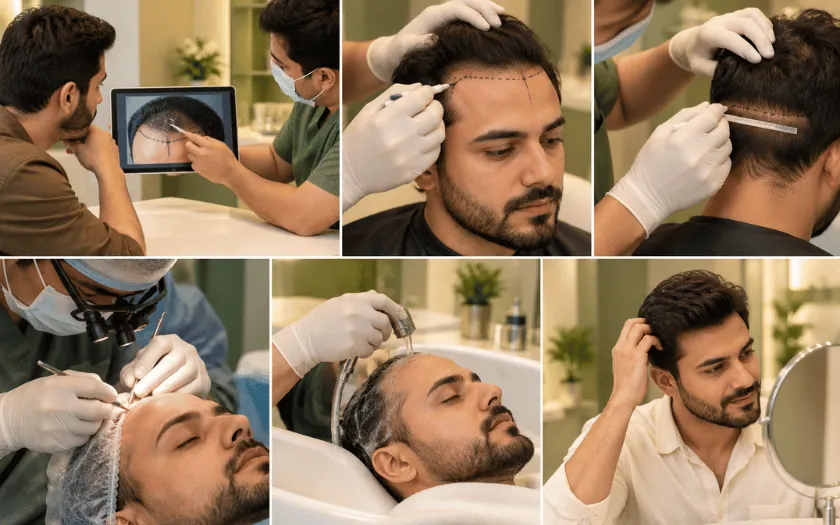
Yes, transplanted hair usually falls out in the first few weeks after surgery, and this is a normal part of healing. The hair shaft sheds, but the follicle stays safely under the skin and rests before starting new growth. So when people ask whether transplanted hair falls out for good, the answer for most is no: the new hair usually begins to grow a few months later.
Key takeaways
- Hair transplant shedding often starts about two to eight weeks after surgery.
- The follicles remain in place and usually regrow hair.
- The scalp may look thinner around month three. This is called the ugly duckling phase.
- Visible results often appear at six to nine months and mature over a year or more.
Does transplanted hair fall out after surgery?
In the days after a transplant, you will see short hairs in each graft. It is natural to hope they keep growing. In most cases, though, these hairs are shed over the following weeks.
This does not mean the grafts have failed. A graft is made up of the follicle, the living root that makes hair, plus a little surrounding tissue. The follicle is what matters. The hair shaft above the skin is simply let go while the follicle recovers from being moved.
Why does hair transplant shedding happen?
Hair grows in a cycle with three main stages: a growth stage, a short transition stage and a resting stage. You can read more about this on our page about the hair growth cycle.
When follicles are removed and placed in a new site, they lose their blood supply for a short time. This stress pushes most of them into the resting stage. In the resting stage, the old hair is released. Once the follicle builds a new blood supply in its new home, it re enters the growth stage and forms a new hair.
When does shedding start and stop?
Every person heals differently, but a typical pattern is:
- Weeks 1 to 2: scabs and crusts around grafts soften and come away with gentle washing.
- Weeks 2 to 8: most transplanted hairs shed. Some people lose nearly all of them, while some grafts may keep growing.
- Months 2 to 4: the area can look much like it did before surgery.
Seeing short hairs on your pillow or in the shower during this period is expected. Hair with a small white bulb at the end is not a lost graft. It is usually just the shed hair shaft.
What is the ugly duckling phase?
The ugly duckling phase is the stretch of time, often around the second to fourth month, when the transplanted area looks thin or patchy. The grafts have shed and new hair has not yet appeared, or is still very fine.
This phase can be frustrating. It helps to know that it is expected and usually temporary. Some people also notice the new hairs come in thin, wavy or uneven at first. They tend to thicken and settle over the following months.
A few simple steps can make this period easier. Many people keep their hair slightly longer on the sides and back so that the area blends better. A loose cap, once your surgeon allows it, can help at work or outdoors. Some people find it useful to take a photograph each month rather than checking the mirror every day, because slow change is easier to see over longer gaps.
What about shedding of native hair?
Sometimes existing hair near the grafts also sheds for a short time. This is called shock loss. It often recovers, though hair that was already very weak may not. Our article on what shock loss is explains it in more detail.
When does transplanted hair grow?
Growth timelines vary, but the table below gives a general guide.
| Time after surgery | What many people notice |
|---|---|
| 3 to 4 months | Fine new hairs begin to appear |
| 6 to 9 months | A clear change in coverage for many people |
| 12 months | Most of the result is visible |
| Beyond 12 months | Hair may continue to thicken, especially at the crown |
The crown often takes longer than the front. Judging the final result too early can cause needless worry. Your surgeon may compare photographs taken at set points to track progress fairly. The full timeline is described on our page about the hair transplant patient journey.
What is normal, and what is not?
Shedding without pain is normal. Contact your surgeon if you notice:
- Increasing pain, swelling or warmth after the first few days
- Pus, spreading redness or a bad smell from the grafts or donor area
- Fever or feeling unwell
- Many painful bumps that do not settle
- No new growth at all well beyond the expected time
Some of these can be signs of infection or folliculitis, which is inflammation of hair follicles. Most problems are easier to manage when treated early. You can read about possible issues on our hair transplant complications page.
How can you care for your scalp during shedding?
- Wash gently, exactly as your team showed you.
- Do not pick, scratch or rub the grafts.
- Avoid tight caps and helmets until your surgeon allows them.
- Take only the medicines your doctor has prescribed.
- Protect the scalp from strong sun during early healing.
- Keep follow up appointments so progress can be checked.
Long term care, including medical treatment for native hair, is covered in our guide to post transplant maintenance.
Book a consultation at Elegance Hair Restoration Centre in Surat to discuss your options or any concerns about healing. Dr. Ashutosh Shah, a plastic surgeon with more than 22 years of experience, and his team can review your scalp and explain what to expect at each stage. Book a consultation in Surat.
Related treatments and conditions
Sources
- American Academy of Dermatology: Hair loss, hair transplant
- Cleveland Clinic: Hair transplant, how does it work
- PMC: Hair transplantation by follicular unit extraction for male androgenetic alopecia, a retrospective observational study from two centers
This article is for general information only. Treatment depends on each patient’s condition and should be decided after consultation with a qualified doctor. Medically reviewed by Dr. Ashutosh Shah, M.B.B.S., M.S., M.Ch., D.N.B. (Plastic Surgery), Gujarat Medical Council Reg. No. G-26257. See the medical disclaimer.
More in Hair Transplant
Questions patients ask
Straight answers, before you decide.
These are the questions that come up most often in consultation. If yours is not here, send it on WhatsApp and the team will reply.
Usually not. Shedding of the hair shaft is expected and reflects the follicle entering a resting stage after being moved. The follicle itself remains in the scalp. Whether grafts have grown well can only be judged months later, once new hair has had time to appear.
Shedding is a normal part of healing, so trying to prevent it is not usually the goal. Gentle care, avoiding picking or rubbing the grafts, and following aftercare instructions give follicles the healthiest start. Any medicine to support growth should only be used on a doctor's advice.
Yes. Some grafts shed their hair completely while others keep growing without a break. Both patterns are common and do not predict the final result. The overall picture becomes clearer after several months, once new growth has started across the treated area.
Newly growing hairs are often finer and may have a different texture at first. As they mature over the following months, many become thicker and settle into a more natural texture. If the texture still seems unusual after a year, discuss it at a follow up review.