
Types of alopecia
Anagen effluvium: sudden hair loss during treatment
Losing hair during a serious illness is hard. Knowing what to expect can help.
Anagen effluvium is the rapid loss of hair that is still in its growing phase, most often caused by chemotherapy. Because the growth of the hair is interrupted suddenly, loss can be quick and extensive, but in most cases the follicles survive and regrowth begins after the cause stops.
Last updated · Medical review: Dr. Ashutosh Shah, M.B.B.S., M.S., M.Ch., D.N.B. (Plastic Surgery), Gujarat Medical Council Reg. No. G-26257
 Gentle, private support
What is anagen effluvium?
Most scalp hairs are in anagen, the active growing phase, at any given time. The cells at the base of a growing hair divide rapidly, which makes them sensitive to treatments and substances that target fast dividing cells.
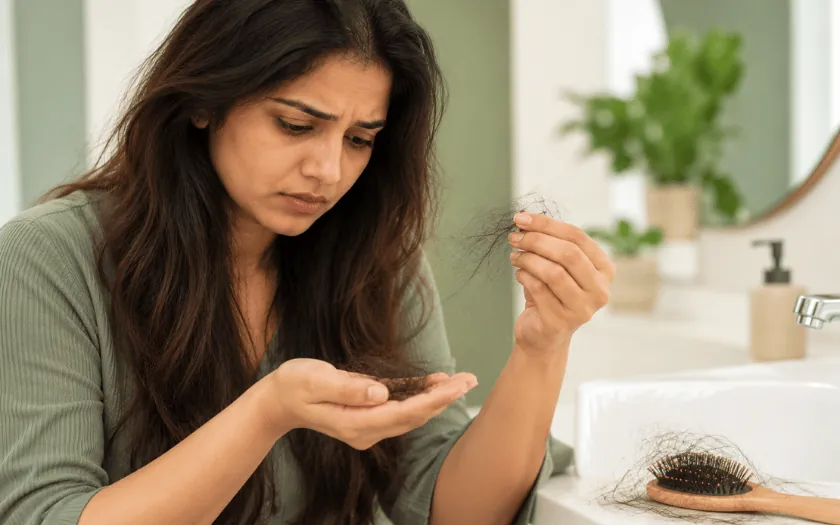
When that cell division is suddenly interrupted, the hair shaft becomes weak and narrow and breaks or falls out, often within days to a few weeks of the cause. Because so many hairs are growing at once, the loss can be heavy and may affect eyebrows, eyelashes and body hair too.
This is different from telogen effluvium, where hairs first move into a resting phase and shed months after a trigger. In anagen effluvium the loss comes quickly, while the hair is still growing.
Anagen effluvium causes
- Chemotherapy, the most common cause; some medicines are far more likely to cause hair loss than others
- Radiotherapy to the head, which affects hair within the treated area
- Toxic exposures, such as poisoning with certain heavy metals, which is rare and needs urgent medical care
- Some other medical treatments that affect rapidly dividing cells
Severe, active alopecia areata can occasionally cause sudden loss of growing hair as well, which is one reason an accurate diagnosis matters. See alopecia areata.
Signs and diagnosis
- Rapid, widespread loss over days or weeks
- Hairs that break easily, with narrowed or tapered ends
- Loss of eyebrows, eyelashes or body hair in some people
- A scalp that may feel tender, tingly or sensitive before or during the loss
In people having chemotherapy, the cause is usually clear from the treatment history, and the oncology team will often have prepared the patient for it. When the cause is not obvious, a careful history of medicines, exposures and symptoms, an examination and blood tests help find it. Any unexplained sudden hair loss with other symptoms, such as stomach upset, numbness or weakness, needs prompt medical attention.
Care and support during treatment
Decisions about cancer treatment belong to the oncology team, and hair care should never delay it. Within that, several steps may make hair loss easier to manage:
- Ask about scalp cooling. With some chemotherapy regimens, cooling the scalp during treatment may reduce hair loss. It is not suitable for everyone, and the decision rests with the oncologist.
- Gentle hair care, with a mild shampoo, a soft brush, and no heat styling, colouring or tight styles
- A shorter cut before treatment, which some people find makes the change less abrupt
- Scalp protection from sun and cold with a soft cap, scarf or hat
- Choosing a wig early, so colour and style can be matched while you still have your hair. See medical wigs.
Feeling upset about hair loss during a serious illness is common and completely understandable. Support from family, counsellors or patient groups can help.
Recovery and regrowth
In most people, hair begins to regrow after the cause stops, for example once chemotherapy ends. The first growth may be soft and fine. For a while the new hair can differ in texture or colour, for example curlier, straighter, lighter or darker, and it often settles with time. The pace of regrowth varies from person to person, so no fixed timeline can be promised.
Some treatments, including certain chemotherapy medicines and higher doses of radiotherapy, can cause longer lasting or incomplete regrowth. If hair has not recovered as expected well after treatment, an assessment can look at what is happening and what may help.
Anagen effluvium treatment after recovery
Anagen effluvium treatment mainly means removing or stopping the cause and supporting the scalp while hair regrows. Once the oncology team agrees it is appropriate, the options for thin or slow regrowth may include:
- Assessment of the scalp and blood tests for iron, thyroid or vitamin levels, which can be affected by illness and treatment
- Medical treatment such as minoxidil in selected people, if the treating doctors agree
- Non surgical cover, such as wigs, toppers or hair fibres, for as long as needed. See non surgical hair replacement.
- In selected cases of stable, long lasting loss, a surgical opinion on whether restoration is realistic
Every option depends on your overall health and the advice of the doctors treating your illness.
Cost factors and when to see a doctor
The cost of anagen effluvium treatment in Surat depends on what is needed: tests, medicines, non surgical cover or later restoration. It is discussed after consultation and in line with advice from your treating team.
- Sudden hair loss without a clear cause needs prompt medical review
- Hair has not regrown as expected some months after treatment ended
- The scalp is painful, red, broken or infected
- You would like advice on wigs or scalp care before treatment begins
Consultations are available at our centres in Adajan and Vesu, Surat.
Suitability, risks and recovery differ for each patient and are discussed during consultation.
Questions about regrowth? We can help.
A private conversation about scalp care, cover options and recovery.
Anagen effluvium questions
Still have a question?
Answers to common questions about sudden hair loss during treatment. Your own situation is best discussed with your treating doctors.
No. Some chemotherapy medicines commonly cause hair loss, others cause thinning, and some rarely affect hair. Your oncology team can tell you what to expect from your specific treatment.
Scalp cooling may reduce hair loss with some regimens, but it does not work for everyone and is not suitable for all cancers. Ask your oncologist whether it is an option for you.
Often it grows back similar to before, but for a while it may be a different texture or colour. These changes frequently settle over time, though not always completely.
Some people prefer to cut hair short or shave it to feel more in control and to avoid finding hair everywhere. Others prefer to wait. Both choices are reasonable; use a clean electric trimmer rather than a razor to protect the scalp.
Many people find it easier to choose a wig before treatment starts, when colour and style can be matched to their own hair. It can then be ready when needed.
Check with your oncology team first. Some products or supplements may not be suitable during cancer treatment, and treatment of the illness always comes first.
Book a consultation
Begin with a conversation.
Every plan starts with an in person assessment by Dr. Ashutosh Shah. Call or WhatsApp the clinic and our team will get back to you.
Book on WhatsApp
Chat with our team on WhatsApp about any treatment, consultation or appointment.
- Ask about any treatment
- Book a consultation
- Get directions to our clinics
WhatsApp opens with a short message ready to send. The clinic team replies during working hours.