
Scalp conditions
Head lice: practical help, without the stigma
Lice are common, have nothing to do with cleanliness and can be cleared with a steady plan.
Head lice are tiny insects that live on the scalp and feed on small amounts of blood. They are very common, especially in school children, and they spread through close head to head contact, not because of poor hygiene. With the right treatment, careful combing and checking the whole family, they can be cleared.
Last updated · Medical review: Dr. Ashutosh Shah, M.B.B.S., M.S., M.Ch., D.N.B. (Plastic Surgery), Gujarat Medical Council Reg. No. G-26257
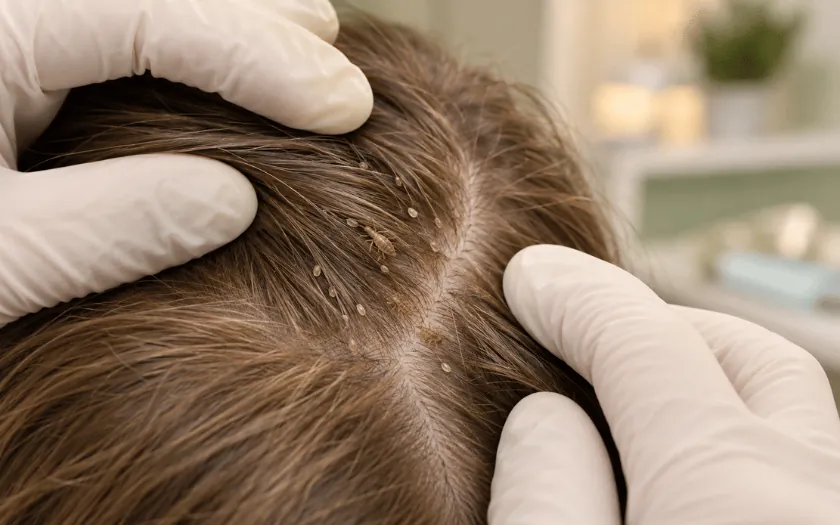 Treat the family together
What are head lice?
Head lice are small, wingless insects about the size of a sesame seed when fully grown. They cling to hair close to the scalp, where it is warm, and lay eggs that are glued firmly to the hair shaft near the skin. The eggs hatch in about a week, and the young lice grow into adults that can lay eggs of their own, which is why a single treatment is often not enough.
Three stages are worth knowing:
- Eggs, tiny oval specks fixed to the hair close to the scalp
- Nits, the empty shells left after hatching, which look white and move further from the scalp as hair grows
- Lice, the moving insects, greyish brown and quick to hide from light
Head lice live only on human heads. They cannot jump or fly, and pets do not carry them.
Head lice causes: how they spread
Lice crawl from one head to another. The main route is direct head to head contact, which is why they are common among children who play, study and sleep close together, and among the parents and grandparents who hug them.
- Head to head contact during play, school, sports or sleepovers
- Less often, shared combs, brushes, hair ties, caps, scarves or pillows
- Close living within households and hostels
Lice do not choose dirty hair. Clean and long, short or oily hair can all be affected, and catching lice says nothing about a family's care or hygiene. Keeping this in mind helps children feel less embarrassed and makes it easier for families and schools to deal with it openly.
Symptoms and how to check for lice
- Itching, especially behind the ears and at the back of the neck
- A tickling feeling of something moving in the hair
- Eggs or nits stuck firmly to hairs near the scalp
- Small red marks or scratch marks on the scalp and neck
- Poor sleep or irritability in children, as lice are more active in the dark
Itching is a reaction to the lice and can take weeks to start after a first infestation, so some people have lice without itching.
Nits versus dandruff
Dandruff flakes are loose and brush or shake off easily. Nits are glued to the hair and have to be slid off with a fingernail or a fine comb. Finding a live louse is the surest sign of an active infestation.
Detection combing
The most reliable home check is combing wet, conditioned hair section by section with a fine toothed lice comb, from the scalp to the tips, and wiping the comb on a white tissue after each stroke. This is also how you check whether treatment has worked.
Head lice treatment options
Treatment should only be started when a live louse has been found. The choice of product depends on age, pregnancy or breastfeeding, skin sensitivity, asthma and previous treatments, so it is worth asking a doctor or pharmacist, especially for young children.
- Medical lotions or sprays
Some products work physically, coating and suffocating the lice, for example those based on dimeticone. Others contain an insecticide such as permethrin, to which lice in some areas have become less sensitive. Use them exactly as the directions or your doctor advise.
- A repeat application
Most treatments do not kill every egg, so a second application is usually advised after a set interval to catch lice that hatch after the first.
- Wet combing
Combing wet, conditioned hair thoroughly with a lice comb on several occasions over about two weeks can remove lice and nits, and can be used on its own or alongside a lotion. It takes patience but avoids chemicals.
- Family treatment
Everyone in the household should be checked. Anyone with live lice is treated on the same day, so lice are not passed back and forth.
- Checking that it worked
Detection combing a few days after the last treatment shows whether live lice remain. If they do, the product may not suit the lice or may not have been applied long enough.
Why treatment sometimes fails
When lice seem to survive treatment, the usual reasons are that the product was not left on long enough or did not cover all the hair, the repeat application was missed, lice were caught again from a close contact who was not treated, or the lice are less sensitive to that product. Changing to a product that works differently, together with careful wet combing, is often more effective than simply repeating the same one.
Environmental cleaning
Lice do not survive long away from the scalp, so large scale cleaning or fumigation is not needed. Sensible steps are washing recently used pillowcases, towels, caps and scarves in hot water, soaking combs and brushes in hot water, and keeping items that cannot be washed aside in a sealed bag for a short time.
What to avoid
Please avoid kerosene, petrol, strong insecticides meant for animals or crops, undiluted essential oils and repeated back to back treatments. These can burn the scalp, trigger allergy or be dangerous if inhaled or absorbed, especially in children.
Preventing reinfestation
- Check the whole family with a lice comb once a week for a few weeks after treatment
- Tie back long hair for school and play
- Avoid sharing combs, brushes, hair ties, caps and helmets
- Let the school or close contacts know discreetly, so other children can be checked and treated too
- Treat again only when live lice are found, not as a routine precaution
Reinfestation usually means lice are still circulating in a close group. Working together with other families is often what finally breaks the cycle.
Head lice and the scalp and hair
Head lice do not cause hair loss directly. Heavy, long standing infestation with constant scratching can, however, break hairs, leave the scalp sore and allow skin bacteria to cause infected spots, which in turn may lead to swollen glands in the neck. Harsh home remedies and repeated chemical treatments can also irritate the scalp and dry the hair.
Once lice are cleared, the scalp usually settles and any broken hairs grow back. Itching can continue for a week or two after successful treatment as the skin reaction fades, which does not always mean lice are still present. An active infestation or scalp infection is always cleared before any hair procedure.
When to see a doctor, and what affects the cost
- Lice remain after two correctly used treatments
- The scalp is red, weeping, crusted or has pus spots
- The child is very young, or you are pregnant or breastfeeding
- There are swollen glands, fever or signs of infection
- Itching continues and you are not sure lice are the cause
The cost of head lice treatment in Surat mainly depends on factors such as how many family members need treatment, which product is chosen, whether a scalp infection or irritation also needs treating and whether follow up checks are needed. These are explained after your consultation.
Suitability, risks and recovery differ for each patient and are discussed during consultation.
Lice keep coming back?
A calm examination can confirm lice, check for scalp infection and plan treatment for the family.
Head lice questions
Still have a question?
Answers to what families ask most about head lice. Advice for your family is confirmed after an examination.
Yes. Lice are most common in children, but parents, grandparents and anyone in close contact with an affected child can catch them.
No. Lice can live in hair of any length. Tying long hair back can reduce contact, but cutting it is not needed for treatment to work.
Usually not. Children can generally attend once treatment has started. Letting the school know helps other families check their children, which reduces reinfestation.
No. Human head lice live only on people. Pets do not need treatment for them.
The skin reaction to lice can take a week or two to fade. If detection combing finds no live lice, lingering itch does not mean treatment failed. Persistent itching should be checked for another cause.
Not necessarily. Empty shells can stay glued to the hair after the lice are gone. Nits far from the scalp are usually old. Finding a moving louse is what shows active infestation.
Book a consultation
Begin with a conversation.
Every plan starts with an in person assessment by Dr. Ashutosh Shah. Call or WhatsApp the clinic and our team will get back to you.
Book on WhatsApp
Chat with our team on WhatsApp about any treatment, consultation or appointment.
- Ask about any treatment
- Book a consultation
- Get directions to our clinics
WhatsApp opens with a short message ready to send. The clinic team replies during working hours.