
Scalp conditions
Scalp folliculitis: bumps, pustules and what they mean
Red spots around the hair can have several causes, and each needs its own care.
Scalp folliculitis is inflammation of the hair follicles that shows as small red bumps or pus spots around the hairs. It is common and often mild, but bacterial, fungal and other causes look alike, so spots that keep returning are worth examining before another cream is tried.
Last updated · Medical review: Dr. Ashutosh Shah, M.B.B.S., M.S., M.Ch., D.N.B. (Plastic Surgery), Gujarat Medical Council Reg. No. G-26257
 Treat the cause, not just the spots
What is scalp folliculitis?
Every hair grows from a tiny pocket in the skin called a follicle. When a follicle becomes irritated, blocked or infected, the skin around it swells and reddens, and a small pimple or pustule may form with a hair at its centre. When this happens on the scalp, it is called scalp folliculitis.
It can be superficial, affecting only the top of the follicle, or deeper, forming tender lumps and boils. Most mild cases settle with simple care. Deeper, recurring or scarring forms need medical attention, because they can leave marks or, rarely, patches without hair.
Scalp folliculitis causes and types
Several different processes can produce a similar picture of red bumps and pus spots:
Bacterial folliculitis
Skin bacteria, most often staphylococci, can enter follicles that are irritated by scratching, shaving, tight headwear, sweat or oily products. Spots are usually tender and may crust. Occasional spots are common; repeated crops suggest that something is keeping the follicles irritated or that the bacteria are being carried elsewhere on the body, such as inside the nose.
Fungal folliculitis
Yeasts such as Malassezia, the same organism linked to dandruff, can inflame follicles, especially in hot, humid weather or after antibiotics. These spots tend to be itchy, uniform and slow to respond to antibacterial creams, which is a useful clue.
Acne necrotica
This is an itchy condition with crusted spots, often along the front hairline and upper forehead. The spots can heal with small pitted marks, so early treatment is helpful.
Boils and deeper pustules
A boil is a deeper, painful infection of a follicle. Several joined boils form a carbuncle. These may need drainage and oral treatment, and recurring boils sometimes prompt checks for conditions such as diabetes.
Folliculitis after a hair transplant
Small pimples in the recipient area are fairly common in the weeks and months after surgery, often as new hairs push through the skin. Most are mild. Persistent, painful or spreading spots should be reviewed early.
Donor area folliculitis
Spots can appear in the donor area after extraction, sometimes from ingrown hairs or small cysts beneath healed sites. These are usually managed with local care, and occasionally with a short course of treatment.
Other contributing factors
- Heavy oils, pomades and occlusive styling products
- Tight caps, helmets or wigs worn for long hours in heat
- Shaving the scalp, and curly hairs that grow back into the skin
- Hot tubs or poorly maintained pools
- Lowered immunity, diabetes or long courses of certain medicines
Signs and symptoms
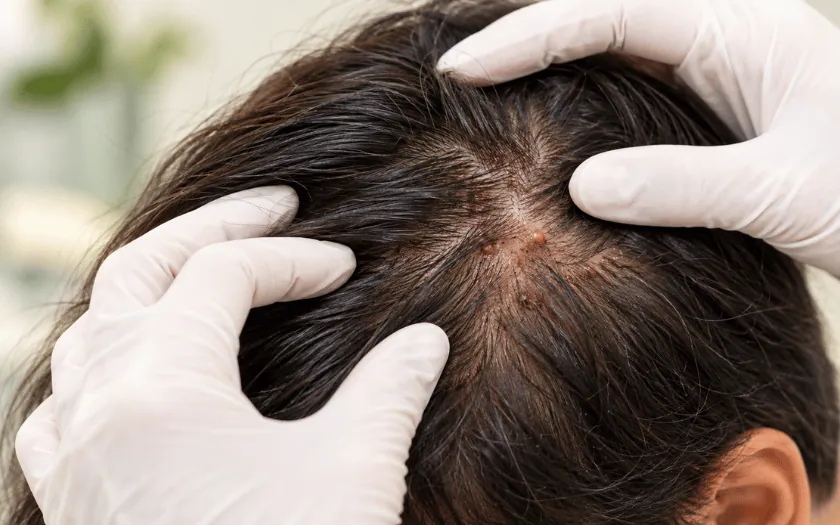
- Small red bumps or white or yellow headed pustules centred on hairs
- Itching, burning or tenderness when combing
- Crusts or scabs where spots have burst
- Firm, painful lumps in deeper forms
- Hairs that pull out easily from inflamed follicles
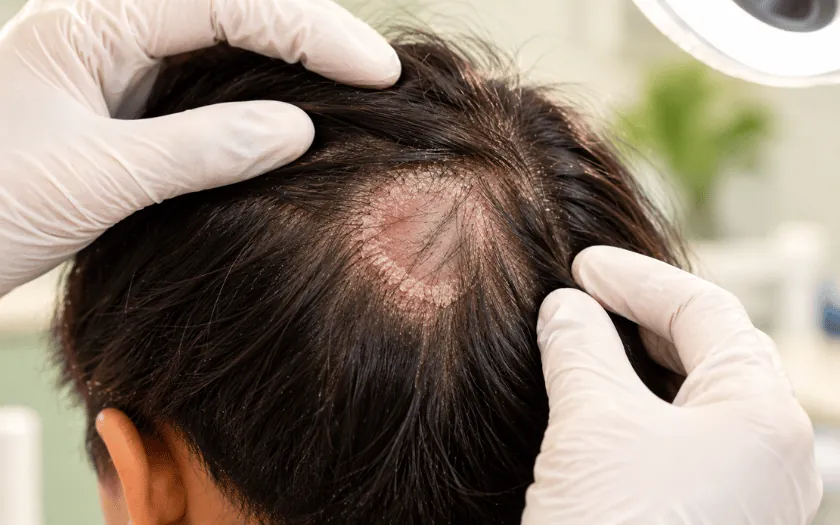
Some scarring hair loss conditions, such as folliculitis decalvans, can begin with pustules that look like ordinary folliculitis. The warning sign is a smooth, shiny patch where hair no longer grows. This is uncommon, but it is the main reason recurring spots should not simply be treated again and again without a diagnosis.
How scalp folliculitis is diagnosed
Diagnosis begins with a history and scalp examination. The doctor may ask how long the spots have been present, whether they itch or hurt, what products and headwear you use, whether you shave, whether antibiotics have been tried and whether anyone in the household has boils.
When a culture or biopsy is needed
Mild, occasional spots usually do not need tests. A swab from a pustule for culture is often advised when folliculitis is persistent, recurring or not responding to treatment. It can show which bacteria or yeast is involved and which medicine is likely to work, which helps avoid repeated courses of the wrong antibiotic.
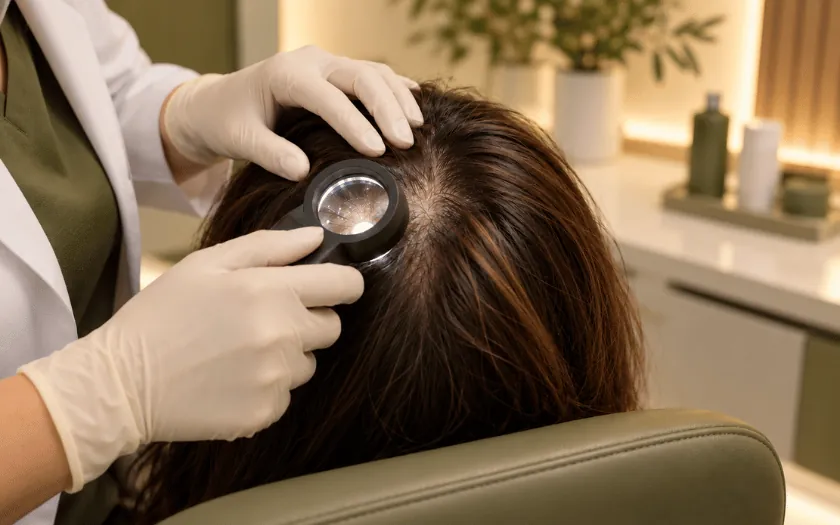
A small scalp biopsy may be suggested when spots leave patches without hair, when the pattern is unusual, or when a scarring condition is suspected. Trichoscopy, a magnified look at the scalp, can also help show whether follicle openings are intact.
Scalp folliculitis treatment options
Treatment is chosen according to the cause and how deep and widespread the spots are. Prescription choices, and how long they are used, belong to the doctor who has examined you.
- Removing triggers
Pausing heavy oils and occlusive products, loosening or washing headwear more often, changing shaving habits and washing after sweating can calm the follicles.
- Antiseptic or medicated washes
Gentle antiseptic cleansers, or antifungal shampoos when yeast is suspected, reduce organisms on the scalp.
- Topical treatment
Prescription antibiotic or antifungal lotions may be used for localised spots.
- Oral medicine when needed
Widespread, deep or recurring folliculitis may need tablets chosen according to the likely cause or the culture result. Side effects and interactions are discussed before starting.
- Drainage of boils
A large, fluctuant boil may need to be drained under clean conditions rather than squeezed at home.
- Reducing carriage and recurrence
Where bacteria keep returning, measures to reduce carriage on the skin or in the nose may be suggested, along with not sharing towels, razors and combs.
Folliculitis after a hair transplant
Mild pimples as new hairs emerge are often managed with gentle washing and warm compresses, as advised by your surgical team. Spots that are painful, spreading, associated with fever or not improving within days should be reported early, as a swab and specific treatment may be needed. Please do not pick or squeeze spots in the transplanted area.
Scalp folliculitis and hair loss
Most superficial folliculitis heals without affecting hair growth. Hairs from inflamed follicles may shed, but they usually regrow once the inflammation settles. Deep, repeated infection is different: it can damage follicles, and some scarring conditions can begin in a similar way, which is why early diagnosis matters.
Before PRP, microneedling or a hair transplant, active folliculitis is usually treated first, because procedures on an infected or inflamed scalp carry a higher chance of problems. After a transplant, early review of redness, pustules or itching helps protect the grafts.
When to see a doctor, and what affects the cost
- Spots keep coming back or last longer than a couple of weeks despite simple care
- A lump is large, very painful, spreading or hot to the touch
- You have fever or feel unwell
- Spots leave smooth patches without hair
- You have diabetes or lowered immunity
- Spots appear in a transplanted or donor area
The cost of scalp folliculitis treatment in Surat depends on factors such as whether a swab culture or biopsy is needed, whether topical or oral medicine is chosen, whether a boil needs drainage and how many review visits are required. These are explained after your examination.
Suitability, risks and recovery differ for each patient and are discussed during consultation.
Spots that keep returning?
An examination, and a swab when needed, can find the cause so treatment is not guesswork.
Types of folliculitis
Similar spots, different causes
The type is confirmed after examination, and a swab when needed.


Folliculitis questions
Still have a question?
Answers to common questions about scalp folliculitis. Your own diagnosis is confirmed only after an examination.
Most scalp folliculitis is not passed on by casual contact. Bacterial forms can occasionally spread through shared towels, razors or combs, so it is sensible to keep these personal while spots are active.
It is better not to. Squeezing can push infection deeper, cause more inflammation and increase the chance of a mark. Warm compresses and prescribed treatment are safer.
The cause may be yeast rather than bacteria, the bacteria may not respond to that medicine, or a trigger such as oil or headwear may still be present. A swab culture can help choose the right treatment.
Yes, shaving can irritate follicles and cause ingrown hairs, particularly with curly hair. A clean, sharp blade, shaving in the direction of growth or clipping instead of close shaving may help.
Superficial folliculitis usually does not. Deep or repeated infection, and some scarring conditions that start with pustules, can leave patches without hair. Any smooth, shiny bald area should be examined early.
Mild cases often settle within days to a couple of weeks once triggers are removed. Deeper or recurring forms can take longer and may need maintenance to prevent new crops.
Book a consultation
Begin with a conversation.
Every plan starts with an in person assessment by Dr. Ashutosh Shah. Call or WhatsApp the clinic and our team will get back to you.
Book on WhatsApp
Chat with our team on WhatsApp about any treatment, consultation or appointment.
- Ask about any treatment
- Book a consultation
- Get directions to our clinics
WhatsApp opens with a short message ready to send. The clinic team replies during working hours.