
Scalp conditions
Scalp psoriasis: thick scales, itch and realistic care
A long term condition that can be controlled well, once it is told apart from dandruff.
Scalp psoriasis is a long term inflammatory skin condition that causes thick, well defined, silvery scales on red skin. It is not contagious and not caused by poor hygiene. It cannot yet be cured, but with the right treatment most people can soften the plaques, ease the itch and keep flares under control.
Last updated · Medical review: Dr. Ashutosh Shah, M.B.B.S., M.S., M.Ch., D.N.B. (Plastic Surgery), Gujarat Medical Council Reg. No. G-26257
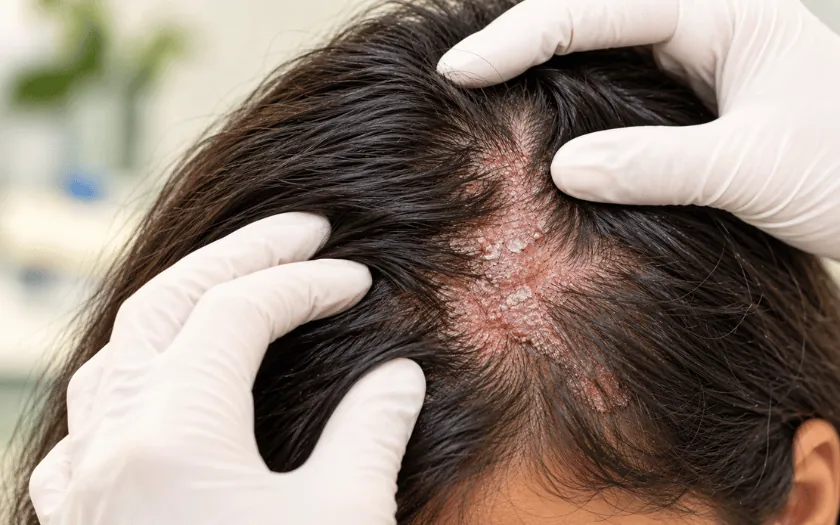 Control, comfort and clear expectations
What is scalp psoriasis?
Psoriasis is a condition in which the immune system drives inflammation in the skin and speeds up how quickly new skin cells are made. Instead of shedding invisibly, the cells build up into raised, scaly patches called plaques. The scalp is one of the most common places for psoriasis to appear, and for some people it is the only area affected.
Scalp psoriasis can range from a few fine scaly patches to thick plaques covering much of the scalp. It often extends just beyond the hairline onto the forehead, around the ears and onto the back of the neck. Many people also have plaques on the elbows, knees or lower back, or changes in the nails, such as small pits or lifting.
Scalp psoriasis causes and triggers
Psoriasis runs in families, and it develops when an inherited tendency meets certain triggers. It is not an infection and cannot be caught from anyone.
- Emotional stress
- Infections, particularly throat infections in some younger people
- Injury to the skin, including scratching or harsh combing, which can cause new plaques to form at the injured spot
- Cold, dry weather
- Smoking and heavy alcohol use
- Certain medicines, which your doctor can review with you
- Excess weight, which is linked with more active disease
Psoriasis is also associated with joint problems in some people, called psoriatic arthritis, and with other health conditions such as raised blood pressure and blood sugar. Joint pain, morning stiffness or swollen fingers are worth mentioning to your doctor.
Symptoms: thick scales, itching and discomfort
- Thick scales. Raised red plaques with silvery white scale, sharply outlined from normal skin
- Itching. Often intense, and scratching can make plaques thicker or cause bleeding
- Soreness or burning, and a tight feeling in the scalp
- Flakes on clothing, sometimes large
- Temporary shedding when scale is heavy or removed roughly
Scalp psoriasis versus dandruff
- Thick, silvery, firmly attached scale
- Sharp edges between affected and normal skin
- Often extends past the hairline
- May affect elbows, knees or nails
- Finer, looser, often greasy or powdery flakes
- Less defined edges
- May affect eyebrows, sides of the nose and ears
- Usually thinner scale
The two can overlap, a pattern sometimes called sebopsoriasis, and fungal infection can also cause scaly patches. An examination is the reliable way to tell them apart.
How scalp psoriasis is diagnosed
Diagnosis is usually made from the appearance of the scalp and a look at the skin and nails elsewhere. The doctor may ask about family history, joint symptoms, triggers and the treatments you have already tried.
Trichoscopy, a magnified examination of the scalp, can show patterns of small blood vessels and scale that help distinguish psoriasis from seborrhoeic dermatitis. A scraping may be taken to rule out fungal infection, particularly in children. A small biopsy is occasionally suggested when the diagnosis is uncertain or when there are patches of hair loss that could suggest another condition.
Scalp psoriasis treatment options
Treatment aims to remove scale, calm inflammation and keep flares less frequent. The scalp is harder to treat than other skin because hair gets in the way, so the form of the product, whether a shampoo, lotion, gel, foam or oil, matters as much as the ingredient. Choices, strength and duration are decided by your doctor.
- Softening and lifting scale
Scale softening preparations, such as those with salicylic acid, or a suitable oil applied and left for a period before washing, loosen plaques so that medicines can reach the skin. Scale should be lifted gently, never scraped or picked.
- Medicated shampoos
Shampoos containing coal tar, salicylic acid or antifungal ingredients may help with scale and itch, often alongside other treatment.
- Prescription topical treatment
Corticosteroid lotions, foams or shampoos, and vitamin D based preparations, alone or combined, are commonly used to settle inflammation. Stronger preparations are usually used for limited periods and then reduced.
- Phototherapy
Light treatment can help some people with more widespread psoriasis, though hair can block light on the scalp.
- Systemic treatment for wider disease
People with extensive, severe or stubborn psoriasis, or psoriatic arthritis, may need tablets or injectable treatments. These need monitoring and are usually managed with a dermatologist or rheumatologist.
Everyday care that helps
- Use a wide toothed comb and avoid scratching and harsh brushing
- Choose gentle shampoos between medicated washes
- Avoid very hot styling tools and harsh chemical treatments during a flare
- Keep up treatment for the recommended time, even once the itch settles
- Look after general health: not smoking, limiting alcohol and managing stress can reduce flares
Setting expectations
Psoriasis tends to come and go over a lifetime. Most people can achieve a comfortable, much clearer scalp, but flares may return, and it is common to need a maintenance plan and occasional adjustments. Improvement is usually gradual over weeks rather than days.
Scalp psoriasis in children and during pregnancy
Psoriasis can begin in childhood, and in children a scaly scalp is also checked for fungal infection before treatment is chosen. Some medicines used for psoriasis are not suitable in pregnancy or while breastfeeding, or when planning a pregnancy, so please tell your doctor, as the plan may need to change. Gentle topical care is often the starting point in these situations.
Scalp psoriasis and hair loss
Heavy scaling, inflammation, scratching and rough removal of plaques can cause temporary shedding. In most people this hair regrows once the psoriasis is controlled, because the follicles are usually not destroyed. Rarely, very severe, long standing inflammation can affect hair more lastingly, which is another reason to treat it steadily.
Psoriasis can also sit alongside other hair problems, such as pattern hair loss or shedding after illness. Treating the scalp first makes the underlying picture clearer. Hair restoration treatments, including PRP, microneedling and a hair transplant, are generally considered only once psoriasis on the scalp is well controlled, because injury to the skin can trigger new plaques in some people.
When to see a doctor, and what affects the cost
- Over the counter shampoos have not helped after a few weeks
- Plaques are thick, sore, cracked or bleeding
- You are losing more hair than usual
- Psoriasis is spreading to other parts of the body or nails
- You have joint pain, swelling or morning stiffness
- Itching is affecting sleep, work or confidence
The cost of scalp psoriasis treatment in Surat depends on factors such as how extensive the psoriasis is, whether tests are needed, which topical products are chosen, whether phototherapy or systemic treatment is required and how often reviews are needed. These are explained after your consultation.
Suitability, risks and recovery differ for each patient and are discussed during consultation.
Scaling that will not settle?
An examination can confirm psoriasis and plan treatment that fits your scalp and routine.
Scalp psoriasis questions
Still have a question?
Answers to common questions about scalp psoriasis. Your own diagnosis is confirmed only after an examination.
There is no cure yet, but it can usually be controlled well. Many people have long clear or mild periods with the right treatment and a maintenance routine.
In most people, yes. Shedding from psoriasis is usually temporary, and hair tends to regrow as the scalp settles. Gentle removal of scale helps avoid pulling hairs out.
It is wiser to avoid dyes and chemical treatments during a flare, as they can sting and irritate. When the scalp is calm, a patch test first and gentle products are sensible.
No single diet cures psoriasis. Maintaining a healthy weight, limiting alcohol and not smoking are linked with less active disease in some people and support general health.
Treatment controls inflammation but does not remove the underlying tendency. Stress, weather, infections and skin injury can trigger new flares, which is why a maintenance plan is often advised.
Some people can, once the scalp has been well controlled and the cause of hair loss is confirmed. Because skin injury can trigger new plaques, this needs careful assessment and planning.
Book a consultation
Begin with a conversation.
Every plan starts with an in person assessment by Dr. Ashutosh Shah. Call or WhatsApp the clinic and our team will get back to you.
Book on WhatsApp
Chat with our team on WhatsApp about any treatment, consultation or appointment.
- Ask about any treatment
- Book a consultation
- Get directions to our clinics
WhatsApp opens with a short message ready to send. The clinic team replies during working hours.