
Hair Transplant
Hair Transplant Myths: 10 Common Beliefs and the Facts Behind Them
Many hair transplant myths, such as instant results, no scars or unlimited grafts, set false expectations. The facts help you judge advice and plan safely.
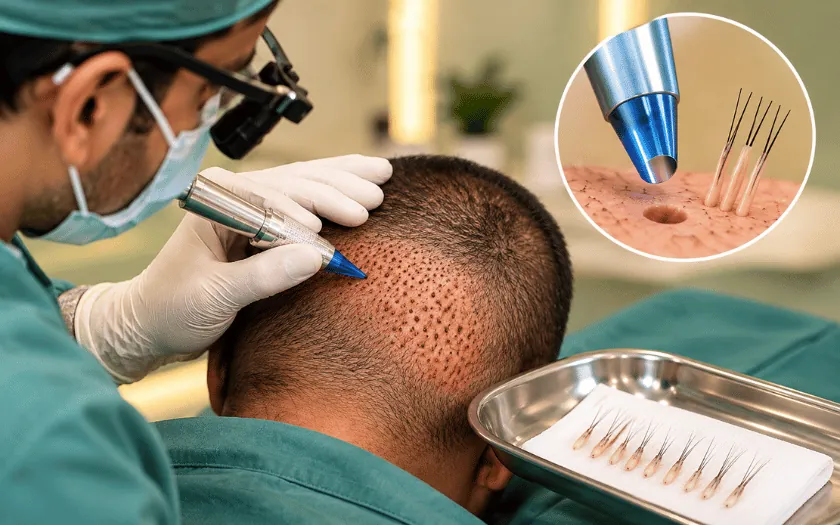
Hair transplant myths are common, and many come from advertising, social media or stories passed between friends. Some myths make surgery sound easier than it is, while others put people off a treatment that might help them. Knowing the facts helps you ask better questions and set realistic expectations.
- A transplant moves your own hair. It does not create new hair or stop native hair from thinning.
- Every technique leaves some scarring, and donor hair is limited.
- Results take many months, not days.
- Names such as DHI, sapphire and Bio FUE describe tools or methods, not separate kinds of surgery.
Why do so many hair transplant myths exist?
Hair loss is emotional, and people understandably look for quick answers. Marketing often highlights the most dramatic results and uses new names for small variations in technique. Online forums mix accurate experiences with guesswork. The result is a set of beliefs that sound reasonable but do not match medical evidence.
Myths about hair transplant results
Myth 1: results are visible within a few weeks
Fact: transplanted hair usually sheds within the first few weeks. New growth typically begins around three to four months, and the full result often takes 10 to 18 months to show.
Myth 2: a transplant stops hair loss
Fact: a transplant redistributes donor hair, which tends to resist the hormone DHT that drives pattern loss. It does not protect the native hair around it, which may keep thinning. Many people benefit from medical treatment and a post transplant maintenance plan to protect the overall result.
Myth 3: more grafts always mean a better result
Fact: the right number of grafts depends on the area, the donor supply and future loss. Very large sessions can overharvest the donor area. Be cautious of guaranteed density or unusually high graft numbers promised before a proper examination.
Myths about the procedure itself
Myth 4: FUE leaves no scars
Fact: FUE leaves many tiny dot scars instead of one line. They are usually hard to see, but they exist, and overharvesting can make them visible.
Myth 5: the operation is extremely painful
Fact: the procedure is done under local anaesthesia. Most people feel the numbing injections and some pressure, then mild soreness afterwards. It is not painless, but discomfort is usually manageable with the advice and medicines your doctor provides.
Myth 6: hair can come from another person
Fact: a standard hair transplant uses your own hair. Hair from another person would be rejected by the immune system. In selected cases, beard or body hair from the same person may be used.
Myths about who can have a transplant
Myth 7: anyone who is bald can have one
Fact: suitability depends on the type of hair loss, the donor area and general health. Transplants are designed mainly for hereditary pattern loss, and are not suitable for conditions such as alopecia areata. People with very extensive hair loss and a weak donor area may not have enough hair to move.
Myth 8: women cannot have hair transplants
Fact: some women are suitable, especially those with a stable donor area and a defined area of thinning, such as a high hairline or a scar. Because thinning in women is often diffuse, careful assessment is essential. Our page on hair transplant for women explains who may benefit.
Myth 9: younger is always better
Fact: very early surgery can be a problem, because the final pattern of loss is not yet known. Many younger patients are advised to try medical treatment and wait until the pattern is clearer.
Myths about techniques and clinics
Myth 10: new technique names mean new types of surgery
Fact: most transplants are either FUE or FUT. Other names usually describe tools or steps within them.
- DHI is an implantation method using implanter devices, not a separate type of transplant.
- Sapphire FUE refers to the blade material used to make recipient sites.
- Bio FUE is a marketing term without a single agreed definition.
The skill of the team, the planning and the aftercare matter more than the name.
Price and quality
It is a myth that any lower price is a warning sign, and also a myth that price alone shows quality. An economically priced clinic with sound standards is different from an unsafe discount clinic where untrained staff perform key steps. Cost depends on factors such as the area, graft numbers, technique and aftercare. The exact cost can be discussed after consultation and assessment.
What are the real hair transplant facts?
- It is surgery, and no surgery is risk free.
- It works by moving hair from a limited donor supply.
- Donor hair is usually resistant to pattern loss, but native hair may keep thinning.
- Results take time and vary from person to person.
- A good plan considers the next 20 years, not just the next few months.
Which common hair transplant questions should you ask?
Instead of relying on myths, ask direct questions at your consultation:
- What is causing my hair loss, and is it suitable for surgery?
- How strong is my donor area, and how much can be safely used over my lifetime?
- Which steps will the surgeon perform personally?
- What result is realistic for me, and when?
- What treatment will I need for my native hair afterwards?
Our guide on how to choose a hair transplant clinic covers more of these questions.
When should you see a doctor?
See a doctor early if hair loss is sudden, patchy, itchy or painful, or if you are unsure of the cause. A diagnosis should come before any decision about surgery.
Book a consultation at Elegance Hair Restoration Centre in Surat to discuss the facts that apply to your own hair and scalp.
Related treatments and conditions
Sources
- NHS: Hair transplant
- American Academy of Dermatology: Hair transplant results and candidates
- ISHRS: Is FUE scarless?
- NHS: Hair loss
This article is for general information only. Treatment depends on each patient’s condition and should be decided after consultation with a qualified doctor. Medically reviewed by Dr. Ashutosh Shah, M.B.B.S., M.S., M.Ch., D.N.B. (Plastic Surgery), Gujarat Medical Council Reg. No. G-26257. See the medical disclaimer.
More in Hair Transplant
Questions patients ask
Straight answers, before you decide.
These are the questions that come up most often in consultation. If yours is not here, send it on WhatsApp and the team will reply.
A well planned transplant using natural follicular groups and a soft, irregular hairline usually looks natural. Older methods that used large plugs gave a doll like appearance, which is where this belief comes from. An unnatural look today usually reflects poor design, wrong hair direction or a hairline set too low for the face.
Yes. Once it has grown in, transplanted hair behaves like the hair it came from. It can be cut, washed, coloured and styled normally. Your doctor will advise how long to wait after surgery before colouring or using heat and chemical treatments on the scalp.
Not routinely. Transplanted donor hair usually continues to grow long term. Some people choose a second procedure later because their native hair keeps thinning or because they want more density, not because the first grafts stopped working.
No. Women can be suitable, though fewer women are candidates because thinning often affects the whole scalp, including the donor area. Women with a stable donor zone and a defined area of loss, such as a high forehead or a scar, may benefit after the cause has been checked.