
Hair Transplant
Does a Hair Transplant Look Natural? What Makes the Difference
Does a hair transplant look natural? It can, when the hairline, graft angles and density are planned carefully and the plan still suits you as your hair loss changes with age.
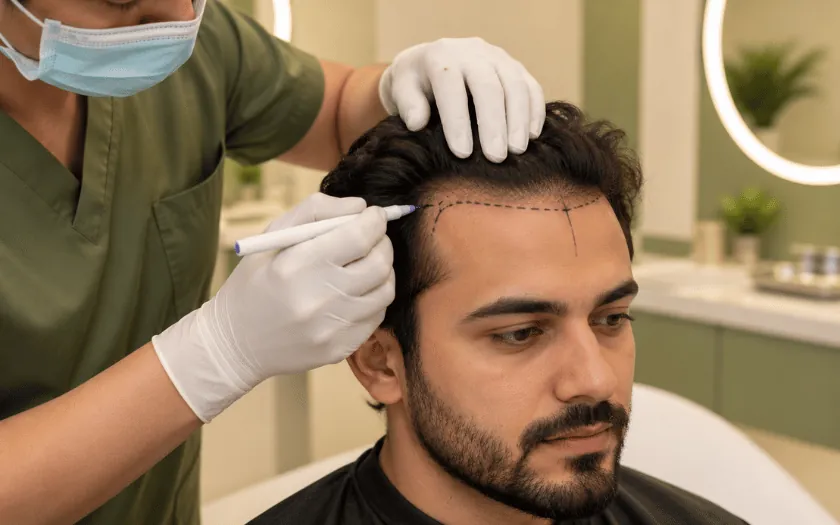
Does a hair transplant look natural? It can, when it is planned and performed with care. The grafts are your own hair, so they grow with your own colour and texture. Whether the result looks natural depends mostly on design: the height and shape of the hairline, the angle and direction of each graft, the use of fine single hair grafts at the front, and a plan that still suits you as you age.
- Modern transplants move hair in small natural groups of one to a few hairs, not large plugs.
- A natural hairline is soft, slightly irregular and suited to your age and face.
- Grafts must follow the angle and direction of your native hair.
- Native hair may keep thinning, so long term planning matters as much as the first result.
- Healing signs such as redness and crusts are visible for a short time before hair grows.
Why did older hair transplants look unnatural?
Many people picture the transplants of past decades. Surgeons then moved large round plugs of skin, each holding many hairs. As they grew, they looked like rows of doll's hair with gaps in between. Donor scars were also more visible.
Techniques have changed a great deal. Surgeons now move follicular units, which are the natural groups of one to four hairs that grow together on the scalp. Placed carefully, these can blend with the hair around them. The American Academy of Dermatology notes that modern results can be hard even for hairstylists to spot.
What makes a natural looking hair transplant?
An age appropriate hairline
A hairline that sits too low can look odd, especially later in life. A mature hairline usually sits a little higher and has gentle recession at the temples. Designing for the face you will have in twenty years, not only today, helps the result age well.
A soft, irregular edge
A natural hairline is not a straight line. It has a slightly uneven zone at the front, where fine single hairs sit in small clusters. A ruler straight edge can look artificial even when small grafts are used.
The right angle and direction
Hair on the front of the scalp grows forward at a low angle. Hair at the crown grows in a swirl. Each graft needs to follow the pattern of the hair around it. Grafts placed too upright or in the wrong direction stand out and are hard to style.
Sensible density
Donor hair is limited. Spreading it wisely, with more density at the front where it frames the face, often looks more natural than trying to cover every area thinly. Hair thickness, curl and the contrast between hair and skin colour also affect how full the result looks.
Our page on hairline design explains how these decisions are made at consultation.
Can people tell I had a hair transplant?
During the first weeks, they may notice something. Common healing signs include:
- Redness and small crusts in the recipient area for about one to two weeks.
- A shorter donor area if it was trimmed for FUE.
- Mild forehead swelling for a few days in some people.
- Shedding of transplanted hairs a few weeks after surgery, which is normal.
After this, there is often a quiet period before new hair grows. Many people see visible growth between six and nine months, and for some it takes around a year. Once hair has grown and matured, a well planned transplant is usually hard for others to notice.
Unnatural hair transplant signs to watch for
When reviewing results or planning surgery, these are the features that most often look unnatural:
- A hairline that is too low, too straight or too sharp at the edges.
- Missing temple recession, giving a flat, helmet like frame to the face.
- Grafts that point in the wrong direction or stand straight up.
- Visible clumps or gaps, often from larger grafts at the front.
- An island of transplanted hair at the front, with thinning native hair behind it.
- A patchy, see through donor area from taking too many grafts.
Does a hair transplant look natural in the long term?
This is the question that matters most. Transplanted donor hair is usually resistant to pattern hair loss. The hair around it may not be. If native hair keeps thinning, a transplanted hairline can end up standing alone in front of a thinning area.
That is why a good plan considers:
- Your age and family history of hair loss.
- Medical treatment to help protect native hair, discussed on our medical hair treatment page.
- Keeping enough donor hair in reserve for possible future needs, as described in our guide to donor area planning.
How can you improve your chances of a natural result?
- Choose a surgeon who designs the hairline personally and explains the reasoning.
- Ask to see results from the surgeon's own patients, taken with consent, at different stages.
- Be open about your expectations. A realistic density usually looks better than an overstretched one.
- Follow aftercare instructions closely, especially in the first two weeks.
- Keep up with follow up visits and any medical treatment advised.
Results vary from person to person and cannot be guaranteed.
Can an unnatural result be corrected?
Often it can be improved, though every case is different. Options may include removing or redirecting poorly placed grafts, softening a harsh hairline with fine single hair grafts, adding density behind an isolated hairline, or treating donor scars. The limiting factor is usually how much donor hair remains. Our page on corrective hair transplant explains the approach.
At Elegance Hair Restoration Centre, hairline design is done by Dr. Ashutosh Shah, a plastic surgeon with more than 22 years of experience, who plans each hairline around the proportions of the face. Book a consultation at Elegance Hair Restoration Centre in Surat to discuss a plan that suits your face and your future.
Related treatments and conditions
Sources
- PMC (NIH): Revision of the Unfavorable Result in Hair Transplantation
- American Academy of Dermatology: Hair transplant
- PMC (NIH): Complications in Hair Transplantation
- Cleveland Clinic: Hair Transplant
This article is for general information only. Treatment depends on each patient’s condition and should be decided after consultation with a qualified doctor. Medically reviewed by Dr. Ashutosh Shah, M.B.B.S., M.S., M.Ch., D.N.B. (Plastic Surgery), Gujarat Medical Council Reg. No. G-26257. See the medical disclaimer.
More in Hair Transplant
Questions patients ask
Straight answers, before you decide.
These are the questions that come up most often in consultation. If yours is not here, send it on WhatsApp and the team will reply.
Early healing signs such as redness and crusts usually settle within about two weeks. Transplanted hairs then shed, and new growth often starts between three and four months. Many people see a clear change by six to nine months, and the hair keeps thickening and softening in texture until around twelve months or a little longer.
Transplanted hair keeps the qualities of the donor area, so it usually matches your own hair closely. In the early months new hairs can feel finer, wirier or slightly curly. This often settles as the hair matures over the first year. Hair taken from the beard or body may look different and is used only in selected cases.
Many people can, once healing is complete. With FUE, small donor dots are usually hard to see at short lengths, though very close shaves can reveal them. With FUT, a linear scar may show if hair is cut very short. Discuss your preferred hair length before surgery so the technique suits your style.
Yes, when the right patient is selected. Women often have diffuse thinning rather than a receding hairline, so the cause must be diagnosed first and a stable donor area confirmed. Female hairlines are usually rounder and fuller at the temples. Careful design respects these features, and grafts are often placed between existing hairs to add density.