
Types of hair transplant
Long hair FUE, a transplant without full shaving
Easier to conceal in the first weeks, with honest trade offs.
Long hair FUE is a partial or non shaven approach to FUE, in which some or all of your existing hair is kept longer so the procedure is easier to hide in the first weeks. It takes more time and technical care, often suits smaller sessions, and is offered only to patients who are good candidates after assessment.
Last updated · Medical review: Dr. Ashutosh Shah, M.B.B.S., M.S., M.Ch., D.N.B. (Plastic Surgery), Gujarat Medical Council Reg. No. G-26257
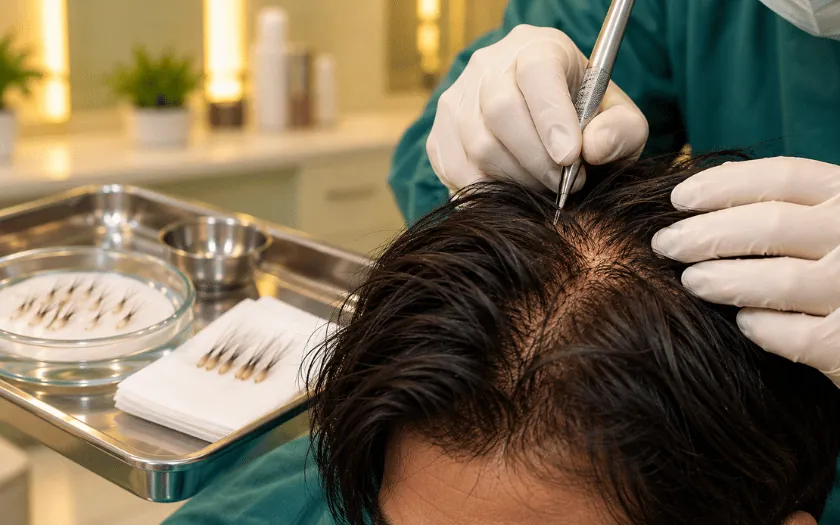 Partial or non shaven FUE
Do you need to shave for a hair transplant?
Not always. In a standard FUE, the donor area and often the recipient area are trimmed short. Short hair makes it easier to see the angle of each follicle, which helps with clean extraction and precise placement, and it allows larger sessions in a working day.
Long hair FUE keeps some or all of your hair longer, so the procedure is less obvious in the days and weeks that follow. It is a variation of FUE, not a separate type of transplant, and it involves real trade offs that are worth understanding before you choose it. In FUT, only the strip area is usually trimmed, which is another way some patients avoid a fully shaved look.
Partial and non shaven approaches
Partial shave
A band of the donor area is trimmed short, while the hair above it is left longer so it falls over and hides the trimmed zone. The recipient area may be left unshaven. This is often the most practical way to keep the procedure discreet.
Non shaven
Instead of trimming whole areas, only the individual hairs chosen for extraction are cut short, scattered through the donor area. The rest of the hair stays at its usual length. This is slower and more demanding.
Long hair grafts
Some or all grafts are extracted with a length of hair left on them, which can give a preview of the look immediately after surgery. The transplanted hairs still usually shed in the first weeks, so this preview is temporary.
Benefits and trade offs
- Better immediate concealment
- Easier return to work or social life for some people
- Useful when a shaved head would be difficult to explain
- Can suit women and people with longer hairstyles
- More time and technical complexity
- Often suits smaller sessions
- Harder to see follicle angles, so extraction is more demanding
- Placing grafts among long hair needs extra care to protect native hair
- May cost more because of the time involved
For a larger session, a short trim is often the safer and more efficient choice, and the hair grows back over the following weeks.
Who is a good candidate?
- People who need a small to moderate number of grafts, such as hairline refinement or filling a limited area
- Women with stable, diagnosed hair loss who wish to keep their length
- People who have had a transplant before and want to add density discreetly
- Those with enough donor density and hair length to hide the extraction sites
It may not suit people who need a large number of grafts in one session, those with very fine or sparse donor hair that cannot conceal marks, or anyone whose hair loss has not been diagnosed and stabilised. Suitability is decided after your hair length, density and graft needs are assessed.
How long hair FUE is done
- Assessment
Diagnosis, donor density, hair length and graft needs are checked to see whether a partial or non shaven approach is realistic.
- Preparation
Hair is trimmed in a band or hair by hair, as planned, and the areas are numbed with local anaesthesia.
- Extraction
Grafts are taken one by one and spread across the donor zone, with the longer hair kept clear of the working area.
- Placement among existing hair
Sites are made and grafts placed between native hairs, taking care not to damage them.
- Aftercare
Washing and styling instructions are adjusted for longer hair, with review visits.
Recovery, side effects and results
Many people return to work within days, and the longer hair may hide much of the treated area. Small crusts usually settle within the first one to two weeks, though they can be harder to wash out among longer hair. Transplanted hairs commonly shed in the first weeks, new growth often starts after a few months, and the result is usually judged at around a year.
No surgery is risk free. Possible side effects include pain, swelling, minor bleeding, itching, temporary numbness, infection or folliculitis, shock loss of native hair near the grafts, patchy growth and donor thinning if too many grafts are taken. Working among longer hair does not reduce these risks and needs care to avoid damaging existing hair. Results vary and depend on the cause of loss, donor quality, graft survival and protection of native hair.
Alternatives and when to see a doctor
If long hair FUE does not suit your case, a standard FUE with a short trim may allow a larger session, and the hair usually grows back over the following weeks. FUT needs only the strip area to be trimmed, so it can also help keep the procedure discreet. Some people are better served by medical treatment first, or by non surgical camouflage such as hair fibres or scalp micropigmentation.
See a doctor if your hairline is receding, your parting is widening, your crown is thinning, or you notice patchy or sudden hair loss. A diagnosis comes first, before any decision about shaving or technique.
Cost factors and what to ask
Cost is discussed after consultation. It depends on the number of grafts, whether a partial or non shaven approach is used, the extra time involved, the area covered and follow up care.
Ask whether the approach suits the number of grafts you need, how the donor area will be protected, and whether a short trim would give a safer or fuller result in your case. At Elegance Clinic, long hair FUE is one of the approaches that may be used for suitable patients, and a plastic surgeon explains the trade offs before you decide.
Suitability, risks and recovery differ for each patient and are discussed during consultation.
Prefer not to shave your head?
Whether a partial or non shaven approach suits you is decided at an in person consultation.
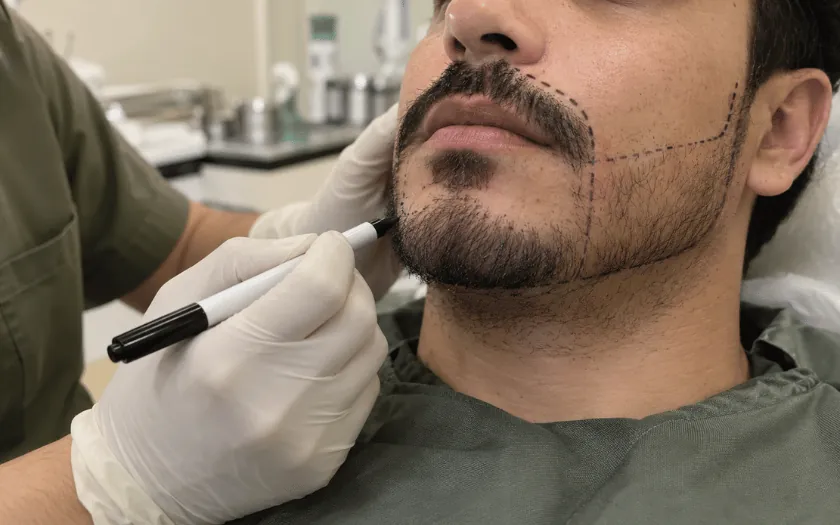
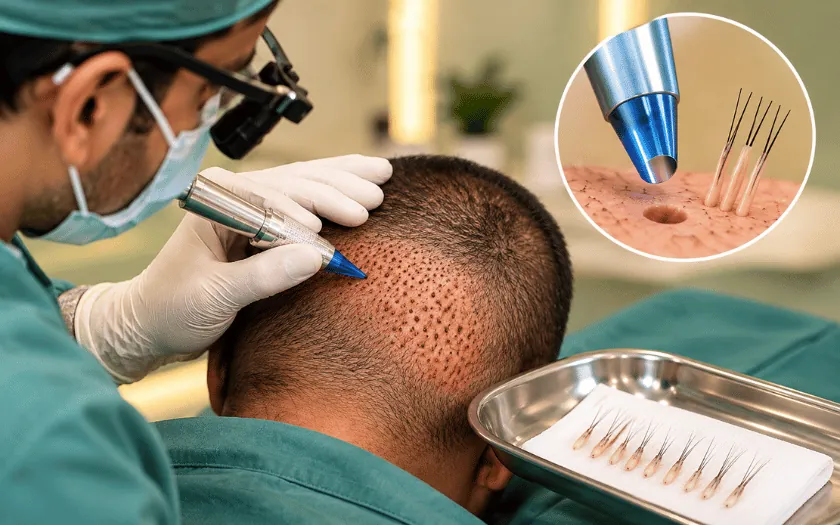
Shaving options
From full trim to non shaven
Which option suits you depends on your graft needs, hair length and donor density.
Long hair FUE questions
Still have a question?
Answers to what patients ask most about transplants without full shaving. Your own plan is confirmed only after an examination.
Longer hair can hide much of the treated area, but redness or crusts may still be visible up close in the first days. How discreet it is depends on your hair and the session.
Trimming hairs one by one and working among longer hair takes more time, so fewer grafts can be moved safely in a single day.
It is often considered for women who wish to keep their length, provided the hair loss is diagnosed, stable and suitable for surgery.
Usually not at first. The hair shafts commonly shed in the first weeks, and new hair grows from the follicle over the following months.
It does not have to, but it is technically harder, so careful case selection and an unhurried session matter.
Often, yes. A trimmed donor band hidden under longer hair is a common middle path. Whether it suits you depends on your hair length and graft plan.
Book a consultation
Begin with a conversation.
Every plan starts with an in person assessment by Dr. Ashutosh Shah. Call or WhatsApp the clinic and our team will get back to you.
Book on WhatsApp
Chat with our team on WhatsApp about any treatment, consultation or appointment.
- Ask about any treatment
- Book a consultation
- Get directions to our clinics
WhatsApp opens with a short message ready to send. The clinic team replies during working hours.