Non scalp hair transplant
Eyebrow transplant in Surat
Rebuilding thin or lost brows with your own hair, placed one hair at a time.
An eyebrow transplant in Surat uses single hairs taken from your own scalp to rebuild brows that are naturally thin, over plucked, scarred or lost after a stable medical condition. Each hair is placed almost flat to the skin, following the direction of a natural brow, and the shape is designed with you so it suits your face.
Last updated · Medical review: Dr. Ashutosh Shah, M.B.B.S., M.S., M.Ch., D.N.B. (Plastic Surgery), Gujarat Medical Council Reg. No. G-26257
 Single hairs, natural direction
What is an eyebrow transplant?
An eyebrow transplant is a small, precise hair transplant. Individual follicles are taken from a donor area, usually the back of the scalp, where finer hairs are selected, and placed into the brow one at a time. Unlike makeup, microblading or tattooing, it adds real hairs that grow from the skin.
Because the grafts come from the scalp, they keep the growth habit of scalp hair. They grow longer than natural brow hair and need regular trimming, usually for life. This is the main practical difference to understand before choosing an eyebrow transplant.
For patients in Surat, the process begins with an in person consultation where the cause of brow loss is checked, the shape is drawn and your donor area is examined.
Who an eyebrow transplant may suit
- Naturally thin or sparse brows present since birth
- Brows thinned by years of over plucking, threading or waxing
- Gaps from scars, burns or injury
- Brow loss from alopecia that has been stable for a long period
- Feminising or masculinising brow design in gender affirming care
- Uneven brows where one side is fuller than the other
- Active alopecia areata or active scarring alopecia
- Brow loss linked to an untreated thyroid or other medical condition
- Ongoing hair pulling (trichotillomania) that needs support first
- Skin conditions around the brows that are not controlled
- People who do not want to trim their brows regularly
- A very limited scalp donor supply
Thinning of the outer third of the brows can have medical causes, including thyroid problems and some forms of scarring alopecia such as frontal fibrosing alopecia. If the cause is not clear, a medical assessment comes before any surgery. You can read more about how hair loss is diagnosed.
Eyebrow transplant for women
Many people who ask about an eyebrow transplant are women whose brows never grew back fully after years of shaping. For them, the design often focuses on a soft, tapering shape with a natural head and tail, rather than a thick, block brow.
Assessment and brow design
Brows change the expression of the whole face, so design comes before anything else. At consultation:
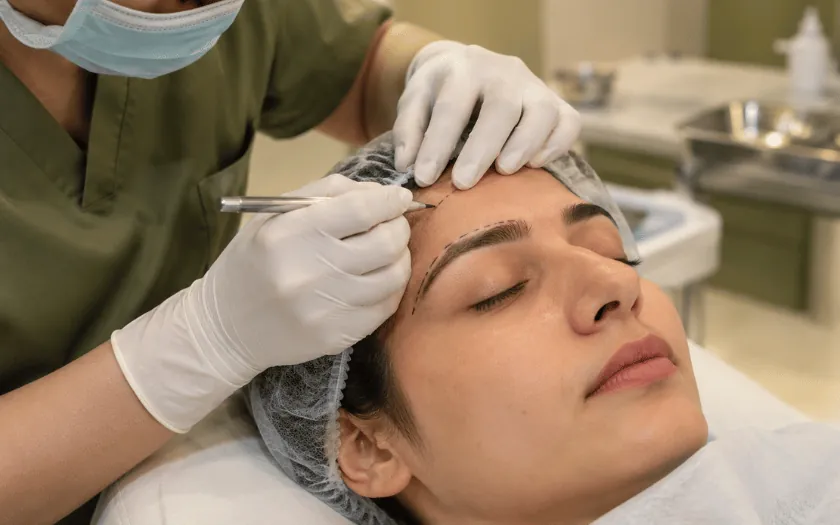
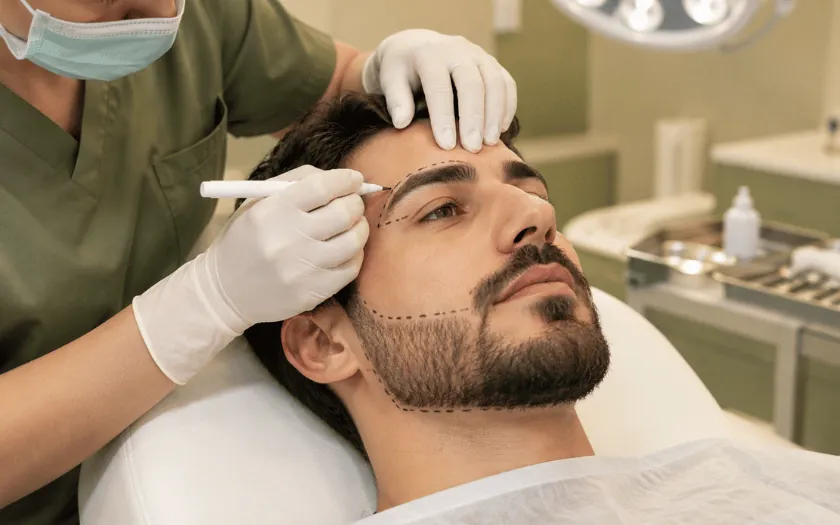
- The brow shape is drawn on your skin and adjusted with you in a mirror
- The start, arch and tail are placed to suit your eyes, brow bone and face
- Existing brow hairs are kept and worked around
- Any old microblading or tattoo pigment is noted, since it may affect planning
- The donor area is checked for fine hairs that suit the brow
- The likely number of grafts and sessions is discussed
Why direction matters so much
Brow hairs change direction along the brow. At the inner head they point upward, through the body they lie flatter and point outward, and along the tail they angle slightly downward. They also lie almost flat against the skin. Grafts placed at the wrong angle can stick out and look unnatural, which is why every site is made to follow this pattern.
How an eyebrow transplant is done
- Final marking
The agreed shape is marked again on the day and checked with you before starting.
- Local anaesthesia
The brows and donor area are numbed so you stay awake and comfortable.
- Harvesting fine grafts
Fine hairs are taken from the donor area, usually by FUE, and prepared as single hair grafts.
- Very fine recipient sites
Tiny sites are made at a very low angle, following the direction of each part of the brow.
- Placement and aftercare
Grafts are placed one by one, and you go home the same day with written care instructions and follow up visits.
Some people are happy after one session. Others choose a second session later to add density or refine the shape, once the first grafts have grown.
Eyebrow transplant recovery, growth and trimming
Recovery on the brows is usually straightforward, but healing varies between people. Typical experiences include:
- Small crusts along the brow that usually settle within about a week to ten days
- Mild swelling that may spread around the eyes for a few days
- Shedding of most transplanted hairs in the first weeks, which is expected
- New growth appearing after a few months
- The final look usually judged at around a year
Rubbing, threading, plucking and brow makeup on the grafts are usually avoided until you are told it is safe. Once the hairs grow, they need regular trimming, and some people find gentle training with a brow gel helps them lie flat.
Eyebrow transplant side effects and risks
No surgery is risk free. Possible effects include:
- Swelling, bruising or redness around the brows and eyes
- Small pimples, ingrown hairs or tiny cysts as hairs grow
- Hairs that curl or grow upward and need training or trimming
- Patchy or lower than hoped density
- Slight asymmetry between the two brows
- Infection, which is uncommon but needs prompt review
- Donor marks or thinning if too many grafts are taken
Careful design, correct angles and follow up reduce many of these problems. Any concern, especially increasing pain, swelling or discharge, should be reported early.
Eyebrow transplant cost factors and alternatives
The cost of an eyebrow transplant in Surat is discussed after assessment. It depends on whether one or both brows need work, the number of grafts, the number of sessions, any scar tissue, and follow up care.
Eyebrow transplant versus microblading and makeup
- Real hairs that grow and can be shaped
- A minor surgical procedure under local anaesthesia
- Hairs need regular trimming
- Final result takes many months to show
- Pigment that imitates hair strokes or a powder brow
- No surgery and no donor hair used
- Fades over time and needs touch ups
- Can suit people who are not ready for a transplant
Some people combine both, using pigment for shape while transplanted hairs add texture. Read more about microblading and permanent makeup. Brow pencils and powders remain a simple option at any stage.
Choosing an eyebrow transplant doctor or clinic
Brows sit at the centre of the face, so small errors in shape or angle are easy to see. When you compare an eyebrow transplant clinic or specialist, ask who draws the design, who makes the sites and places the grafts, and how follow up is arranged.
- Your eyebrow transplant is planned by Dr. Ashutosh Shah, a plastic, cosmetic and hair transplant surgeon (M.S., M.Ch., DNB) with more than 22 years of surgical experience
- Brow design takes account of facial proportions and your own preferences
- Scar and burn related brow loss is assessed with a reconstructive approach
- Medical causes of brow loss are looked for before surgery is offered
- Consultations at two centres in Surat: Adajan and Vesu
Some patients feel more comfortable seeing a lady doctor or a male doctor, or having a chaperone present. If you have a preference, mention it when you book and the team will tell you what can be arranged.
Suitability, risks and recovery differ for each patient and are discussed during consultation.
Talk about your brows, privately
Shape, donor hair and realistic density are decided at an in person consultation in Surat.
Brow concerns
Reasons people consider it
Whether a transplant suits you depends on the cause and stability of the brow loss.

Eyebrow transplant questions
Still have a question?
Answers to what patients ask about an eyebrow transplant. Your own plan is confirmed only after an examination.
Often, yes. Old pigment is assessed first, because it can affect how the brow is designed and how the result looks as hairs grow through it.
No. The brows may look defined for the first days, but most transplanted hairs shed within weeks. New growth appears over the following months and fullness builds gradually.
It depends on the size of the gap, how many natural brow hairs remain and the shape you want. A graft estimate is given after the design is drawn and your brows are examined.
The thyroid condition is treated first, since brows may partly recover once it is controlled. A transplant is considered only if loss remains after the medical cause is managed.
Makeup on the grafts is usually avoided until crusts have cleared and the area has healed. You will be told when it is safe to start again.
Stray hairs outside the design can be tidied once healing is complete, but plucking transplanted hairs removes them. Trimming is the usual way to keep their length natural.
Hair pulling usually needs support and treatment first, because transplanted hairs can be pulled out too. Surgery is considered only once the habit has settled for a sustained period.
Book a consultation
Begin with a conversation.
Every plan starts with an in person assessment by Dr. Ashutosh Shah. Call or WhatsApp the clinic and our team will get back to you.
Book on WhatsApp
Chat with our team on WhatsApp about any treatment, consultation or appointment.
- Ask about any treatment
- Book a consultation
- Get directions to our clinics
WhatsApp opens with a short message ready to send. The clinic team replies during working hours.