Non scalp hair transplant
Beard transplant in Surat
Filling a patchy beard or moustache so it grows in the same direction as the hair you already have.
A beard transplant in Surat moves your own hair follicles, usually from the back of the scalp, into areas of the cheeks, jawline, chin or moustache where facial hair is thin, patchy or missing. Whether it suits you depends on why the beard is sparse, how much donor hair you can spare over your lifetime, and the look you hope to achieve.
Last updated · Medical review: Dr. Ashutosh Shah, M.B.B.S., M.S., M.Ch., D.N.B. (Plastic Surgery), Gujarat Medical Council Reg. No. G-26257
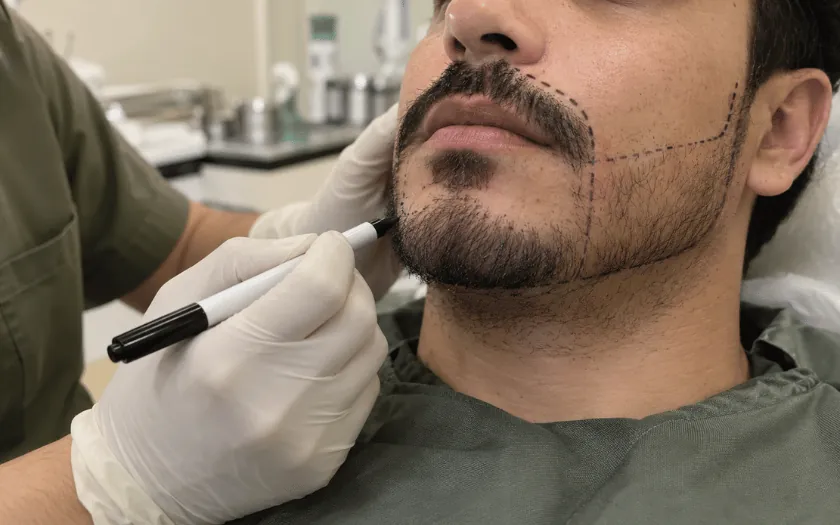 Planned for angle and direction
What is a beard transplant?
A beard transplant is a hair transplant performed on the face. Healthy follicles are taken from a donor area, most often the back and sides of the scalp, and placed one by one into the beard or moustache. The transplanted hairs keep many of the qualities of the area they came from, so they are chosen to match the thickness and colour of your facial hair as closely as possible.
The procedure can fill small gaps on the cheeks, strengthen a weak jawline or chin, rebuild a moustache, connect the beard with the sideburns, or restore hair in a scar. It does not change hormones or create beard growth in follicles that are not there. It adds new follicles where they are needed.
For people in Surat and nearby areas, the first step is an in person consultation. Your beard is examined, the cause of the thin or patchy areas is identified, and design, donor supply and likely density are discussed before any decision is made.
Who a beard transplant may suit, and who it may not
- A patchy beard with gaps on the cheeks, chin or jawline
- Naturally low beard density present since the late teens
- A thin or uneven moustache
- Scars from injury, burns, acne or surgery within the beard
- Masculinising facial hair as part of gender affirming care
- Joining the beard and sideburns more naturally
- Younger men whose beard is still filling in
- Active patchy beard loss from alopecia areata
- A limited donor area that may be needed for the scalp later
- Skin infection or active inflammation in the beard area
- Medical conditions that are not yet under control
- Expectations of a density the donor supply cannot provide
Facial hair can keep developing into the twenties, and in people starting testosterone therapy it can keep changing for some years. In these situations waiting is often advised, because the beard you have today may not be the beard you have later.
Sudden round bald patches in a beard that was previously full are a different problem. They can be a sign of alopecia areata (sometimes called alopecia barbae in the beard), which needs medical assessment first. A transplant is not usually done while the condition is active.
Assessment and beard design
A good result on the face depends more on design and direction than on the number of grafts. At consultation, several points are checked:
- The cause of the sparse areas, and whether it is stable
- The thickness, colour and curl of your existing beard hair
- The quality and density of your scalp donor area
- Your likely future needs for scalp hair, especially with a family history of hair loss
- Any scars, and their blood supply and maturity
- Hormone status and timing, for trans men on testosterone
Direction and angle in each zone
Beard hair does not grow the same way everywhere. On the upper cheeks it grows downward and slightly forward, along the jawline it changes angle, on the chin it often points down and outward, and on the neck the direction can swirl. Moustache hairs grow outward from the midline and lie close to the skin. Each zone is mapped so the new hairs lie the same way as the hairs around them.
The shape is drawn with you. A cheek line can be sharp or soft, a beard can be full or a shorter stubble style, and the moustache can be joined to the beard or left separate. The design is chosen to suit your face and age, and to still look natural if the rest of your facial hair changes over the years.
How a beard transplant is done
- Marking the design
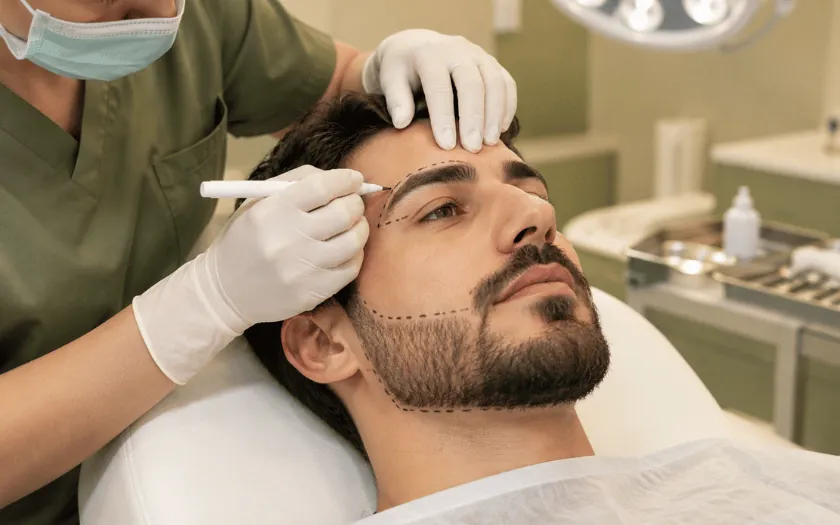
The planned beard line, moustache and any gaps are marked on the skin and checked with you in a mirror before anything begins.
- Local anaesthesia
The donor and recipient areas are numbed. You stay awake and can usually rest, listen to music or talk during the procedure.
- Harvesting grafts
Grafts are most often taken by FUE, one at a time, spread across the donor area so it does not look thin. Single hair and two hair grafts are usually preferred for the face.
- Making recipient sites
Very small sites are made at a low angle, following the direction mapped for each zone. Single hairs are used at the edges so the beard line looks soft rather than drawn.
- Placing grafts and aftercare
Grafts are placed into the sites, and you go home the same day with written instructions and follow up visits to check healing and growth.
The number of grafts, and whether more than one session is needed, depends on the area to cover, the density you want and what your donor supply can safely give.
Beard transplant recovery and results
Facial skin has a good blood supply, which usually helps healing. Typical experiences, which vary from person to person, include:
- Redness, mild swelling and small crusts around each graft for about a week to ten days
- Soreness or tightness in the donor area for a few days
- Shedding of most transplanted hairs in the first few weeks, which is expected
- New growth starting after a few months, often fine at first and thickening over time
- The final look usually judged at around a year
You will be told when you can wash your face normally, when trimming is safe and when you can shave again. Rubbing, threading, strong sun and contact sports are usually avoided while the grafts settle.
What affects results
Results depend on the quality of your donor hair, how well its thickness matches your beard, the design, the direction of each graft, your skin and healing, and how carefully aftercare is followed. Transplanted hairs can feel slightly softer or straighter than native beard hair, which is one reason donor hair is chosen with care. A realistic aim is a fuller, more even beard, not a copy of someone else's.
Beard transplant side effects and risks
No surgery is risk free. Most effects are temporary, but they should be understood before you decide:
- Swelling, redness and crusting on the face in the first days
- Small pimples or ingrown hairs as new hairs come through (folliculitis)
- Infection, which is uncommon but needs prompt review
- Temporary numbness in the donor or recipient area
- Patchy or slower growth in some areas, sometimes needing a later touch up
- Hairs growing at an unnatural angle if placement does not follow the beard pattern
- Visible donor marks or thinning if too many grafts are taken
- Using donor hair that may later be needed for scalp hair loss
Careful selection, sterile technique, controlled extraction and early review of any concern help reduce these risks. Report pain that gets worse, spreading redness, discharge or fever without delay.
Beard transplant cost factors and alternatives
The cost of a beard transplant in Surat can only be discussed after assessment, because every plan is different. It depends on:
- The size of the area, such as a moustache alone or a full beard
- The number of grafts planned and the density you want
- Whether one session or staged sessions are needed
- Scar tissue or previous treatment in the area
- Follow up care and any medical treatment alongside
Beard transplant versus other options
Not everyone with a thin beard needs surgery. Depending on the cause, alternatives may include waiting for the beard to mature, a beard style that works with your natural pattern, medical treatment for conditions such as alopecia areata, or topical treatments that a doctor may discuss with you (evidence for beard growth is limited and the decision belongs to the doctor). Where the aim is a sharper beard line rather than more hair, beard shaping with laser hair reduction may be more suitable. A transplant is considered when these routes are not enough and your donor supply allows it.
Choosing a beard transplant doctor or clinic
When you compare a beard transplant clinic or specialist, ask who will design your beard, who will make the recipient sites, how your lifetime donor supply is protected, and what follow up is included. Facial work is seen at close range, so experience with angle and direction matters.
- Your beard transplant is planned by Dr. Ashutosh Shah, a plastic, cosmetic and hair transplant surgeon (M.S., M.Ch., DNB) with more than 22 years of surgical experience
- Experience across primary, advanced, corrective and scar hair transplantation
- Donor use for the face is weighed against your possible future scalp needs
- Scar related beard gaps are assessed with a reconstructive approach
- Consultations at two centres in Surat: Adajan and Vesu
Some patients prefer to discuss facial hair concerns with a lady doctor or a male doctor, or to have a chaperone present. If you have a preference, mention it when you book and the team will tell you what can be arranged.
Suitability, risks and recovery differ for each patient and are discussed during consultation.
Talk about your beard, privately
Design, donor supply and realistic density are decided at an in person consultation in Surat.
Beard zones
Each area, planned on its own
Angle, direction and density are set zone by zone after your beard is examined.
Beard transplant questions
Still have a question?
Answers to what patients ask about a beard or moustache transplant. Your own plan is confirmed only after an examination.
Transplanted hairs usually keep growing for the long term because they come from a donor area that tends to resist thinning. Results still vary, and the native beard around them can change with age.
There is no single age. Facial hair often keeps filling in through the twenties, so younger men may be advised to wait and see how their beard develops before using donor hair.
It can feel slightly softer or straighter, since scalp hair differs from beard hair. Donor hairs are chosen to match your beard as closely as possible, and the difference is often less noticeable once the beard is grown.
Yes, a moustache transplant can be planned by itself. The area is small but seen at close range, so fine single hair grafts and careful direction are important.
Usually not while the condition is active, because it can affect transplanted hair too. Medical treatment and a long stable period come first, and the decision is made case by case.
Yes, it may be considered as part of gender affirming care. Because testosterone can increase facial hair over time, the timing of surgery is usually planned around how long hormone therapy has been in place.
It is usually a day procedure that takes several hours, depending on the number of grafts. You go home the same day with written aftercare instructions.
The size of the area, the number of grafts, the number of sessions, any scar tissue and follow up care. A clear estimate can only be given after an examination.
Book a consultation
Begin with a conversation.
Every plan starts with an in person assessment by Dr. Ashutosh Shah. Call or WhatsApp the clinic and our team will get back to you.
Book on WhatsApp
Chat with our team on WhatsApp about any treatment, consultation or appointment.
- Ask about any treatment
- Book a consultation
- Get directions to our clinics
WhatsApp opens with a short message ready to send. The clinic team replies during working hours.